




Best overall for a large Rochester yard: swamp white oak. Best for a smaller, partly shaded yard: American hornbeam. Best for spring flowers and birds: serviceberry. This 2026 guide compares five low-maintenance trees by growing space, soil, cleanup, and the work you should expect after planting.
- The best low maintenance trees Rochester NY homeowners choose must fit the yard’s mature growing space.
- Swamp white oak is the default for large yards with room for a broad shade tree.
- American hornbeam suits smaller, partly shaded yards; serviceberry suits homeowners who welcome birds and fruit.
- Spartantreeny provides tree care and planting for Rochester homeowners who need help with existing trees and replacements.
Why this matters
A tree that needs repeated cutting to stay clear of your roof is not low-maintenance. Neither is a fruiting tree over the patio you want to keep clean.
For homeowners in Rochester, Webster, and eastern Monroe County, the starting point is the planting spot—not the nursery label. Check overhead wires, drainage, driveway edges, and the space between your house and the property line before choosing a species.
Spartantreeny’s tree care services include removal, trimming, stump grinding, and planting. If an existing tree occupies the space, settle its condition and the removal scope before ordering a replacement.
What makes the best low-maintenance tree?
Use these criteria to judge your 2026 shortlist:
- Mature size: The tree must fit without regular height reduction or branches pressing against buildings.
- Site match: Soil moisture, drainage, and sunlight must suit the species without constant correction.
- Branch structure: Choose nursery stock with sound branch attachments, not damage or competing stems you will inherit.
- Cleanup: Leaves are unavoidable. Fruit, pods, and placement over hard surfaces determine how much additional work you accept.
- Establishment care: Every new tree needs watering attention. Low-maintenance describes the long-term fit, not permission to neglect planting care.
A good species in the wrong location still creates work. Give mature width the same attention as height, especially in narrow side yards.
Rochester yard trees at a glance
| Tree | Best for | Standout feature | Key limitation |
|---|---|---|---|
| Swamp white oak | Large yards needing lasting shade | Tolerates periodically wet soil | Large mature crown and acorn cleanup |
| American hornbeam | Smaller, partly shaded yards | Compact scale and distinctive bark | Poor fit for hot, dry, exposed sites |
| Serviceberry | Spring flowers and bird-friendly planting | Flowers, edible fruit, and fall color | Fruit litter and disease concerns |
| Eastern redbud | Sheltered ornamental planting | Spring flowers before leaves emerge | Needs suitable drainage and structural attention |
| Kentucky coffeetree, male selection | Open, sunny yards where pods are unwanted | Drought tolerance once established | Large size and a sparse young appearance |
These are different answers to different yard problems. None belongs directly beneath utility wires simply because a young nursery tree looks small.
1. Swamp white oak: best for shade in a large yard
Swamp white oak, Quercus bicolor, is the default choice when you have enough room for a substantial shade tree. It commonly reaches about 50–60 feet tall, with a broad crown that needs space away from buildings and overhead utilities.
The species tolerates periodically wet ground and also handles some dryness once established. That flexibility does not make a permanently waterlogged planting hole suitable.
Swamp white oak pros:
- Provides substantial shade as the crown develops.
- Accommodates a range of soil-moisture conditions.
- Supports wildlife through acorns and native-tree habitat.
Swamp white oak cons:
- Acorns add seasonal cleanup near walks and patios.
- Mature size rules it out for narrow yards.
- Young trees still need watering and structural pruning.
Best for: A large lawn where the mature crown can spread without repeated clearance cutting.
Keep swamp white oak away from the paved area where you want the least litter. Let it grow as a large tree rather than planning to keep cutting it back to fit.
Verdict: Buy for a spacious yard; skip where mature size conflicts with the house or wires.
2. American hornbeam: best for a smaller, partly shaded yard
American hornbeam, Carpinus caroliniana, gives you a smaller native tree with smooth, muscular-looking bark. Its usual mature height of about 20–35 feet makes it easier to place than a large canopy tree, though spread still matters.
American hornbeam naturally suits moist, well-drained soil and partial shade. Choose it for the conditions it likes rather than expecting it to thrive beside a hot, dry driveway.
American hornbeam pros:
- Fits smaller spaces than the large shade trees in this list.
- Tolerates shade better than many sun-loving ornamental trees.
- Offers distinctive bark without relying on showy flowers.
American hornbeam cons:
- Does not suit every dry, exposed lawn.
- Slow growth requires patience if shade is your immediate goal.
- Its smaller stature does not eliminate the need for building clearance.
Best for: A partly shaded yard or woodland-edge planting with room for a small tree’s full crown.
Before buying American hornbeam, check the site in summer. Shade from the house does not guarantee moist soil, particularly beneath roof overhangs or beside established tree roots.
Verdict: Buy for a suitable shaded site; skip for a dry, sun-baked strip.
3. Serviceberry: best for flowers and birds
Serviceberry offers spring flowers, summer fruit, and fall color in a smaller tree. For this comparison, the species is Amelanchier canadensis, which commonly grows about 15–30 feet tall; other serviceberry species and selections differ.
The fruit attracts birds, but that benefit comes with cleanup. Put serviceberry beside a planting bed rather than directly over seating, a parked car, or your main walkway.
Serviceberry pros:
- Combines flowers, fruit, and seasonal leaf color.
- Works where a large shade tree would overwhelm the space.
- Provides fruit for birds.
Serviceberry cons:
- Fallen fruit and bird activity create mess near hard surfaces.
- Rust and leaf diseases can affect appearance.
- Multi-stem growth needs deliberate selection if you want a single-trunk tree.
Best for: A homeowner who values wildlife and seasonal interest more than a spotless patio.
Inspect the form before purchasing. A multi-stem serviceberry creates a different footprint from a single-trunk specimen, even when both carry the same species name.
Verdict: Buy for a garden bed; skip over pavement you want to keep clean.
4. Eastern redbud: best for a sheltered flowering accent
Eastern redbud, Cercis canadensis, produces pink-purple flowers along its branches before the leaves emerge. It generally reaches about 20–30 feet tall and works as an ornamental tree rather than a substitute for a broad shade canopy.
For a Rochester planting, choose a sheltered location with well-drained soil and ask about locally suitable nursery stock. Do not make flower color the only buying criterion.
Eastern redbud pros:
- Provides conspicuous spring flowers.
- Fits an ornamental role without the scale of a large oak.
- Works in sun or partial shade when other site conditions fit.
Eastern redbud cons:
- Poor drainage is a bad match.
- Cankers and branch dieback are recognized concerns.
- Branch structure requires attention while the tree is young.
Best for: A sheltered planting bed where spring flowers matter more than maximum shade.
Eastern redbud ranks below American hornbeam for a homeowner whose main objective is reducing intervention. Its ornamental value is the reason to choose it, not a promise that it will never need attention.
Verdict: Buy for the right sheltered site; skip if minimal oversight is your only priority.
5. Kentucky coffeetree: best for a sunny, open yard
Kentucky coffeetree, Gymnocladus dioicus, is a large tree with bold branching and relatively open foliage. It commonly reaches about 60–80 feet tall, so this is another choice for substantial growing space.
A verified male selection avoids the large seed pods produced by female trees. Confirm that detail with the nursery rather than assuming every Kentucky coffeetree is pod-free.
Kentucky coffeetree pros:
- Tolerates drought after establishment.
- Handles full-sun sites.
- A male selection removes pod cleanup from the decision.
Kentucky coffeetree cons:
- Mature size excludes small planting spaces.
- Young trees have a sparse appearance that not every homeowner likes.
- Female trees produce pods; seeds and pods are toxic if ingested.
Best for: A sunny, open property where you want a large tree and accept its coarse winter outline.
Kentucky coffeetree leafs out relatively late. If you want a tree that looks full early in spring, choose a different option rather than treating its natural seasonal pattern as a problem.
Verdict: Buy a verified male selection for an open site; skip for a small yard.
Check the planting spot before buying
The simplest way to reduce future work is to reject a poor planting spot before a tree arrives. Walk the area and check these four things:
- Overhead space: Look for wires, roof edges, and the crown of neighboring trees.
- Rooting space: Check how much unpaved soil surrounds the proposed location.
- Drainage: Look for standing water and ask what happens after prolonged rain.
- Cleanup zone: Identify patios, cars, paths, and gutters beneath the future crown.
Do not treat a recently ground stump as a ready-made planting hole. Read the guide to planting a new tree where one was removed before choosing the replacement position.
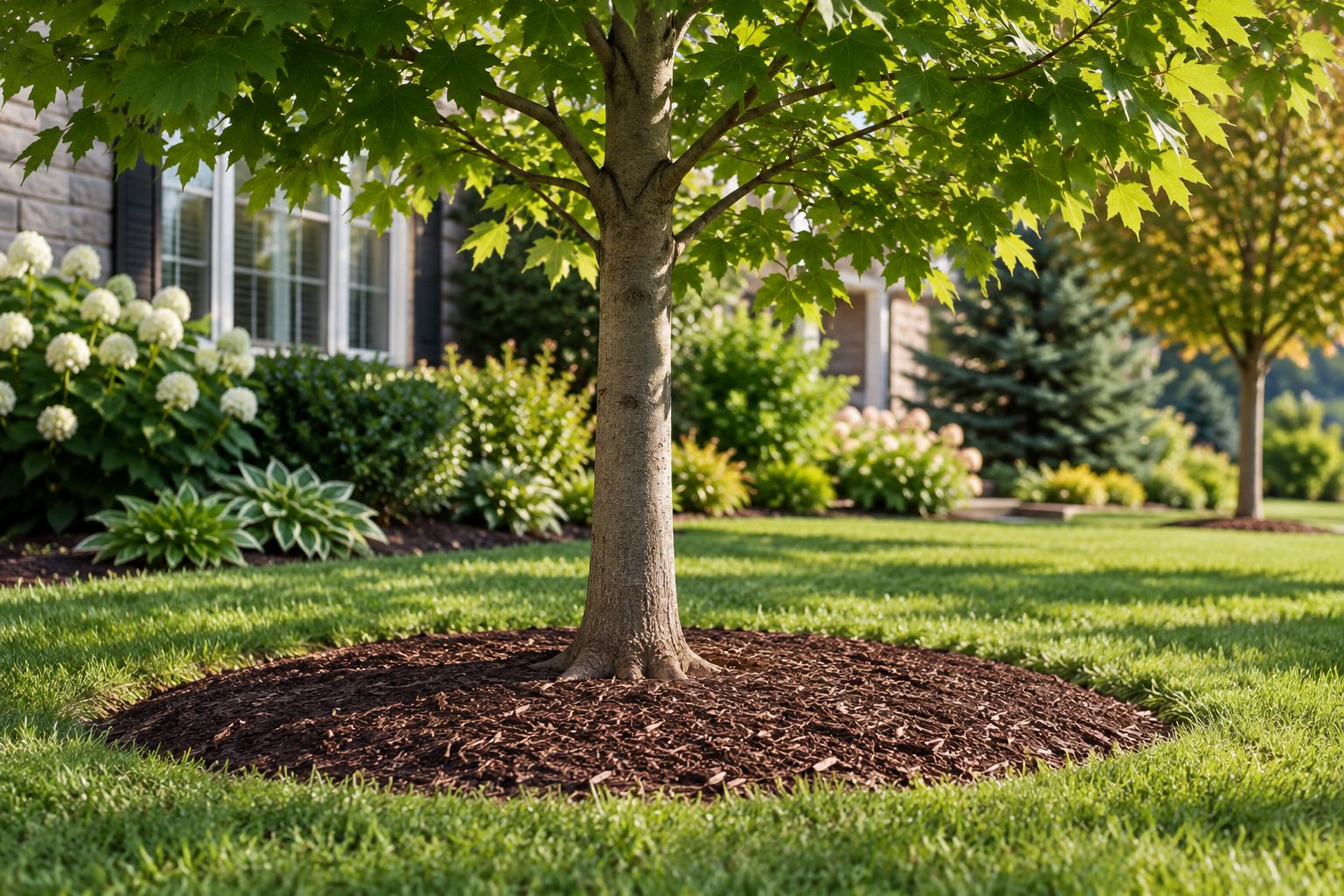
A proper planting also leaves the root flare visible and keeps mulch away from the trunk. Piling mulch against bark does not make the tree easier to maintain.
Replacing an existing tree? Set the scope first
A replacement plan starts with the tree already on the property. Do not assume that planting something smaller requires removing a healthy tree; ask whether appropriate pruning addresses the actual concern.
For a planned 2026 removal, ask Spartantreeny for an individual estimate that addresses access, nearby structures, stump work, and cleanup. Discuss how the crew will handle the work area and what remains when the job is finished.
Get the details in writing:
- Which tree and branches are included.
- Whether stump grinding is included.
- Whether wood and chips leave the property.
- What cleanup and surface restoration are included.
- Where a replacement could go without repeating the same clearance problem.
Careful removal, a clear cleanup scope, and direct discussion with the crew matter more than a quick online number. Tree size and equipment access change the job; a species list cannot price it.
Request an individual tree estimate
Discuss removal, access, stump work, cleanup, and your replacement planting plans.
How these trees were ranked
This 2026 ranking prioritizes mature fit, soil compatibility, cleanup, and predictable care—not flower color alone. Species characteristics follow established horticultural descriptions published by sources such as NC State Extension and the Missouri Botanical Garden; the ranking is an editorial recommendation, not a local performance trial.
Swamp white oak takes the large-yard default because it combines useful shade with tolerance of varied moisture conditions. American hornbeam wins the smaller, partly shaded slot. The remaining choices address specific preferences rather than replacing those defaults.
Which tree should you choose?
Choose swamp white oak if you have a large yard and want lasting shade. Choose American hornbeam if your space is smaller, partly shaded, and reasonably moist. Those are the clearest starting points.
For your 2026 planting plan, choose serviceberry for birds and flowers, eastern redbud for a sheltered ornamental spot, or a male Kentucky coffeetree for a sunny, open property. If none fits the site, change the shortlist—not the tree’s natural size through repeated cutting.
FAQ
What’s the best low-maintenance tree for a Rochester yard?
Swamp white oak is the default recommendation for a large Rochester yard with room for its mature crown. American hornbeam is the better starting point for a smaller, partly shaded site with suitable soil moisture.
Which small tree creates the least fruit cleanup?
American hornbeam avoids the fleshy fruit cleanup associated with serviceberry. It still drops leaves and other natural material, so no deciduous tree is cleanup-free.
Is serviceberry better than eastern redbud?
Serviceberry is better when birds and fruit are part of your goal; eastern redbud is better when spring flowers are the main priority. Both need a suitable site, and neither is the strongest choice for someone seeking almost no oversight.
Can I plant one of these trees under power lines?
Do not assume any tree on this list fits beneath power lines. Confirm the utility’s planting guidance and the exact selection’s mature dimensions before buying.
Do low-maintenance trees need watering after planting?
Yes, newly planted trees need watering attention while roots establish. Check moisture in the root ball and surrounding soil rather than watering only by the calendar.
Should I remove my old tree before planting a new one?
Remove an existing tree only when its condition or the property plan justifies removal. Have the tree and replacement location assessed before treating removal as the automatic first step.
What should I ask before getting a tree estimate in 2026?
Ask what removal, stump work, debris hauling, and cleanup the estimate includes. Also explain your replacement planting plan so access and the finished work area are discussed before work begins.
One last thing
Spend as much attention on the planting position as the species name. Moving a proposed tree away from a roofline, walkway, or cramped strip is easier before planting than correcting the conflict later.
For Rochester homeowners planning replacement planting, Spartantreeny provides tree removal and tree care services. Start with the existing tree, the available space, and a clear estimate—not a promise that any tree is maintenance-free.