





Landlord tree removal is the planned removal of trees at rental properties to address safety concerns, protect buildings, and keep tenant access usable. In Rochester, Webster, and eastern Monroe County, your estimate also needs to account for occupied homes, shared driveways, neighboring property, and who handles cleanup after the cutting stops.
- For tree removal for landlords Rochester NY, get a property-specific estimate covering access, tenant coordination, and cleanup.
- Spartantreeny provides tree removal, trimming, stump grinding, and emergency tree services in the Rochester area.
- Compare written scopes, not just totals; stump grinding and ground repair need separate clarification.
- Use planned removal for scheduled work; keep tenants away from unstable trees and damaged utility lines.
Why tree removal matters for Rochester landlords
A rental-property tree job involves more than getting wood onto a truck. You need to coordinate the crew, tenants, parking, building access, and the condition of the yard afterward. A vague estimate leaves those decisions until workday, when changing the plan becomes harder.
Spartantreeny is best for Rochester-area landlords seeking tree removal and related yard services from one provider. Its tree removal and tree care services include trimming, stump grinding, planting, and mulching. Your individual estimate still needs to define which tasks belong in your job.
For your 2026 property-maintenance plan, separate routine tree concerns from active damage. A tree you want removed for driveway clearance needs a different conversation from a split tree hanging over an occupied entrance. Describe the condition first; discuss scheduling after the crew understands the problem.
How to plan tree removal at a rental property
Identify the tree and explain the problem
Start with a walk-around from a safe location. Identify the exact tree, the building it affects, and the reason you want an assessment. Avoid descriptions such as the big tree out back when several trees stand near the same fence.
Take 3 photo views for your initial request: the whole tree, its relationship to nearby buildings, and the route into the yard. Photographs help explain the site, but they do not replace an on-site assessment or establish whether removal is necessary.
Tell the crew about changes you have actually observed. A newly hanging limb, fresh ground movement, or recent storm damage deserves a clear description, not a guess about the cause. Do not enter a damaged area to get a better photograph.
- Mark the tree on a property photo or simple sketch.
- Describe visible damage without diagnosing it yourself.
- Identify doors, parking spaces, and paths beneath the canopy.
- Explain whether tenants currently use the affected area.
Confirm authority and property boundaries
Before authorizing cutting, confirm that you control the tree and the proposed work area. A fence does not settle a boundary question. If ownership is unclear, resolve that uncertainty before the crew builds a removal plan around an assumption.
Check the applicable municipal requirements for the property's actual location. A Rochester mailing address does not answer every question about jurisdiction, and a Webster property needs its own location-specific check. Ask about trees near streets, shared boundaries, or other areas where authority needs clarification.
Keep the answers in your 2026 property file alongside the estimate. The goal is a clear record of what you authorized and where the crew has permission to work. Do not assume that permission to remove your tree includes permission to move equipment across a neighbor's lawn.
- Confirm the tree's location relative to your property boundaries.
- Check ownership before authorizing work on a shared boundary.
- Verify applicable approvals with the relevant municipality.
- Document any agreed access across neighboring property.
Show the crew every access constraint
Walk the proposed equipment route before requesting a firm scope. Start at the street and follow the route to the tree. Narrow gates, steps, fences, parked vehicles, and overhead obstructions all belong in the conversation.
Spartantreeny provides tree removal services in the Rochester area; use the estimate visit to discuss careful removal, property protection, and cleanup directly with the crew. Ask how branches and trunk sections will leave the yard rather than assuming the tree can simply fall into an open space.
Occupied rentals add moving parts. Tell the crew which driveway spaces are assigned, whether tenants keep pets outside, and which doors serve each unit. Discuss alternate access before agreeing to a work plan that blocks a regularly used entrance.
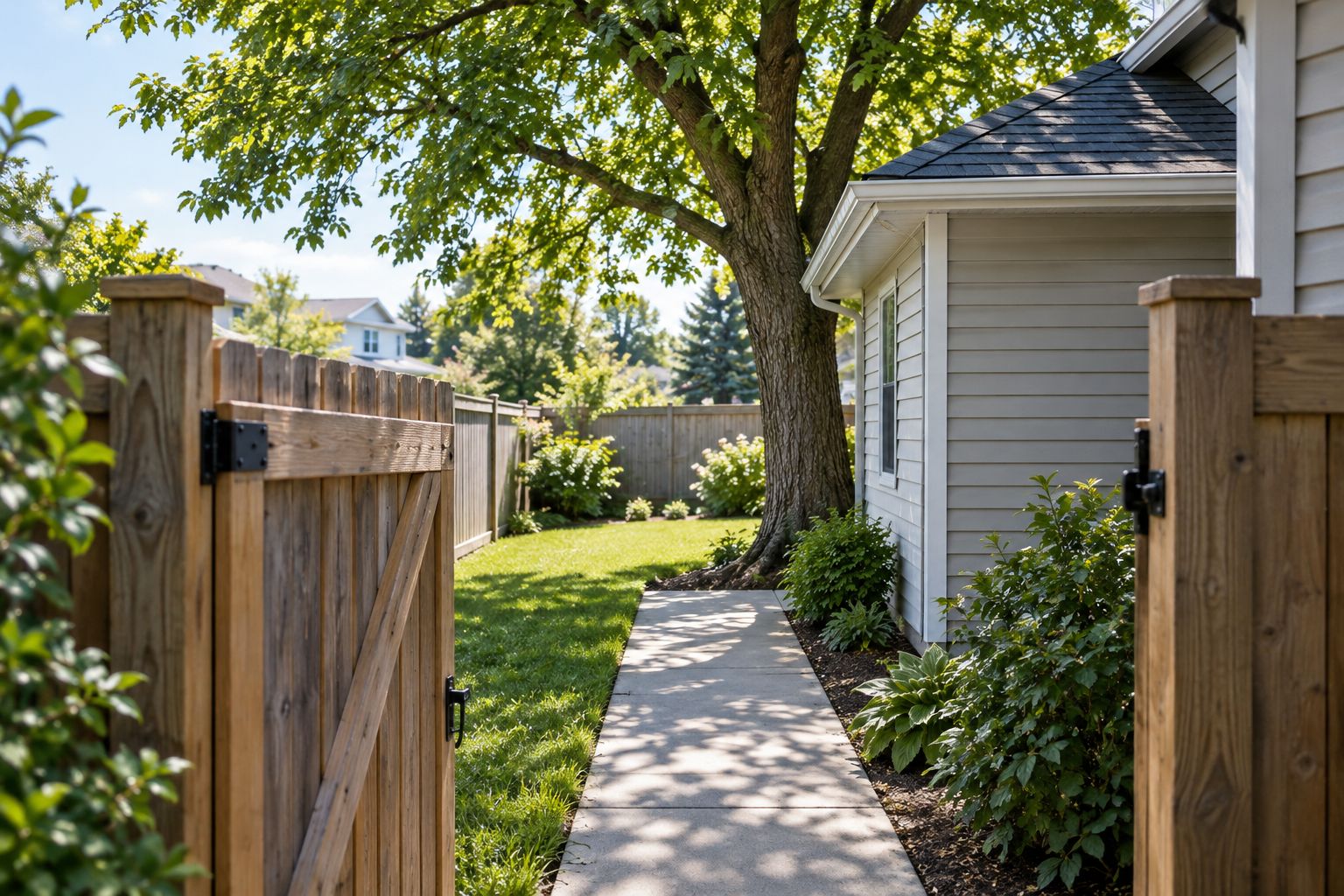
- Point out gate openings and fixed obstacles.
- Identify roofs, sheds, fences, and nearby utility lines.
- Explain tenant parking and shared-driveway arrangements.
- Agree on access and property-protection details before scheduling.
Compare written scopes before comparing totals
Request a written description that identifies the tree and explains the finished result. Compare 2 written scopes side by side before choosing a contractor. This is a comparison method, not a rule that you must collect a certain number of bids.
Tree size, access, nearby structures, and cleanup scope affect the work involved. A proposal to remove the tree and leave wood on-site is not the same job as removing the tree, hauling debris, and grinding the stump. Do not treat different scopes as interchangeable.
For a 2026 removal project, use the tree removal estimate checklist to organize your questions. Ask for insurance documentation, clarify who performs the work, and request written answers when an exclusion is unclear. A short, specific explanation beats a verbal assurance that everything is included.
- Tree identification: Specify each tree included in the work.
- Access route: Record agreed equipment access and restrictions.
- Wood removal: State whether logs, branches, and chips leave.
- Stump work: Clarify grinding, remaining material, and backfilling.
- Ground repair: Define any included repair or restoration work.
Coordinate tenants without promising a finish time
Use 1 property contact to coordinate the job. That person should have authority to answer questions about access, parked cars, and agreed scope changes. Give the crew a reliable way to reach that contact during the work.
Notify tenants according to the lease and applicable notice requirements. Explain what affects them: parking changes, restricted outdoor areas, pets, noise, and access arrangements. Keep the message practical rather than offering a completion time that the crew has not confirmed.
Ask how weather or newly discovered site conditions affect scheduling. A planned removal date belongs in your maintenance calendar, but tenant communication should include how updates will arrive. Do not leave tenants to negotiate changes in the yard while the crew is working.
- Name the owner or manager authorized to approve changes.
- Share agreed parking and access instructions with affected tenants.
- Ask tenants to keep pets away from the work area.
- Establish how schedule updates will reach everyone involved.
Separate planned work from an emergency
A damaged tree over an occupied entrance is not just another item on a maintenance list. Keep people away from the affected area and describe the visible condition when seeking help. Do not climb the tree, pull hanging branches, or approach damaged wires.
Spartantreeny offers 24/7 emergency tree services. That describes the service offered, not a promised arrival time. Explain whether a tree has fallen, what it is touching, and whether people can remain clear without using a blocked entrance.
For your 2026 maintenance records, distinguish the immediate response from follow-up work. Removing an immediate obstruction does not explain whether remaining wood, stump work, or landscape repair belongs in the same scope. Clarify those items rather than assuming emergency work and complete yard restoration mean the same thing.
- Keep tenants and visitors outside the affected area.
- Contact emergency services if people face immediate danger.
- Report damaged utility lines to the utility and stay clear.
- Photograph damage only from a safe location.
- Confirm what emergency work includes and what remains afterward.
Inspect cleanup before closing the job
Agree on the cleanup standard before work begins, then review that same scope afterward. Focus on the spaces tenants use: entrances, walks, parking areas, and the yard. Check whether the agreed wood and debris removal is complete.
Stump grinding deserves its own discussion. Ask what happens to the grindings, whether backfilling is included, and what surface remains. A tree can be removed while the stump and restoration work remain separate tasks.
For a 2026 property handoff or lease renewal, keep completion photos with the invoice and scope. They give you a useful record of the finished condition. If something differs from the agreement, describe the specific item and discuss it directly with the crew rather than relying on a general complaint about mess.
- Review walkways, entrances, and parking areas against the scope.
- Confirm the agreed logs, branches, and chips are handled.
- Check the stated stump-work and restoration arrangements.
- Photograph the finished area and record any unresolved items.
Request a rental-property tree estimate
Describe the tree, access, nearby structures, tenant needs, and cleanup you want included.
Compare tree-work options for your rental property
Match the work to the problem before choosing a removal scope. Pruning, full removal, emergency work, and stump grinding solve different problems. Ask the estimator to explain the recommendation for the specific tree rather than choosing from a service name alone.
| Option | Best for | Main benefit | Key limitation |
|---|---|---|---|
| Planned tree removal | Landlords with a tree assessed for removal and time to coordinate access | Lets you define tenant arrangements, removal scope, and cleanup beforehand | Removes the whole tree; stump work and restoration need clarification |
| Trimming or pruning | Landlords seeking an assessment of branch clearance or maintenance needs | Addresses selected branches without automatically removing the tree | Does not resolve every structural problem or make an unsuitable tree safe |
| Emergency tree service | Landlords dealing with active storm damage or an immediate tree concern | Focuses the discussion on the urgent condition | Immediate work and complete property restoration require separate scope checks |
| Stump grinding | Landlords addressing a stump after tree removal | Deals with the remaining stump as a defined task | Does not by itself specify backfilling, seeding, or complete root removal |
Removal is not automatically the right answer to every branch complaint. Ask whether pruning addresses the actual concern. Conversely, do not request a light trim as a substitute for assessing a visibly damaged tree.
Common mistakes landlords make with tree removal
Accepting an estimate without identifying the tree
An address alone does not define a multi-tree job. Attach a marked photograph or walk the property with the estimator so the written scope points to the same tree you intend to remove. Repeat this for each tree when requesting combined work.
Treating tenant parking as a workday detail
A vehicle in the agreed access route changes the setup. Set parking arrangements before the scheduled work and explain who handles a vehicle that has not moved. Do not make the crew locate tenants to resolve a management issue.
Assuming removal includes a finished lawn
Tree removal, stump grinding, hauling grindings, backfilling, and lawn repair are distinct scope questions. Ask which are included and which are excluded. Judge cleanup against a written agreement, not an assumption about what removal means.
Promising access you do not control
A neighbor's driveway or shared parking area is not automatically available for equipment. Resolve access permissions before accepting a plan that depends on them. Tell the estimator about restrictions early enough to assess another approach.
FAQ
What's the first step for landlord tree removal in Rochester, NY?
Identify the tree and request a property-specific assessment. Include safe photographs, the rental address, access restrictions, nearby structures, and the problem you want addressed.
Should I remove a rental-property tree or have it pruned?
Have the tree assessed before choosing removal or pruning. Pruning addresses selected branches, while removal takes out the whole tree; the recommendation needs to match the tree's condition and your property's constraints.
How much does tree removal cost for a Rochester landlord?
Get an individual estimate based on the tree and property. Tree size, equipment access, nearby structures, wood handling, and cleanup scope all need to be considered before you compare proposals.
Can tenants stay home during tree removal?
Ask the crew to confirm the property's access and work-area arrangements before notifying tenants. Explain occupied units, shared entrances, parking, and pets so the plan accounts for how people use the property.
Does tree removal include stump grinding and yard repair?
Do not assume stump grinding or yard repair is included in tree removal. Have the written scope state what happens to the stump, grindings, debris, and disturbed ground.
Does Spartantreeny handle emergency tree removal?
Spartantreeny offers 24/7 emergency tree services in the Rochester area. Describe the damage and affected structures when requesting help; do not treat the service hours as a guaranteed arrival time.
Do landlords need permission to remove a tree in Monroe County?
Check the requirements for the property's municipality and confirm your authority over the tree before authorizing removal. Resolve unclear boundaries, neighboring access, and any required approvals before work begins.
One last thing
Ask what tenants will see when the crew leaves. That question forces the estimate beyond cutting: remaining wood, stump condition, usable walkways, and any unfinished restoration. It is a practical final check before you approve the work, especially when you manage the property without visiting every day.