





Tree removal cost varies because tree size, access, nearby structures, tree condition, and cleanup scope change the work required to remove it safely. For homeowners in Rochester, Webster, and eastern Monroe County comparing estimates in 2026, the key is a written scope: taking down a tree does not automatically include hauling every piece away, grinding the stump, or repairing the lawn.
- Tree removal cost depends on the work involved, not tree height alone.
- Compare removal estimates with the same hauling, stump grinding, and cleanup requirements.
- Spartantreeny provides tree removal and stump grinding; ask which services your individual estimate includes.
- Show the estimator gates, nearby structures, overhead wires, and the route into your yard.
Why do tree removal quotes vary by size, access, and cleanup?
Different quotes often describe different jobs. A crew removing a tree beside a house must plan around that structure. A crew removing a similar tree in an open yard faces a different setup, even when the trees look alike from the street.
If you are considering Spartantreeny for tree removal, ask for an individual estimate that identifies the tree, access route, debris handling, and stump work. Keep those details consistent when comparing other estimates.
| Work included | Best for | What to confirm | Trade-off |
|---|---|---|---|
| Removal with wood retained | Homeowners who want usable wood and can handle it | Where wood stays and whether it is cut into manageable sections | You remain responsible for moving or processing it |
| Removal with debris hauling | Homeowners who want the removed material taken away | Whether branches, trunk sections, and loose debris are included | Stump work and lawn repair still need separate confirmation |
| Removal with stump grinding | Homeowners who also want the remaining stump addressed | Grinding scope, grindings removal, and backfill | Grinding does not automatically include full root removal or a finished lawn |
These are scope choices, not standardized service packages. Ask the estimator to describe the finished condition of your property rather than relying on a phrase such as complete removal.
Why this matters
For a planned removal in 2026, a useful estimate answers a practical question: what will your yard look like when the crew leaves? A quote that leaves wood behind cannot be compared directly with one that includes hauling it away.
You also need to know what happens between the driveway and the tree. Gates, landscaping, patios, sheds, and utility lines affect how the crew approaches the job. Point them out during the visit, not after you accept the estimate.
Spartantreeny is best suited to Rochester-area homeowners seeking tree removal with an individually defined scope. Ask directly about careful removal, cleanup expectations, and who you will speak with on the crew; put the agreed details in writing.
Tree size: more than height
A taller tree can require more cutting and material handling, but height alone does not describe the job. Trunk thickness, canopy spread, and the arrangement of large limbs also matter.
A broad canopy extending over a garage creates a different removal problem from a narrow canopy over open ground. The estimator needs to see where the branches sit, what is below them, and where the material can be handled.
Ask the crew to identify the parts of the tree that drive the removal plan. That explanation is more useful than a quote based only on a homeowner's rough height estimate.
Do not climb the tree or stand beneath damaged branches to gather measurements. Photos taken from a safe position can help start the conversation, but they do not replace an assessment of the site.
Access: the route matters as much as the tree
A tree beside an accessible driveway presents different handling choices from one behind a narrow gate. The access route affects how workers, tools, equipment, and removed material move through your property.
Walk the proposed route with the estimator. Identify fence openings, tight turns, steps, slopes, soft ground, and landscaping you want protected. Mention anything beneath the route that is not obvious, such as a septic system or buried irrigation.
The point is not to choose the crew's equipment yourself. It is to make sure the estimate reflects the actual yard, including restrictions that affect the work.
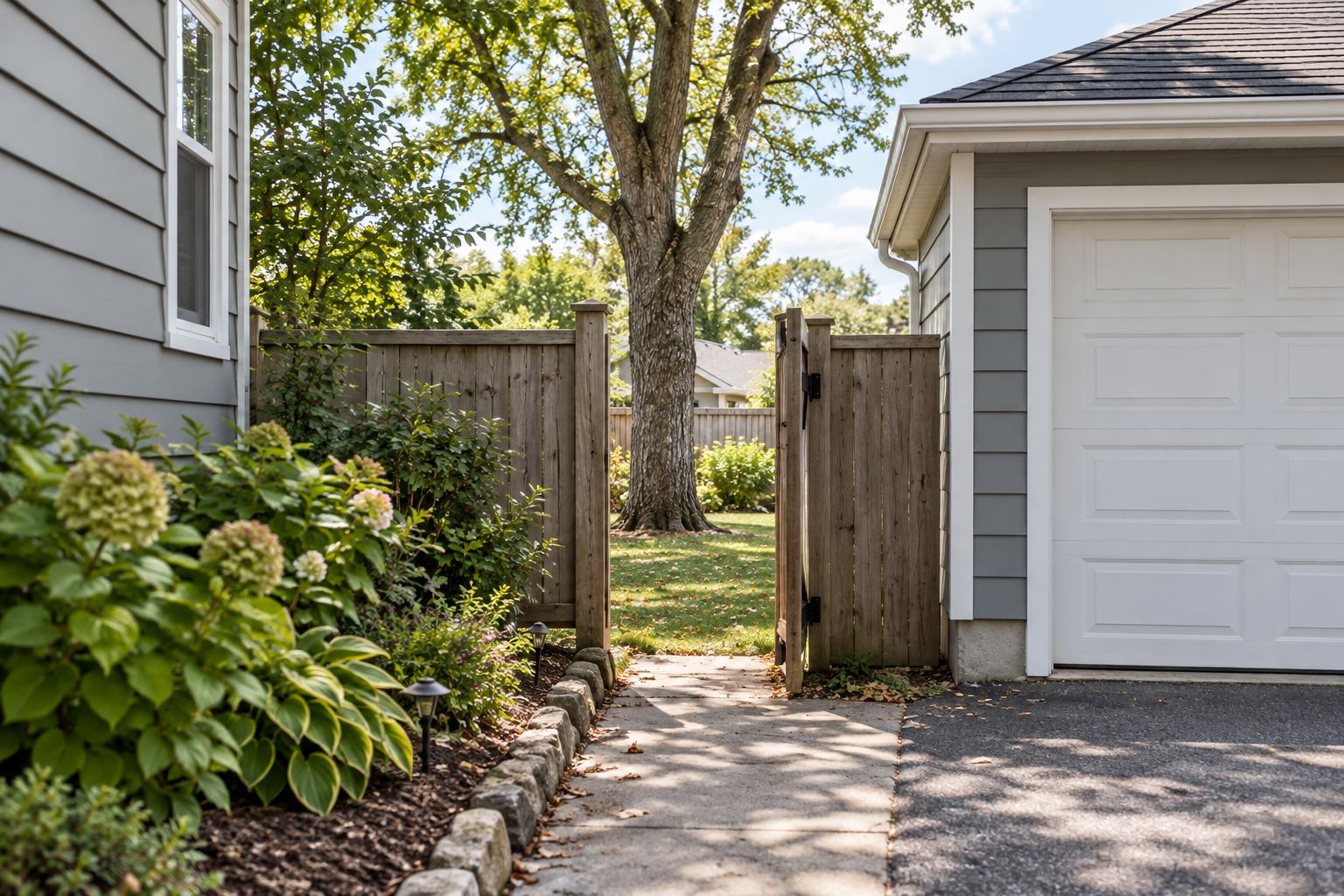
Before a planned removal in 2026, confirm whether the crew needs you to move vehicles, outdoor furniture, planters, or other belongings. Ask what happens if the planned route is unsuitable on the workday. Access arrangements should be settled before cutting begins.
Nearby structures: less room changes the removal plan
A house, garage, fence, pool, or neighboring building limits where branches and trunk sections can go. Removal planning must account for those obstacles rather than treating the tree as though it stands in an empty field.
Ask how the crew plans to control material near the structure. You do not need a lesson in rigging, but you should understand which areas need to stay clear and what property protection is included.
Overhead electrical lines require a separate safety conversation. Do not touch a tree, branch, fence, or other object that is contacting a power line. Keep away and contact the utility; use emergency services when there is immediate danger.
A quote comparison should never reward a plan that ignores an obvious obstacle. Compare the removal scope and site precautions before comparing the bottom line.
Cleanup: define what leaves and what stays
Cleanup is where a vague estimate creates avoidable disagreement. Removing branches, hauling trunk sections, raking loose debris, and restoring disturbed ground are different tasks.
Use plain questions during the estimate:
- Branches: Will all cut branches leave the property?
- Trunk wood: Will the crew haul it away or leave it in an agreed location?
- Loose debris: What raking or blowing is included?
- Stump: Does the estimate include grinding, or does the stump remain?
- Ground finish: Who handles grindings, backfill, seed, or other restoration?
If you want wood retained for firewood, agree on where it goes and how it will be left. Keeping wood is useful only if you can manage the remaining work; a pile in the wrong place becomes another project.
For a 2026 estimate, ask the crew to describe cleanup in observable terms. Branches hauled away and driveway cleared are clearer instructions than a promise to leave everything tidy.
Stump grinding: a separate scope to check
Cutting a tree down leaves a stump unless the agreed work addresses it. Stump grinding is a separate operation, so do not assume it is included because the estimate says tree removal.
Ask what area the grinding covers and what remains afterward. Grinding produces wood material mixed with soil; removing that material and preparing the area for grass or planting requires its own agreement.
Spartantreeny offers tree removal and stump grinding. Confirm whether your estimate includes both, how the work is coordinated, and who handles the remaining grindings.
Be specific about your next use for the space. A lawn repair, a planting area, and a construction project have different requirements. Tell the estimator your goal without assuming stump grinding alone prepares the site for all of them.
Why tree removal cost varies
These factors explain the work behind an individual estimate. Use them to ask better questions, not to calculate a guaranteed quote from a photograph.
- Tree size and shape: Height, trunk thickness, canopy spread, and large limbs affect cutting and material handling.
- Access: Gates, slopes, ground conditions, and the hauling route affect how the crew reaches the tree.
- Nearby structures: Buildings, fences, landscaping, and overhead lines constrain the removal plan.
- Tree condition: Dead, broken, or damaged sections affect how the crew approaches the work.
- Cleanup scope: Retaining wood, hauling debris, grinding the stump, and restoring ground are different commitments.
- Urgency: A planned removal and an active storm hazard require different scheduling and safety decisions.
The useful question is which factors apply to your tree. Ask the estimator to explain those factors on site and reflect the agreed work in the written estimate.
How do you compare tree removal estimates fairly?
Compare the same tree, the same access assumptions, and the same finished result. If one estimate leaves the stump and another includes grinding, first ask for matching scopes.
Use this sequence before approving work:
- Identify the tree. Make sure every estimate clearly identifies the tree or trees being removed.
- Confirm access. Agree on the entry route, staging area, and anything you must move beforehand.
- Set debris handling. Decide whether wood stays, where it stays, and what gets hauled away.
- Separate stump work. Confirm grinding, grindings handling, and any ground restoration.
- Check the contractor. Request insurance documentation and a written scope; clarify who performs the work and answers questions.
- Confirm changes. Ask how additional work or a changed scope will be approved before it happens.
For planned tree removal in Rochester, Webster, or eastern Monroe County in 2026, keep the accepted estimate where you can refer to it. Share any access changes with the crew before the scheduled work.
Request an individual tree removal estimate
Discuss the tree, access route, hauling, stump work, and the cleanup you want included.
Can photos give you an accurate tree removal quote?
Photos help explain the job, but they do not show every site condition. A useful set shows the whole tree, the trunk base, nearby buildings, and the access route from safe positions.
Do not enter a damaged area to get a better angle. Let the estimator know about visible breaks, hanging branches, or a recent change in the tree's position, and follow any safety instructions before arranging a closer inspection.
Is planned removal different from emergency removal?
Planned removal gives you time to define the work before a crisis. An unstable tree, hanging limb, or tree resting on a structure needs a safety assessment rather than routine quote shopping.
Keep people and pets away from the affected area. Tell the service provider what the tree is touching and whether electrical lines are involved; do not attempt to move damaged wood yourself.
FAQ
Why is my tree removal quote different from my neighbor's?
Your tree removal quote reflects your tree and your property, not your neighbor's. Access, tree condition, nearby structures, debris hauling, and stump work can differ even on adjacent lots.
Does tree removal include stump grinding?
Tree removal includes stump grinding only when the agreed scope says so. Ask separately about grindings removal, backfill, and preparation for lawn repair or planting.
Can I get a firm tree removal cost from a photo?
A photo alone does not establish every condition needed for a firm tree removal estimate. Ask whether an on-site assessment is needed to confirm access, obstacles, condition, and cleanup requirements.
Will keeping the wood change my tree removal estimate?
Keeping the wood changes the hauling scope, but it does not guarantee a lower estimate. Agree on where the wood stays, how it is left, and who handles further cutting or moving.
What should I ask about cleanup before hiring a tree service?
Ask whether cleanup includes branches, trunk sections, loose debris, stump grindings, and disturbed ground. Put the agreed result in writing so removal and restoration are not confused.
What should Rochester homeowners prepare before an estimate?
Identify the tree, show the access route, and explain what you want left behind or removed. Mention nearby structures, overhead wires, buried systems, and your plans for the space after removal.
One last thing
Tell the estimator what you want to do with the space after the tree is gone. That single detail helps expose missing work before you accept an estimate.
If you want grass, ask about grindings and ground preparation. If you want to keep the wood, choose its location before the crew starts. The right scope ends with a usable yard, not an unexpected second project.