





HOA tree removal is the planned removal of trees on association-managed property to protect shared spaces, nearby homes, and resident access. For homeowners and board members in Rochester, Webster, and eastern Monroe County, a workable plan starts with ownership, written approval, and a site-specific estimate—not a crew arriving before everyone agrees on the scope.
- Tree removal for HOAs Monroe County NY starts with ownership, board authority, and a written scope.
- Spartan Tree and Landscape fits Rochester-area property owners seeking tree removal, stump grinding, and related yard services.
- Compare estimates using identical trees, access requirements, debris removal, and restoration expectations.
- Keep urgent storm hazards separate from your planned tree care schedule.
Why tree removal matters for Monroe County HOAs
An HOA removal affects more than the homeowner closest to the trunk. Equipment access, parking restrictions, shared lawns, and cleanup can involve several households, even when only one tree comes down.
For your 2026 tree work plan, separate three questions: who owns the tree, who can authorize work, and what the contractor must finish. A board vote does not establish a property boundary or settle a municipal requirement. Start with the Monroe County tree removal permit guide, then confirm requirements with the municipality responsible for the address.
A useful estimate describes the whole job, not just cutting down the tree. You need enough detail to explain the decision to residents and compare contractors without guessing what each proposal leaves out.
How to plan HOA tree removal in 2026
Confirm ownership and approval authority
Start with association records, the recorded property information available to you, and your governing documents. A tree beside a shared driveway is not automatically an association-owned tree. Likewise, a tree serving as a privacy screen does not establish which party controls it.
Identify the person authorized to sign the agreement before requesting a work date. If the boundary or the association's authority remains disputed, resolve that question before authorizing removal; a contractor's estimate is not a boundary determination or legal opinion.
Keep the ownership record attached to the project file. Future board members should be able to understand why the association approved the work without reconstructing an email chain.
- Mark the tree on a site map and identify the parcel involved.
- Check the governing documents for maintenance and approval responsibilities.
- Record the board decision and the authorized signer.
- Confirm municipal requirements and any applicable property restrictions.
Build a tree list before collecting estimates
Walk the property from accessible ground and make a simple inventory. Give each tree a unique label, such as Courtyard Maple or North Parking Tree, so every contractor prices the same work. Avoid descriptions such as the bad tree behind the houses when several trees fit.
Take 3 site photos per tree as a practical starting point: the whole tree, its base, and its surroundings. Photograph only from a safe location. Visible cracks, broken limbs, or a changing lean belong in the request, but photographs do not establish whether a tree is safe or whether removal is necessary.
Separate the board's concern from the proposed solution. A complaint about branches over parking spaces needs an assessment, not an automatic removal order.
- Give each tree a label that matches the site map.
- Note nearby roofs, fences, sidewalks, utilities, and parked vehicles.
- Record whether the concern involves condition, clearance, or a planned project.
- Identify trees needing assessment before the board decides on removal.
Request an on-site estimate with the crew
You can prepare the request yourself using a marked map, photographs, and a written list of questions. Then arrange a site visit so the contractor can assess access, nearby structures, and the work involved. Send the same information to every contractor you consider.
Spartan Tree and Landscape is best for Rochester-area property owners seeking tree removal and related yard services. Its listed services include trimming, stump grinding, planting, and mulching, which lets you discuss the work beyond removal without assuming those tasks are included.
When discussing Spartan Tree and Landscape tree removal, make careful dismantling, thorough cleanup, and direct communication with the crew part of the estimate conversation. Those expectations still belong in writing. The website's service list does not replace a property-specific scope.
- Arrange access to the affected common area for the site visit.
- Ask who will explain the work and handle questions on removal day.
- Request a written description of removal, debris handling, and exclusions.
- Request insurance documentation and verify that it applies to the work proposed.
Map access and protect shared spaces
Walk the proposed equipment route before approving the plan. A tree beside an open lawn presents different access questions from one behind attached homes, beside a fence, or near resident parking. Tell the contractor about irrigation, drainage features, septic components, and other known underground installations.
Identify 2 access routes if the property allows: the preferred route and an alternative for discussion. Do not assume the crew can use either route until it has assessed them. Gate width, slopes, ground condition, and overhead clearance all belong in that conversation.
A marked plan also helps residents understand where not to park. Keep the route specific enough that a different board member can explain it without walking the whole property again.
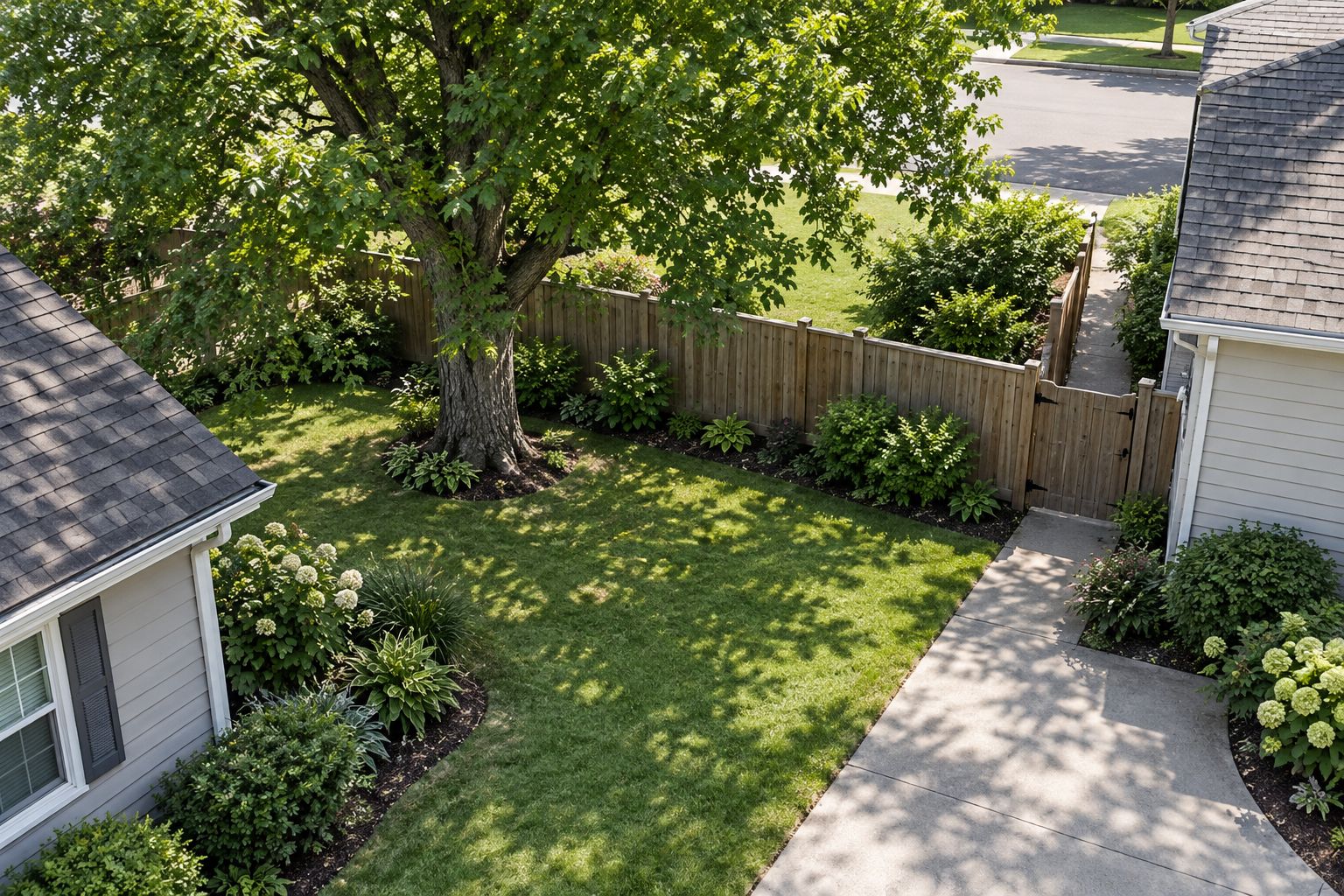
- Mark approved entry points and areas where equipment must not travel.
- Identify known irrigation lines, drains, and other buried features.
- Agree on parking restrictions and resident access arrangements.
- Ask how the crew will address lawn protection and weather-related changes.
Compare the same scope before approving work
Put the estimates side by side and check what each includes. Tree size matters, but so do access, nearby structures, debris handling, stump work, and the requested finish. A proposal that leaves logs on site is not the same job as one that removes the wood.
For a 2026 board decision, keep a 4-part scope: removal, debris handling, stump work, and site finish. Each part should say what happens, including work that is excluded. Stump grinding, removal of grindings, soil replacement, and seeding are separate questions; do not treat them as interchangeable.
Ask for clarification before voting rather than relying on a verbal explanation that only one board member heard. Keep the accepted revision with the agreement.
- Match the tree labels and work descriptions across proposals.
- Specify whether logs, branches, and chips leave the property.
- Identify stump grinding and handling of the resulting material separately.
- Define the expected condition of lawns, paths, and planting beds afterward.
Notify residents and prepare the work area
Send a resident notice after the work arrangements are confirmed. State which area is affected, what residents need to move, and who handles questions. Share the agreed work arrangements without promising an exact finish time that the contractor has not committed to.
Use one board contact for scope decisions. Individual residents should not redirect the crew, add trees, or request extra cutting during the job. If someone raises a concern, route it through that contact and keep residents outside the work area.
Treat the schedule as an agreed plan with a change process. Your 2026 notice should explain how residents will receive an update if weather or site conditions change the arrangements.
- Identify vehicles, furniture, and other items residents must move.
- Explain temporary restrictions on walkways, parking, and shared spaces.
- Name the board contact for questions and requested changes.
- Confirm how the association and contractor will communicate schedule changes.
Inspect cleanup and close the project file
Walk the completed area with the written scope in hand. Check the items you actually purchased rather than assuming a general promise of cleanup includes stump removal, new soil, or lawn restoration. Photograph the finished area from the same safe viewpoints used before work.
Careful removal and thorough cleanup need a shared definition. A resident expecting a ready-to-seed lawn will judge the result differently from a contractor instructed only to remove wood and brush.
Close the file with the accepted estimate, approved changes, completion photographs, and any remaining work. Record replacement planting as a separate decision when it was not included in the removal agreement.
- Check that the correct trees and agreed stump work are complete.
- Review debris removal and the condition of access routes.
- Record unfinished items against the written scope.
- Store the agreement, communications, and completion photographs together.
Compare tree care options for an HOA
Removal is not the right starting assumption for every complaint. Ask the contractor to explain the proposed work in relation to the tree's condition and the association's objective. Each option below solves a different problem and has a different limit.
| Option | Best for | Main advantage | Key limitation |
|---|---|---|---|
| Planned tree removal | A tree selected for removal after assessment | Lets the board coordinate access, approval, and cleanup | Removes the tree and its existing screening or shade |
| Trimming or pruning | A tree suitable for retention with a defined branch-management need | Keeps the tree while addressing specific branches | Does not make every damaged or declining tree safe to retain |
| Emergency tree service | An urgent tree hazard requiring prompt professional attention | Focuses the response on the immediate problem | Does not replace a planned property-wide maintenance scope |
| Stump grinding after removal | A removed tree whose stump conflicts with the intended site use | Addresses the remaining stump | Does not automatically include soil replacement or seeding |
Spartan Tree and Landscape lists tree removal, trimming, stump grinding, and 24/7 emergency tree services. The limitation is scope: listing those services does not make every task part of your agreement. Request an individual estimate and confirm which work belongs in the planned project.
Request a site-specific tree estimate
Discuss the trees, equipment access, nearby homes, and cleanup scope before the board approves work.
Common mistakes Monroe County HOAs make
Treating resident concern as removal approval
A homeowner's concern deserves a documented response, but it does not establish ownership or authorize work. Confirm the association's responsibility and arrange an assessment before turning a complaint into a removal instruction.
Comparing different cleanup scopes
One estimate includes hauling wood away; another leaves it for the association to handle. Compare the finished condition, not just the removal description. Put stump work and lawn repair in their own lines.
Letting several people direct the crew
Conflicting instructions create uncertainty about what the association approved. Name one authorized contact and require written approval for scope changes before additional work begins.
Mixing urgent hazards into routine scheduling
A hanging limb over an occupied area is not simply another item for the next board meeting. Keep people away and seek professional help; call 911 for an immediate threat to life and contact the utility when wires are involved. Do not approach or attempt cleanup around downed wires.
FAQ
Who approves tree removal in an HOA in Monroe County?
The approving party depends on tree ownership and the association's governing documents. Confirm maintenance responsibility, board authority, and the authorized signer before scheduling work.
Does an HOA need a permit to remove a tree in Monroe County?
Confirm requirements with the municipality responsible for the property's address before authorizing removal. HOA approval does not replace municipal review or resolve property restrictions.
What should an HOA tree removal estimate include?
An HOA tree removal estimate should identify the trees, removal scope, access arrangements, debris handling, stump work, and exclusions. Define the expected site condition afterward so the board and crew share the same understanding.
Can an HOA keep a tree by pruning it instead?
Pruning is an option when an assessment supports retaining the tree and the proposed cuts address the actual problem. Do not assume pruning resolves structural defects or that every branch complaint requires removal.
Is stump grinding included with HOA tree removal?
Stump grinding is included only when the accepted agreement includes it. Confirm handling of grindings, soil replacement, and seeding separately rather than assuming the lawn will be restored.
Can Spartan Tree and Landscape provide emergency tree service?
Spartan Tree and Landscape lists 24/7 emergency tree services for the Rochester area. Confirm the arrangements for your situation directly; emergency availability does not establish an arrival time.
How should an HOA prepare residents for removal day?
Give residents the confirmed work-area restrictions, parking instructions, and board contact. Keep residents outside the work area and route requests through the authorized contact rather than directly to the crew.
One last thing
Decide what replaces the tree before approving its removal. If the tree screens bedroom windows or shades a shared seating area, removing it changes more than the maintenance list. Add replacement planting—or a deliberate decision not to replant—to your 2026 project record so residents understand the finished plan.