




Best overall: wood chips for established trees and shrubs. Best for neat ornamental beds: shredded bark. Best for reusing yard material: shredded leaves. These are the leading choices for Rochester, Webster, and eastern Monroe County gardens in 2026; Spartantreeny provides local mulching services when you want help with the work.
- Best mulch types Rochester NY: choose wood chips for established trees and shredded bark for ornamental beds.
- Shredded leaves suit perennial beds; clean straw suits vegetable gardens; pine needles suit beds with existing needle cover.
- Keep mulch away from trunks, and measure the existing layer before adding more.
- Spartantreeny offers mulching services for Rochester homeowners; request an individual estimate for your property.
Why this matters
The right mulch protects exposed soil, slows moisture loss, and reduces weed growth. The wrong application causes problems even when you buy a suitable material: thick piles against trunks hold moisture against bark, while another fresh layer can bury an already adequate covering.
For your 2026 yard work, start with the bed rather than the mulch color. A tree surrounded by lawn, a tightly planted perennial border, and a vegetable garden need different handling. Mulch also does not fix standing water, buried root flares, or damaged trees.
What makes the best mulch for Rochester gardens?
Use these criteria before choosing a material:
- Planting purpose: Match the mulch to trees, ornamental plants, or crops rather than covering every bed the same way.
- Soil coverage: Choose a material that covers exposed soil without packing into a dense, wet mat.
- Maintenance: Consider whether you regularly divide plants, sow seeds, or disturb the bed.
- Material quality: Look for identifiable material without trash, treated lumber, or obvious contamination.
- Placement: Keep stems and trunks clear, and account for mulch already on the ground.
- Cleanup scope: Decide who removes weeds, excess old material, and debris before spreading begins.
Application matters more than color. A correctly placed layer of plain wood chips serves a tree better than a decorative mound against its trunk.
Best mulch types at a glance
| Rank and material | Best for | Standout feature | Key limitation |
|---|---|---|---|
| 1. Wood chips | Established trees and shrub beds | Coarse cover that breaks down gradually | Awkward in beds you dig frequently |
| 2. Shredded bark | Finished ornamental beds | Consistent texture around visible plantings | Fine material can mat when piled deeply |
| 3. Shredded leaves | Perennials and leaf reuse | Uses fallen leaves as soil cover | Whole or wet leaves can form mats |
| 4. Clean straw | Vegetable garden rows | Easy to move around seasonal crops | Seed contamination can create weeds |
| 5. Pine needles | Beds already receiving needle fall | Light cover that fits existing plant debris | Less useful where you need a tidy, uniform finish |
These are different jobs, not interchangeable products. For most established tree beds, start with wood chips; choose another material when the planting or maintenance routine gives you a reason.
1. Wood chips: best mulch for established trees and shrubs
Wood chips cover the soil around established woody plants without needing to be mixed into it. Their irregular pieces create a coarse surface layer that decomposes over time. Keep them on top of the soil rather than digging fresh chips into a planting bed.
Wood chips pros:
- Cover broad tree and shrub beds effectively.
- Reduce exposed soil and moisture loss.
- Add organic material as they break down.
Wood chips cons:
- Mixed chips have a less uniform appearance than shredded bark.
- Coarse pieces get in the way when you frequently sow or transplant small plants.
Best for: Established trees, shrub borders, and areas you do not cultivate regularly.
For established trees, a total mulch depth of 2–4 inches is a common extension-service guideline. Count the existing layer in that total, use the shallower end on poorly drained ground, and keep the root flare exposed. More material is not automatically better.
Verdict: Buy wood chips for established tree beds; skip mixing them into the soil.
2. Shredded bark: best mulch for ornamental beds
Shredded bark gives foundation plantings and ornamental borders a more consistent surface than mixed wood chips. It suits beds where appearance matters and the plants remain in place. Texture still matters: finely shredded material needs checking for compaction and matting.
Shredded bark pros:
- Creates a consistent finish around shrubs and perennials.
- Covers soil between established plants.
- Can be moved aside for small planting jobs.
Shredded bark cons:
- Fine particles can knit together into a dense layer.
- Repeated top-ups can build excessive depth around plant crowns.
Best for: Visible ornamental beds around your home, walkway, or patio.
A 2–3-inch total layer is a practical starting point for many established ornamental beds, adjusted for drainage and existing cover. Pull it back from perennial crowns and shrub stems. Before refreshing a faded bed in 2026, check the depth underneath; a changed surface color does not prove the mulch is used up.
Verdict: Buy shredded bark for a consistent bed finish; skip automatic annual top-ups.
3. Shredded leaves: best mulch for perennial beds and leaf reuse
Shredded leaves turn fallen yard material into useful soil cover. Smaller pieces settle around established perennials more readily than whole leaves and break down into the bed. Keep the layer loose rather than pressing wet leaves into a blanket.
Shredded leaves pros:
- Put fallen leaves to use on your property.
- Fit around established perennial plants.
- Add organic material as they decompose.
Shredded leaves cons:
- Wet or unshredded leaves can mat and restrict water movement.
- Loose pieces can move out of exposed beds.
Best for: Perennial borders and homeowners who want to reuse their leaves.
Start with a loose 1–2-inch layer and inspect it after rain. If it forms a flat mat, loosen or thin it rather than covering it with more material. Keep crowns visible and move leaves aside where seedlings need to emerge.
Verdict: Buy only if needed; use your own suitable shredded leaves first.
4. Clean straw: best mulch for vegetable garden rows
Straw is useful around established vegetable plants and between garden rows because you can move it when tending crops. Choose clean material intended for garden use. Straw and hay are not interchangeable: hay commonly carries more seed heads.
Clean straw pros:
- Moves easily when planting or tending crops.
- Keeps exposed soil covered between rows.
- Helps limit soil splash onto low-growing produce.
Clean straw cons:
- Contaminating seeds can germinate in the bed.
- Loose straw shifts in exposed locations and needs tidying.
Best for: Seasonal vegetable beds, not the main decorative border beside your front walk.
Wait until direct-sown seedlings are established before covering the surrounding soil. Keep straw away from plant stems and check underneath when watering; a dry-looking surface does not tell you whether the soil needs water.
Ask about the material's source before putting it near food crops. Unknown agricultural residues and unexplained contamination are reasons to choose something else.
Verdict: Buy clean straw for vegetable rows; skip hay as a direct substitute.
5. Pine needles: best mulch for beds with existing needle fall
Pine needles work as surface cover where conifers already contribute them. Leaving an appropriate layer in a planted bed avoids removing useful material just to replace it with another mulch. Keep needles out of drains, paths, and places where they collect against stems.
Pine needles pros:
- Make use of material already falling into the bed.
- Fit naturally around established conifers.
- Allow you to maintain soil cover without mixing it into the ground.
Pine needles cons:
- Drift onto nearby paths and need occasional cleanup.
- Do not provide the uniform appearance some homeowners want.
Best for: Existing conifer beds and informal planted areas.
Do not choose pine needles as a substitute for a soil test. Surface needle mulch does not reliably correct unsuitable soil pH for a particular plant. Choose plants for the site and address an actual soil problem separately.
Verdict: Hold an appropriate existing needle layer; skip adding it solely to acidify soil.
Put mulch down correctly before buying more
The best mulch choice fails when the preparation is wrong. For Rochester and Webster properties, inspect the bed on foot before arranging a delivery or asking for spreading work.
- Check depth. Move the surface aside and measure what remains. Do not confuse a faded surface with bare soil.
- Clear weeds. Remove established weeds before covering the bed; mulch is not a reliable treatment for mature weeds.
- Expose flare. Find where the trunk widens into the main roots. If that area is buried or unclear, ask for an assessment rather than digging blindly.
- Spread evenly. Cover the bed without building a mound at each tree or shrub.
- Check water. Look beneath the layer after watering or rain to confirm water reaches the soil.
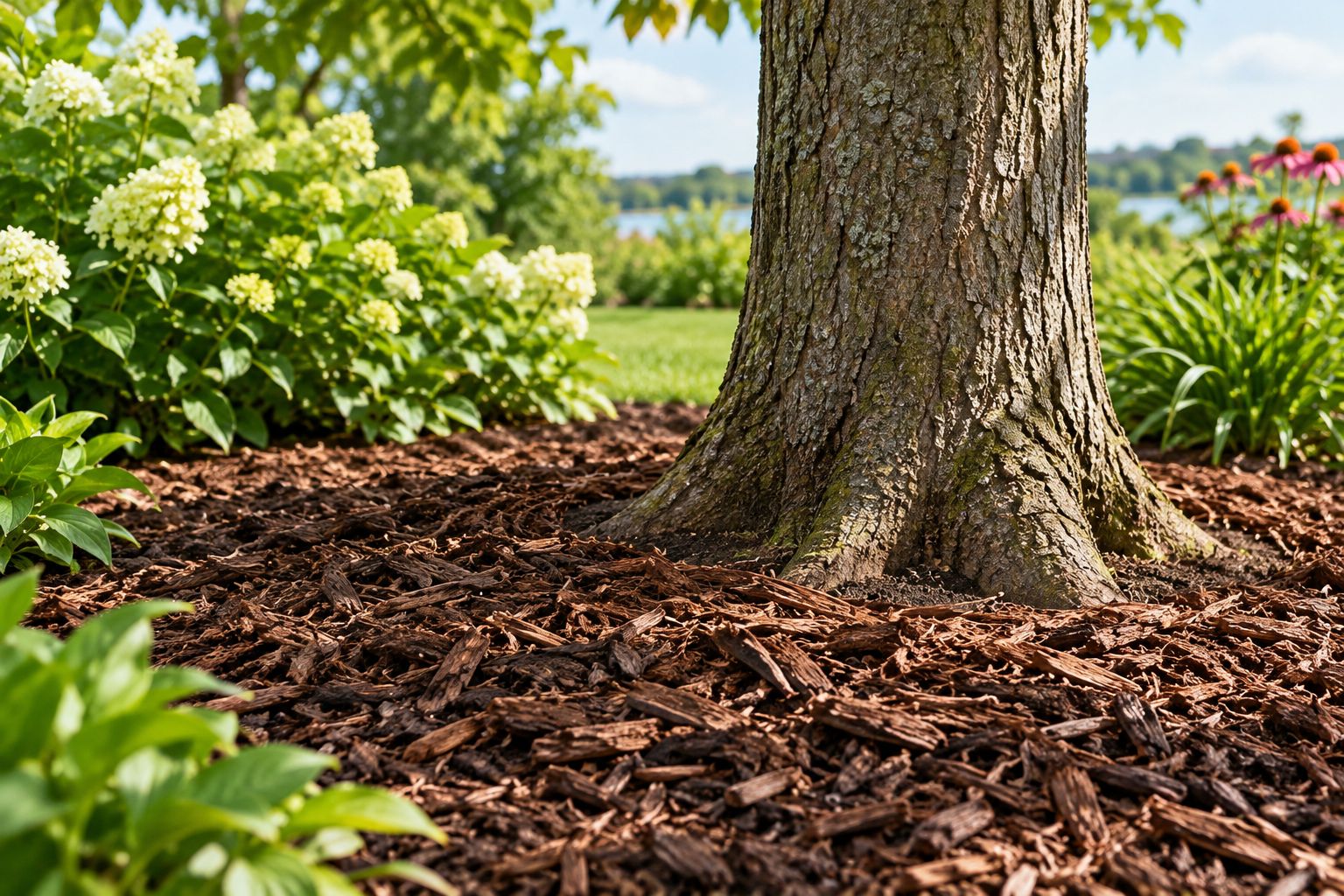
Leave several inches of clearance around tree trunks, with the flare visible. Do not place landscape fabric beneath mulch as an automatic step in a planted tree bed; it complicates later planting and does not stop weeds from rooting in decomposed material above it.
What to include in a local mulching estimate
A useful estimate describes the work, not just the material. When you contact Spartantreeny about mulching, explain whether the job stands alone or follows tree removal, stump grinding, planting, or pruning.
For your 2026 estimate, identify:
- Access: Gates, narrow passages, slopes, and the route between unloading and the beds.
- Preparation: Weeding, edging, excess mulch removal, and debris handling.
- Material: The mulch type and the beds receiving it.
- Protection: Plants, exposed roots, nearby structures, and surfaces along the work route.
- Cleanup: What gets collected and which paths, lawn areas, or driveway sections need clearing afterward.
Ask to discuss those details directly with the crew. Careful placement and a clear cleanup scope belong in the estimate, not in assumptions made after the material arrives.
Spartantreeny is a local mulching option for Rochester homeowners seeking an individual property estimate. Use the contact page to describe your location, beds, access, and any connected tree work. Ask what preparation and cleanup the proposed work includes.
How the mulch types were ranked
This 2026 ranking prioritizes planting purpose, soil coverage, maintenance, material quality, placement, and cleanup. Wood chips take the default position for established trees; shredded bark wins the appearance-focused slot, while leaves, straw, and needles serve distinct planting needs.
The order is not a claim that one material suits every yard. A vegetable garden and a mature tree bed deserve different choices.
Which mulch should you choose?
Choose wood chips if your main job is covering established tree and shrub beds. Choose shredded bark when a consistent ornamental finish matters more. Use shredded leaves in perennial borders, clean straw around established vegetables, and pine needles where they already fit the planting.
For a 2026 refresh, check the existing depth before ordering anything. If the layer is already adequate, weed, loosen compacted material, and correct trunk clearance instead of adding more.
FAQ
What's the best mulch for trees in Rochester, NY?
Wood chips are the best default for established tree beds because they provide coarse surface cover and break down over time. Keep them above the soil, away from the trunk, and out of the root flare.
Is shredded bark better than wood chips for flower beds?
Shredded bark is the better choice when you want a consistent finish around established ornamental plants. Wood chips suit less-disturbed tree and shrub beds; neither material should bury plant crowns.
How deep should mulch be around an established tree?
A total depth of 2–4 inches is a common guideline for established trees, adjusted for drainage and the material. Include the existing mulch in that total and keep the root flare exposed.
Can I use leaves as mulch in my Webster garden?
Yes, shredded leaves suit established perennial beds. Apply a loose layer, keep plant crowns clear, and thin any patches that form a wet mat.
Should I replace all my mulch every spring?
No, inspect its depth and condition before replacing it. Remove contaminated or problematic material, but do not strip out sound mulch simply because its color has faded.
Can I use wood chips left after tree removal?
Wood chips from tree work can serve as surface mulch when the material is suitable for the intended bed. Confirm what the pile contains, keep it out of cultivated soil, and separate mulch planning from stump-grinding debris disposal.
How much will mulching my Rochester property cost in 2026?
Request an individual estimate based on the beds, material, access, preparation, and cleanup scope. Describe any connected removal, grinding, or planting work so the estimate addresses the whole job.
One last thing
Before adding a fresh layer, uncover a small patch and measure what is already there. That simple check separates a bed that needs mulch from one that needs weeding and redistribution. New color is not a reason to bury roots more deeply.