




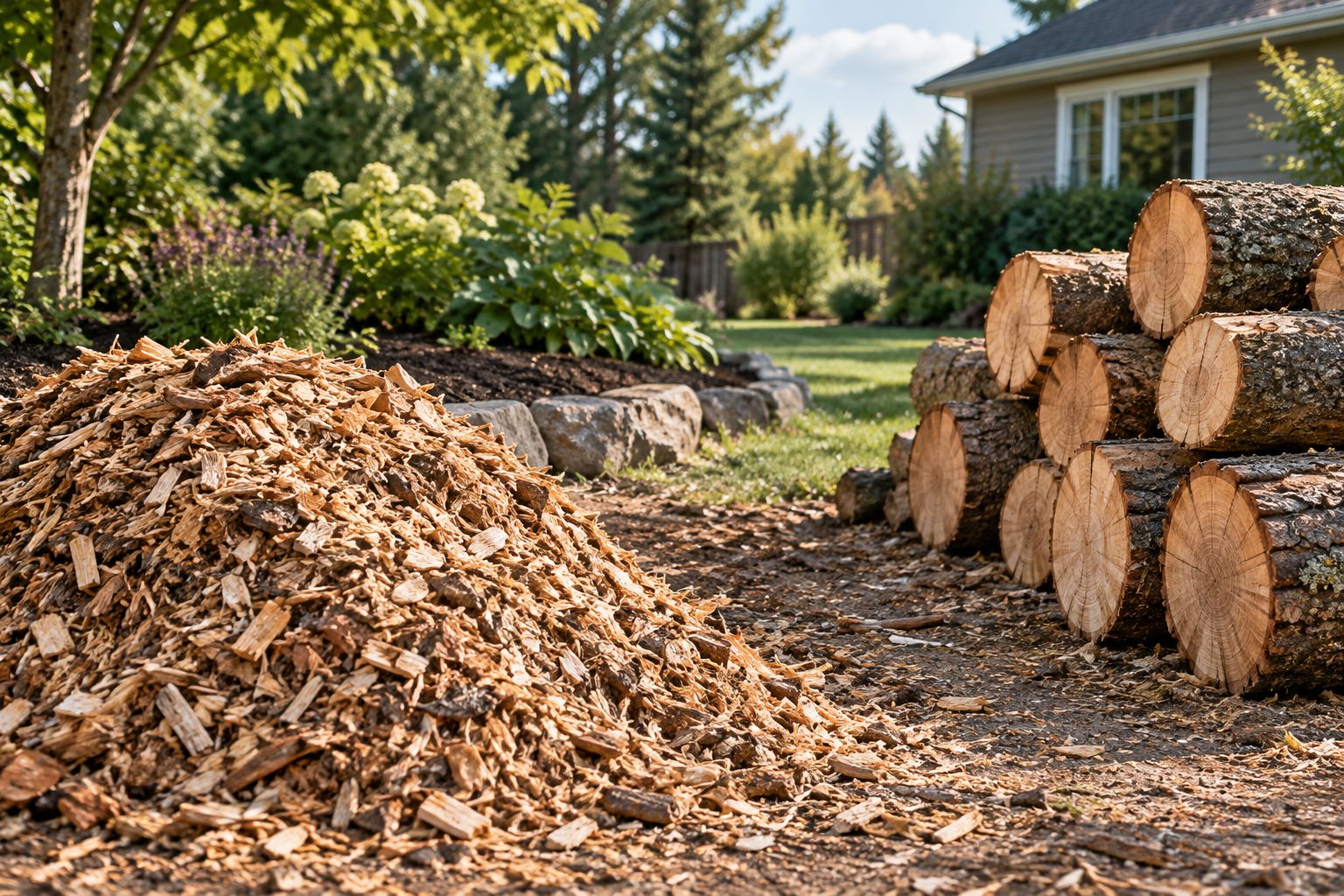
After tree removal, branches usually become wood chips, while the trunk is cut into logs for hauling, firewood processing, or another agreed use. For homeowners in Rochester, Webster, and eastern Monroe County, what stays, what leaves, and whether the stump is included should be settled in the written estimate—not after the tree is down.
- What happens to wood after tree removal depends on your written cleanup agreement: haul away, retain logs, or keep chips.
- Tree removal does not automatically mean split firewood, stump grinding, or removal of grinding debris.
- Spartan Tree and Landscape serves Rochester-area homeowners seeking tree removal; request an individual estimate with cleanup spelled out.
- Keep wood only when you have a specific use, suitable storage, and a plan for handling it.
What happens to wood after tree removal?
The usual process separates smaller branches from heavier trunk sections. Branches can go through a chipper; larger wood gets cut into sections that the crew can handle and load. The agreed scope determines whether those materials leave your property or remain in designated piles.
For a planned removal in 2026, use a tree removal estimate checklist to make the finished condition explicit. A tree on the ground is not the same thing as a cleared yard.
| Wood-handling option | Best for | Main benefit | Main drawback | What to specify |
|---|---|---|---|---|
| Haul away logs and branches | Homeowners who want the material removed | Avoids storing and processing wood yourself | Hauling and cleanup remain part of the job scope | Which materials leave and which areas get cleared |
| Keep trunk sections | Homeowners with equipment and a definite use | Retains usable wood on the property | Sections can be heavy and still need cutting | Section size, placement, and handling responsibility |
| Keep wood chips | Homeowners with suitable landscape beds | Provides material for mulching | A pile still needs moving and spreading | Drop location and whether spreading is included |
| Keep wood for firewood | Homeowners prepared to process and dry it | Makes use of suitable wood | Fresh-cut wood is not ready to burn | Whether cutting, splitting, or stacking is included |
Choose the finished yard you want, then have the estimate describe the work needed to get there. Do not assume every company uses the same meaning for cleanup.
Why this matters before you approve removal
The decision affects more than where a truck goes. Leaving logs transfers handling work to you; leaving chips transfers spreading work to you. Removing everything requires a different cleanup scope from setting material aside.
For your 2026 project in Webster or eastern Monroe County, walk through the final result during the estimate. Point out the lawn, garden beds, driveway, gates, and any area where you do not want material placed.
Spartan Tree and Landscape is best suited to Rochester-area homeowners seeking an individual tree-removal estimate. Ask for careful removal, thorough cleanup, and direct agreement with the crew on what stays. Those details belong in the scope rather than in an assumption about what tree removal includes.
Keeping logs: useful material, unfinished work
Keeping trunk sections makes sense when you already know how you will move and use them. Possible uses include firewood processing or a woodworking project, but a standing tree does not automatically produce usable lumber. Condition, dimensions, and defects affect what the wood can become.
Ask what the crew means by logs. Short rounds, long trunk sections, and manageable firewood lengths are different outcomes. Even a short section can be too heavy to move safely by hand.
Before choosing this option, settle these details:
- Placement: Identify an accessible spot that does not block a gate, driveway, or drainage route.
- Processing: State whether the wood remains in large sections or receives additional cutting.
- Handling: Decide who moves the wood after the crew places it.
- Backup plan: Know what you will do if the intended recipient does not collect it.
Do not keep a trunk solely because someone might want it. An uncertain future use is a poor reason to leave a heavy pile in your yard. Confirm the recipient and handling arrangements before removal day.
Keeping chips: good for beds, not a finished landscape
Tree-service chips contain chipped woody material and can include bark, twigs, and leaves. They are useful as surface mulch in suitable landscape beds, but they are not necessarily the uniform product you would select for a decorative finish.
The advantage is straightforward: you retain material you can use around your property. The drawback is the work between receiving a pile and having a finished bed. You still need to move, spread, and maintain it unless those tasks are included separately.
For a conservative starting point, spread about 2 inches of wood-chip mulch over a bed and keep it away from direct contact with trunks and stems. Account for mulch already present rather than adding another layer automatically. Do not bury a tree's trunk flare under a mound.
Ask whether the chips will be left in a driveway pile or placed closer to the intended beds. Choose somewhere that allows access without blocking daily use of the property. If you cannot use the material, do not request it simply to avoid deciding where it should go.
Keeping firewood: cutting is only the beginning
Fresh-cut wood is not automatically ready for a fireplace or wood stove. Turning a removed tree into usable fuel involves suitable cutting, splitting where needed, storage, and drying. Confirm which of those tasks are part of the removal agreement.
The U.S. Environmental Protection Agency's Burn Wise guidance recommends burning wood with a moisture content below 20 percent. For your 2026 firewood plan, use a moisture meter on a newly split face rather than judging readiness by bark, color, or how long the pile has been sitting.
Drying time depends on the wood, piece size, airflow, and storage conditions. A calendar promise is less useful than checking the moisture. Stack wood so air can circulate, keep it off the ground, and protect the top from rain without wrapping the entire stack tightly.
Keeping firewood is best for a homeowner who already has a suitable place to store it and a way to process it safely. It is not the simplest cleanup option. If you do not burn wood, keeping a large pile just because the tree is yours creates a job rather than solving one.
Hauling wood away: define the finish line
Hauling is the practical choice when you do not want logs or chips left behind. It also removes the need to find a recipient, arrange equipment, or reserve storage space. The important limitation is that hauling woody debris does not automatically include every restoration task.
Ask separately about the stump, roots, grinding debris, and lawn repair. A crew can remove the trunk and branches while leaving the stump in place. Stump grinding can leave a mixture of wood fragments and soil that also needs an agreed destination.
“Remove the tree” and “leave the area ready for grass” describe different scopes. If you want a planting bed or lawn afterward, explain that intended use before approving the estimate.
You can also ask where hauled wood is expected to go. Chipping, firewood processing, and other outlets depend on the material and the receiving operation. Do not assume hauling guarantees a particular recycling destination unless that destination is confirmed.
Why wood handling varies between tree-removal jobs
Wood handling changes with the property and the result you request. These are the practical details to discuss during a 2026 site visit:
- Tree size: A larger trunk creates heavier sections and more material to process or remove.
- Access: Gates, driveways, slopes, and the route from the tree to loading equipment affect handling.
- Nearby structures: A house, fence, garage, or shed can limit where sections can be lowered and staged.
- Wood condition: Decay and damage affect handling and whether wood is useful for another purpose.
- Cleanup scope: Hauling logs, retaining chips, grinding a stump, and restoring ground are separate decisions.
- Requested processing: Leaving large sections is not the same work as cutting, splitting, or stacking firewood.
The explanation of why tree removal quotes vary helps you compare access, size, and cleanup without treating different scopes as equivalent. Ask each company to describe the same finished result before comparing estimates.
How do you put wood handling into the estimate?
Use a short walkthrough to turn preferences into clear instructions. You do not need technical language; you need agreement on what the yard will look like when the crew leaves.
- Choose what stays. Identify logs, chips, or nothing, and describe any intended use.
- Choose the location. Show the crew exactly where retained material should go and what must remain clear.
- Define processing. Ask whether cutting, splitting, stacking, or spreading is included rather than assuming it is.
- Address the stump. Confirm grinding, treatment of grindings, and any remaining ground work separately.
- Review cleanup. Identify the work area, loading route, and surfaces that need attention before the job is complete.
Tell Spartan Tree and Landscape whether your priority is a clear yard, retained firewood, or usable chips. A specific request gives the crew something concrete to estimate and you something concrete to check afterward.
Plan your tree removal cleanup
Discuss access, retained wood, stump work, and the finished condition you want.
Can you move the firewood to another property?
New York restricts firewood movement to help limit the spread of invasive pests. New York State Department of Environmental Conservation guidance limits movement of untreated firewood sourced in New York to 50 miles from its source; additional restrictions can apply.
Before moving retained firewood in 2026, check the current DEC rules, including documentation and any pest-specific restrictions. Do not assume that giving wood away, crossing only a county line, or transporting it yourself removes those requirements.
Does stump grinding remove all the wood underground?
Stump grinding reduces the stump mechanically, but it does not mean every root is excavated. It also produces grindings that need to be left, spread, or removed according to the agreement.
Explain what you want to do with the spot afterward. Grass, a garden bed, and another tree create different site-preparation questions; ask what remains for you to handle.
FAQ
What happens to wood after tree removal if I do not want it?
Logs and branches can be hauled away when that work is included in the agreement. Confirm whether the scope also covers chips, the stump, and any grinding debris.
Can I ask the tree crew to leave the logs?
Yes, you can request retained logs, but agree on section size and placement before removal. Cutting, splitting, and stacking are separate tasks unless the estimate includes them.
Are wood chips from tree removal useful as mulch?
Wood chips can serve as surface mulch in suitable landscape beds. You still need a plan for moving and spreading the pile, and the material can contain bark, twigs, and leaves.
Can I burn wood immediately after my tree is removed?
Fresh-cut wood generally needs drying before burning. EPA Burn Wise guidance recommends wood below 20 percent moisture, checked on a newly split face.
Does tree removal automatically include stump grinding?
Tree removal does not automatically include stump grinding. Have the estimate state whether grinding and handling the resulting debris are included.
Is keeping the wood always the better option?
Keeping wood is useful only when you have a purpose, storage space, and a safe handling plan. Compare written scopes instead of assuming retained wood makes the overall job simpler.
What should I ask a Rochester tree service about cleanup?
Ask which materials leave, where retained wood goes, and what happens to the stump and grindings. Spartan Tree and Landscape homeowners should also discuss the finished condition directly with the crew before work starts.
One last thing
Do not arrange a log pickup without asking whether the recipient can load the pieces. Wanting wood and having the equipment to collect it are different things. Settle that detail before removal day so a useful material does not become an obstacle in your driveway.