



Best overall: white oak. Best for damp soil: swamp white oak. Best for a tough, open site: common hackberry. For Rochester, Webster, and eastern Monroe County homeowners planting in 2026, the right shade tree is the one whose mature canopy fits the yard—not the one that grows fastest.
- The best shade trees Rochester NY homeowners should consider start with white oak for large yards with well-drained soil.
- Choose swamp white oak for periodically wet ground, not permanently flooded planting sites.
- Common hackberry suits difficult sites; thornless honeylocust provides lighter shade over lawns.
- Spartan Tree and Landscape provides tree planting and removal services for Rochester-area homeowners.
Why this matters
A replacement tree needs room above ground and usable soil below it. Plant a large shade tree beneath utility lines or beside a foundation, and you create a conflict that pruning cannot permanently fix.
Spartan Tree and Landscape provides tree planting, removal, trimming, and stump grinding in the Rochester area. If your 2026 project starts with removing an existing tree, settle the removal access, stump work, and replacement location together. Those decisions affect the same piece of yard.
White oak is the best default shade tree for a large Rochester yard with well-drained soil and room for a broad canopy. A narrow lot, wet planting pocket, or overhead wire changes that recommendation.
What makes the best shade tree for Rochester?
Use these criteria before comparing nursery trees:
- Mature size: Match the full-grown canopy to your house, driveway, neighboring property, and overhead utilities.
- Soil drainage: Check whether water drains away or remains around the planting spot after rain.
- Cold tolerance: Choose a species and nursery selection suited to Rochester winters.
- Shade density: Decide whether you want dense afternoon shade or filtered light that leaves more sunlight for grass.
- Maintenance: Consider fruit, seedpods, surface roots, branch structure, and future pruning access.
- Planting condition: Favor sound structure and a visible root flare over a tall specimen with damaged or circling roots.
A species can meet these criteria and still be wrong for your particular yard. Give the planting location the deciding vote.
Rochester shade trees at a glance
| Tree | Best for | Standout feature | Key limitation |
|---|---|---|---|
| White oak | Long-term shade in a large yard | Broad canopy and native wildlife value | Needs substantial space; produces acorns |
| Swamp white oak | Periodically wet soil | Handles wetter conditions than white oak | Not a solution for permanent standing water |
| Common hackberry | Difficult, open planting sites | Tolerates varied soils and urban conditions | Fruit and cosmetic leaf galls |
| Thornless honeylocust | Filtered shade above a lawn | Open canopy lets light through | Nursery selection matters; insect problems occur |
| Sugar maple | Fall color on a suitable sheltered site | Dense shade and strong autumn color | Poor fit for road salt and compacted soil |
These are different planting choices, not interchangeable winners. The ranking starts with the broadest long-term recommendation, then separates specific yard conditions.
1. White oak: best shade tree for a large Rochester yard
White oak (Quercus alba) develops a broad crown and provides substantial shade. Mature trees commonly reach 50–80 feet tall, so this is a canopy tree for a yard with real space, not a planting strip beside the house.
Choose white oak where the soil drains well and the canopy can expand without repeated clearance cutting. Its acorns support wildlife, but they also belong in your maintenance decision if the crown will eventually extend over a patio.
White oak pros:
- Broad crown provides substantial summer shade.
- Native oak supports insects, birds, and other wildlife.
- Strong choice for a long-term landscape plan.
White oak cons:
- Acorns and leaves require cleanup.
- Mature size rules out tight spaces and overhead-wire locations.
Best for: Homeowners planting for lasting shade in a large, well-drained yard.
Verdict: Buy for a spacious site; skip beside utilities or where a broad crown cannot fit.
2. Swamp white oak: best shade tree for periodically wet soil
Swamp white oak (Quercus bicolor) is the stronger oak choice where soil stays moist or experiences periodic wetness. It commonly reaches 50–60 feet tall, with a spreading crown that still demands a generous planting area.
The name does not mean you should plant it in a permanently flooded hole. Check how the location drains, especially if the wetness comes from roof runoff or a grading problem that needs correction.
Swamp white oak pros:
- Better suited to wetter soil than white oak.
- Broad crown provides useful shade.
- Native species offers wildlife value.
Swamp white oak cons:
- Acorns add cleanup around paths and seating areas.
- Large mature size limits placement in smaller yards.
Best for: A roomy Rochester-area yard with moist soil or occasional wet conditions.
Verdict: Buy for the right damp site; skip as a substitute for fixing persistent drainage trouble.
3. Common hackberry: best shade tree for a difficult, open site
Common hackberry (Celtis occidentalis) tolerates a wide range of soil conditions and is a practical option where a more demanding tree would struggle. Its mature canopy needs open space, even though the species tolerates challenging growing conditions.
Small fruits attract birds. Leaf galls and witches'-broom growth can affect appearance, so choose hackberry for site tolerance rather than a perfectly tidy ornamental look.
Common hackberry pros:
- Tolerates varied soils, including alkaline conditions.
- Established trees tolerate drought and urban stresses.
- Fruits provide food for birds.
Common hackberry cons:
- Fruit creates cleanup concerns near hard surfaces.
- Cosmetic leaf galls and irregular twig growth can bother homeowners.
Best for: An open yard where soil tolerance matters more than a polished appearance.
Verdict: Buy for a demanding site with canopy room; skip if a tidy patio tree is your priority.
4. Thornless honeylocust: best shade tree for light above a lawn
Thornless honeylocust (Gleditsia triacanthos var. inermis) has small leaflets and an open canopy. It provides filtered shade rather than the heavier cover of an oak or sugar maple.
Ask about the specific nursery selection, including its thorn and seedpod characteristics. Do not assume every honeylocust has the same traits, and do not treat filtered light as a guarantee that grass will thrive underneath.
Thornless honeylocust pros:
- Open foliage allows more light through the canopy.
- Small leaflets are less bulky than large leaves during cleanup.
- Tolerates a range of urban growing conditions.
Thornless honeylocust cons:
- Plant bugs, webworms, and other pests can affect foliage.
- Dense cooling shade is not its strength; selection affects pod production.
Best for: Homeowners who want shade without making the area below as dark.
Verdict: Buy for filtered shade after checking the selection; skip if dense shade is the main goal.
5. Sugar maple: best shade tree for fall color on a suitable site
Sugar maple (Acer saccharum) provides dense summer shade and distinctive autumn color. Mature trees commonly reach 60–75 feet tall, making placement just as important as appearance.
Give sugar maple well-drained soil and protection from heavy road-salt exposure. A compacted roadside strip or a dry, confined planting pocket is a poor match, even when sugar maples look excellent elsewhere in the neighborhood.
Sugar maple pros:
- Dense canopy provides substantial summer shade.
- Autumn foliage gives the yard seasonal interest.
- Native species suits appropriate northeastern growing conditions.
Sugar maple cons:
- Sensitive to road salt, soil compaction, and drought stress.
- Dense shade and root competition complicate lawn growth underneath.
Best for: Homeowners with suitable soil who prioritize fall color away from salted pavement.
Verdict: Buy for a suitable protected site; skip a cramped, salty roadside location.
How these shade trees were ranked
This 2026 shortlist puts mature fit ahead of quick growth. White oak leads for a spacious, well-drained yard; the remaining trees fill distinct needs involving moisture, difficult soil, light penetration, or fall color.
The criteria are canopy space, drainage, cold tolerance, shade density, maintenance, and planting condition. This is a site-matching guide, not a claim that every listed species belongs on every Rochester property.
Before planting: check the actual spot
Look up, then measure outward
Locate overhead wires and consider the mature crown, not just the trunk. Include your roof, driveway, neighbor's yard, and access routes in that check.
For a 2026 planting project, record the available space before choosing a nursery specimen. Do not rely on routine topping to make a large tree fit a small location; topping damages tree structure rather than solving the placement problem.
Check roots and drainage
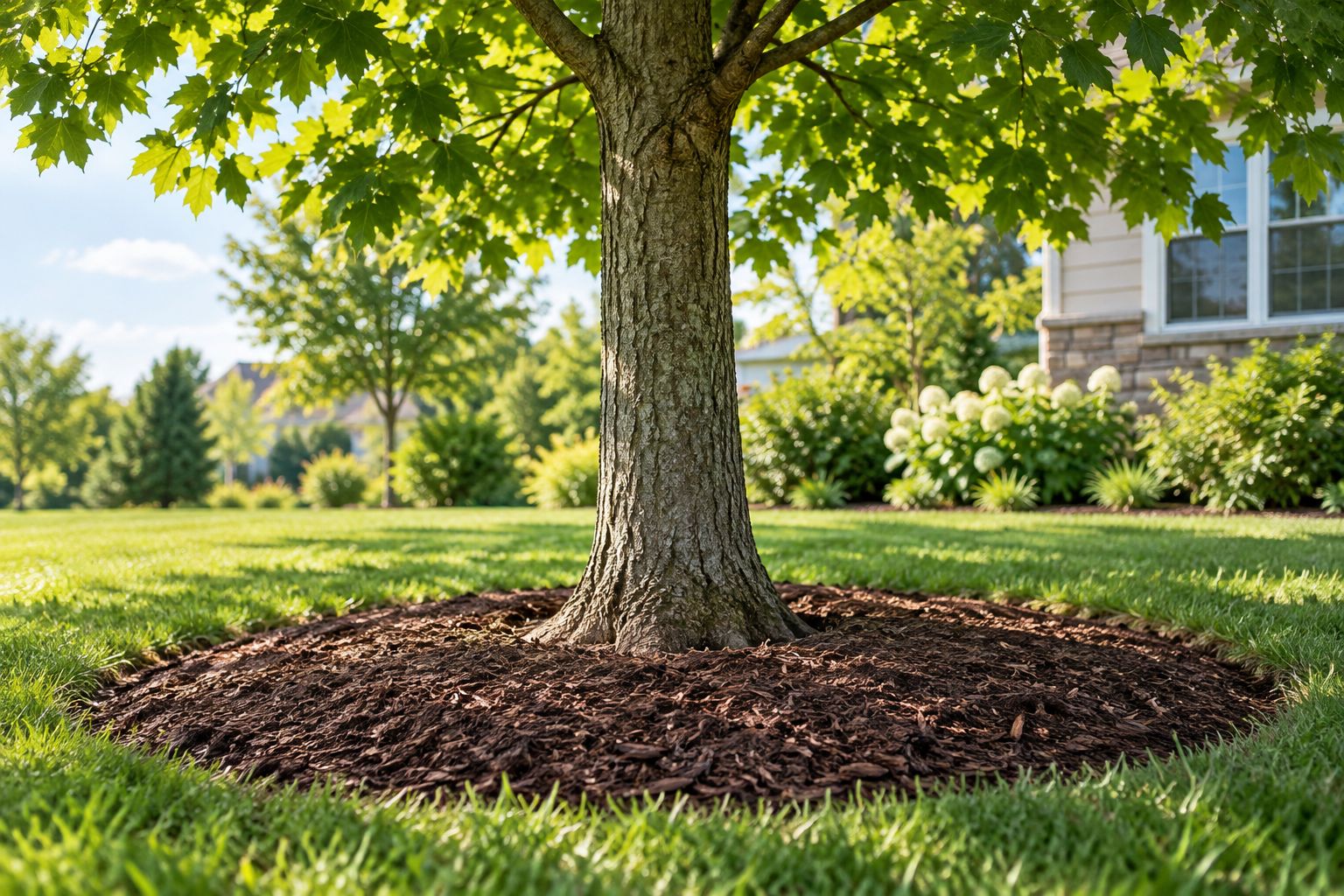
Look for the root flare where the trunk broadens into the main roots. Planting too deeply buries that transition and creates avoidable problems.
Keep mulch away from the trunk instead of piling it against the bark. Before digging, arrange utility marking through New York's 811 service and identify private underground lines that public utility marking does not cover.
Resolve the old tree first
If replacement follows removal, discuss the old stump, remaining roots, wood chips, and usable planting soil before choosing the new spot. Stump grinding does not remove every root or automatically leave a planting-ready bed.
Spartan Tree and Landscape provides removal, stump grinding, and planting services. Ask for an individual estimate that separates removal work, stump work, cleanup, and planting so you can compare the same scope rather than different assumptions.
Plan your replacement tree
Discuss removal, stump work, cleanup, and planting as one yard project.
Which shade tree should you choose?
Choose white oak if you have a large yard, well-drained soil, and room for its mature crown. That is the default recommendation for this 2026 guide.
Choose swamp white oak when periodic wetness is the deciding factor. Choose common hackberry for a difficult open site, thornless honeylocust for lighter shade, or sugar maple for autumn color where soil and salt exposure suit it.
If none fits, stop before buying. Keeping a large shade tree off the shopping list is better than planting one where it will need repeated clearance cuts.
FAQ
What's the best shade tree to plant in Rochester, NY?
White oak is the best default for a large Rochester yard with well-drained soil and room for a broad mature canopy. Swamp white oak, common hackberry, thornless honeylocust, and sugar maple suit different site conditions.
Which shade tree works best in wet soil around Webster?
Swamp white oak is a good candidate for moist soil and periodic wetness. Permanent standing water or drainage problems need assessment before you select a tree.
Is sugar maple better than white oak for my yard?
Sugar maple is the better choice when fall color is your priority and the site has suitable soil without heavy road-salt exposure. White oak is the stronger default for a spacious, well-drained planting location.
Which shade tree lets enough light through for grass?
Thornless honeylocust provides lighter, filtered shade than the denser canopies on this list. Lawn performance still depends on soil, water, root competition, and the grass itself.
Can I plant a shade tree where another tree was removed?
A former tree location needs assessment before replanting. Remaining roots, grindings, soil condition, and the new tree's space requirements determine whether that exact spot makes sense.
How much does planting a shade tree in Rochester cost?
Tree planting needs an individual estimate based on the tree, access, site preparation, and planting scope. If removal or stump grinding is involved, ask for those tasks to be listed separately.
Can I plant one of these shade trees under power lines?
These large shade trees are not suitable directly beneath overhead power lines. Choose a smaller-maturing tree appropriate to the utility clearance instead of planning to control a large tree through topping.
One last thing
The tallest tree at the nursery is not automatically the best tree to bring home. Inspect the root flare, branch structure, and root condition before size impresses you.
For a 2026 replacement project, ask Spartan Tree and Landscape to discuss where the new tree belongs before the old tree comes down. Removal access and the future planting area should be part of the same conversation—not separate decisions made after the yard is disturbed.