




Best overall: swamp white oak for a large, seasonally wet yard. Best for fall color: black gum. Best for a smaller, partly shaded spot: American hornbeam. This 2026 guide compares the best trees for wet yards in Rochester, NY, with the limits that matter before you plant.
- Best trees for wet yards Rochester NY: swamp white oak leads for large, seasonally wet sites.
- Black gum suits acidic soil and fall color; American hornbeam fits smaller, partly shaded spaces.
- River birch and bald cypress need room; neither fixes a drainage problem.
- Spartantreeny offers tree planting; request a site-specific estimate before choosing a replacement tree.
Why this matters
A wet lawn and a permanently flooded planting hole are different problems. Choosing a tree that tolerates occasional flooding does not mean its roots can sit underwater indefinitely.
For homeowners in Rochester, Webster, and eastern Monroe County, the first decision is about the site—not the nursery tag. Watch where water collects, whether it drains between storms, and how much space the mature tree will have.
Spartantreeny provides tree planting and tree care in the Rochester area. If you are replacing a declining tree, ask whether poor drainage contributed before putting another tree in the same spot.
What makes the best tree for a wet yard?
Use these criteria for your 2026 planting shortlist:
- Flooding tolerance: Match the tree to occasional saturation, seasonal flooding, or consistently moist soil. Those conditions are not interchangeable.
- Mature size: Leave room for the canopy and roots without crowding the house, driveway, utilities, or neighboring trees.
- Soil chemistry: Wet soil can still be unsuitable. River birch, black gum, and red maple need particular attention to soil pH.
- Sun exposure: A tree that handles wet ground can still struggle under a dense existing canopy.
- Maintenance: Bark, seeds, leaves, surface roots, and eventual pruning all affect where a tree belongs.
- Planting access: Consider how the tree reaches the planting spot without rutting saturated ground.
Choose for the wettest normal conditions the tree will face, not just the day you visit the nursery.
Best wet-yard trees at a glance
| Tree | Best for | Standout feature | Key limitation |
|---|---|---|---|
| Swamp white oak | Large, seasonally wet lawns | Tolerates periodic flooding and develops a broad shade canopy | Too large for confined spaces |
| Black gum | Fall color in moist, acidic soil | Strong red fall color | Does not suit alkaline soil |
| American hornbeam | Smaller, partly shaded spaces | Smaller stature and shade tolerance | Not a permanent-standing-water tree |
| River birch | Sunny, moist, acidic sites | Exfoliating bark and tolerance of periodic flooding | Chlorosis risk in alkaline soil |
| Bald cypress | Large, sunny sites with periodic flooding | Strong wet-site adaptation | Large mature size and possible knees |
| Red maple | Seasonally wet sites needing shade | Adapts to a range of moisture conditions | Surface roots and sensitivity to alkaline soil |
1. Swamp white oak: best wet-yard tree for a large lawn
Swamp white oak (Quercus bicolor) is the default choice when you have space for a substantial shade tree. It tolerates periodic flooding while also handling periods when the soil dries out.
Its typical mature height is about 50–60 feet, with a broad canopy. That makes it a yard-planning decision, not something to tuck beside a patio because the planting spot happens to be damp.
Swamp white oak pros:
- Handles seasonal wetness and occasional flooding.
- Provides a broad shade canopy as it matures.
- Supports native wildlife through its foliage and acorns.
Swamp white oak cons:
- Mature size rules out tight planting spaces.
- Acorns and leaves require cleanup near outdoor living areas.
Best for: An open lawn with periodic wetness and enough room for a large canopy.
Keep the mature tree away from overhead lines and account for nearby structures before choosing the planting location. A young oak's current size tells you little about its eventual footprint.
Verdict: Buy for a large, seasonally wet yard; skip for a narrow side yard.
2. Black gum: best wet-yard tree for fall color
Black gum (Nyssa sylvatica), also called black tupelo, combines tolerance of moist conditions with red fall color. It belongs on your shortlist when appearance matters and the soil is acidic.
Typical mature height is about 30–50 feet. Black gum is smaller than many large shade trees, but it still needs a permanent planting location with room to develop.
Black gum pros:
- Produces notable red fall foliage.
- Tolerates moist soil and periodic flooding.
- Provides fruit used by birds.
Black gum cons:
- Alkaline soil is a poor match.
- Transplanting becomes more difficult as the tree gets established.
Best for: A moist, acidic planting site where fall color is a priority.
Do not choose black gum on leaf color alone. Check soil conditions first, and avoid treating every wet depression as suitable habitat. Permanent ponding needs a separate assessment.
Verdict: Buy for moist, acidic soil; hold until soil testing if pH is unknown.
3. American hornbeam: best wet-yard tree for partial shade
American hornbeam (Carpinus caroliniana) is a smaller native tree suited to moist conditions and partial shade. Its smooth, muscle-like trunk gives it interest without requiring a large canopy.
Typical mature height is about 20–35 feet. It fits smaller spaces better than swamp white oak, though you still need room for its spreading crown.
American hornbeam pros:
- Tolerates shade better than the sun-demanding choices here.
- Suits moist woodland-edge conditions.
- Offers a smaller mature form than large shade trees.
American hornbeam cons:
- Does not belong in permanently standing water.
- Slow growth makes it a poor choice for quick shade.
Best for: A partly shaded yard with consistently moist soil that still drains.
A damp area beneath existing trees creates competition as well as shade. Check surrounding roots and available planting space rather than digging into the first open patch.
Verdict: Buy for moist partial shade; skip for a persistently flooded basin.
4. River birch: best wet-yard tree for ornamental bark
River birch (Betula nigra) suits moist, acidic ground and tolerates periodic flooding. Its peeling bark makes it useful where you want interest beyond summer foliage.
River birch is not a compact ornamental tree. A multistem form needs substantial room around its base and canopy, especially beside walks and patios.
River birch pros:
- Handles moist soil and periodic flooding.
- Provides distinctive exfoliating bark.
- Offers single-trunk and multistem forms.
River birch cons:
- Alkaline soil can cause iron chlorosis and yellowing leaves.
- Leaves, twigs, and seed material create cleanup work.
Best for: A sunny, moist, acidic site where bark character matters.
If you want a tidy tree beside outdoor furniture, weigh cleanup against appearance. Ask about the mature dimensions of the specific selection rather than assuming every river birch grows the same way.
Verdict: Buy for the right soil and enough space; skip where low litter is essential.
5. Bald cypress: best wet-yard tree for periodic flooding in full sun
Bald cypress (Taxodium distichum) is a deciduous conifer: it has needle-like foliage but drops it for winter. Its tolerance of wet conditions makes it useful on larger sites with periodic flooding.
Select the planting location carefully. Bald cypress becomes a large tree, and wet-site specimens can develop woody root projections called knees.
Bald cypress pros:
- Tolerates wet conditions and periodic flooding.
- Develops a distinctive upright form.
- Adds fine-textured foliage and seasonal color.
Bald cypress cons:
- Mature size requires substantial space.
- Knees can interfere with mowing and foot traffic.
Best for: A large, sunny wet area away from pavement and heavily used lawn.
For a Rochester planting, discuss the nursery stock's regional suitability before ordering. Flood tolerance alone does not settle winter suitability, planting position, or long-term maintenance.
Verdict: Buy for a roomy wet site; skip beside a narrow walkway or small patio.
6. Red maple: best wet-yard tree for adaptable shade
Red maple (Acer rubrum) grows naturally across varied moisture conditions, including wet sites. It is an option for homeowners who want a familiar shade tree in seasonally wet ground.
The species varies, and named selections differ. Choose for the actual planting conditions rather than assuming any tree sold as a red maple has identical tolerances.
Red maple pros:
- Tolerates a range of soil-moisture conditions.
- Provides shade and seasonal foliage interest.
- Works in sites that alternate between moist and better-drained conditions.
Red maple cons:
- Surface roots can conflict with pavement and lawn use.
- Alkaline soil can cause chlorosis.
Best for: A seasonally wet planting area with suitable soil chemistry and room away from hard surfaces.
Do not confuse red maple with every maple that has red leaves. Ask for the botanical name and the mature dimensions of the specific selection.
Verdict: Buy after matching the selection to the site; skip as an unidentified nursery substitute.
Check the wet spot before you order
For a 2026 planting project, observe the yard after rain and again as the surface dries. Record where water collects, whether it reaches the proposed planting spot, and whether nearby areas drain differently.
Use a simple site checklist:
- Water pattern: Separate temporary puddles from persistent standing water.
- Soil condition: Note compaction, recent construction, and areas that stay soft.
- Available space: Include buildings, fences, overhead lines, and existing roots.
- Access route: Identify gates and surfaces equipment would cross.
A shovel hole alone does not explain the whole yard. Roof runoff, grading, compacted soil, and a high water table are different problems, and tree selection does not replace drainage assessment.
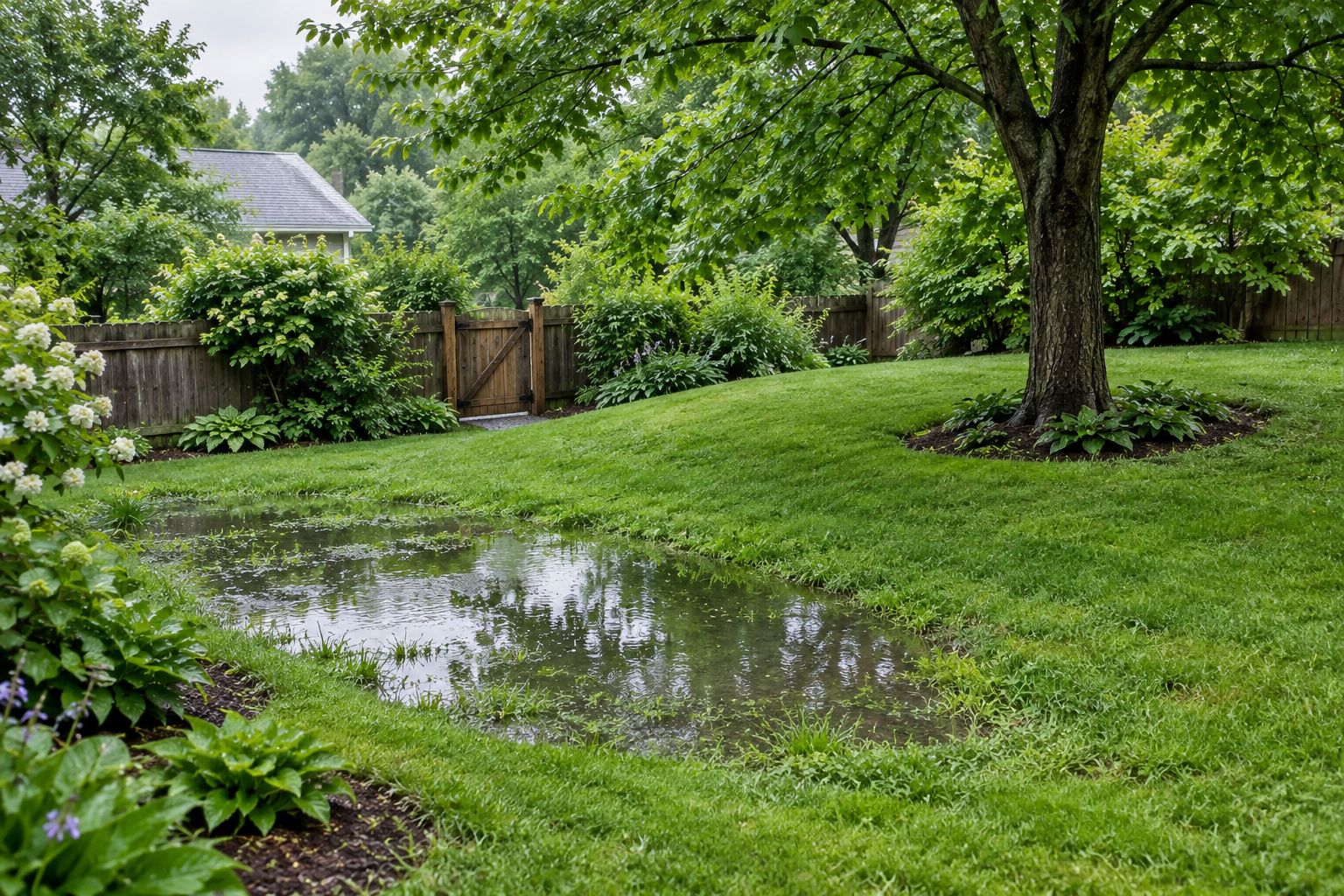
A moisture-tolerant tree is not a drainage repair. If water threatens the house, crosses a property boundary, or remains pooled around structures, address that issue before treating planting as the solution.
Replacing a tree? Set the removal scope first
If an existing tree occupies the wet spot, settle removal and site preparation before buying its replacement. Removing the trunk does not automatically create a suitable planting location.
Ask whether the estimate includes stump grinding, removal of grindings, backfill, and cleanup. Also discuss whether the replacement should move away from the old stump rather than occupy the same hole.
Spartantreeny provides tree removal, stump grinding, and planting. For an individual estimate, describe the tree, nearby structures, gate access, wet ground, and the finished condition you want.
When choosing a crew, prioritize careful removal, thorough cleanup, and direct communication with the people doing the work. Get those expectations into the written scope instead of assuming “tree removal” includes everything.
Request an individual estimate with photos of the tree, the wet area, and the access route. Photos help explain the job; they do not replace an on-site assessment.
How these trees are ranked
This 2026 ranking prioritizes moisture tolerance, mature size, soil compatibility, sun exposure, and maintenance—not growth speed alone. The species characteristics are documented in public horticultural references, including NC State Extension's Plant Toolbox profiles for these trees.
The order is a decision guide, not a claim that every Rochester property needs an oak. American hornbeam moves ahead of swamp white oak when the site is smaller and partly shaded; river birch drops off the list when soil chemistry is unsuitable.
Which wet-yard tree should you choose?
Start with swamp white oak for a large, seasonally wet lawn. Choose black gum when acidic soil and fall color drive the decision, or American hornbeam when the site is smaller and partly shaded.
For a Rochester, Webster, or eastern Monroe County property, give the crew the site conditions before naming your preferred species. Spartantreeny tree planting starts with a better question than “What grows fastest?”: what fits this location without creating the next removal problem?
FAQ
What's the best tree for a wet yard in Rochester, NY?
Swamp white oak is a strong default for a large, seasonally wet Rochester yard. American hornbeam fits smaller, partly shaded sites better, while black gum suits moist, acidic soil.
Can I plant a tree where water stands after rain?
Yes, if the species tolerates the site's flooding pattern and the location meets its other needs. Persistent standing water requires a closer assessment than an occasional puddle.
Will planting a tree dry out my wet backyard?
A tree is not a dependable repair for poor drainage. Resolve grading, runoff, or persistent ponding problems separately before choosing the planting location.
Is river birch better than red maple for wet soil?
River birch and red maple both tolerate wet conditions, but neither wins on moisture tolerance alone. Compare soil pH, mature size, cleanup, and distance from pavement before choosing.
What's a smaller tree for a damp, shady yard?
American hornbeam is a good candidate for moist soil and partial shade. It is smaller than the large shade trees in this guide, but it still needs room for its spreading crown.
Should I replace a tree in the same spot after removal?
Do not assume the old planting spot is suitable. Review the original tree's decline, drainage, remaining stump material, and available root space before selecting the replacement location.
What should I include when requesting a planting estimate in 2026?
Provide photos of the planting area, nearby structures, wet ground, and access route. State whether the job also includes removal, stump grinding, backfill, and cleanup so the estimate addresses the full scope.
One last thing
Wet-soil tolerance does not mean you should plant deeper. Keep the root flare at the appropriate finished grade; burying the trunk does not help a moisture-loving tree cope with a wet yard.
Before planting, identify the flare where the trunk widens into the main roots. If that point is hidden inside the nursery soil, sort it out before setting the tree—not after backfilling.