



Best overall: downy serviceberry. Best for a partly shaded yard: American hornbeam. Best for spring flowers: eastern redbud. For 2026 planting in Rochester, Webster, and eastern Monroe County, choose by mature width and planting conditions—not the size of the tree at the nursery.
- Downy serviceberry leads the best trees for small yards in Rochester, NY, when you have room for its mature canopy.
- American hornbeam suits partial shade; eastern redbud suits homeowners who prioritize spring flowers.
- Japanese tree lilac and Sugar Tyme crabapple offer distinct flowering options, with different cleanup and maintenance needs.
- Spartan Tree and Landscape provides planting and removal services; request an individual estimate for your site.
Why the planting spot matters more than the label
A small yard does not automatically need the shortest tree. You need a canopy that fits between the house, driveway, neighboring property, and overhead lines without requiring repeated size-control pruning.
For a 2026 replacement planting, settle the removal and stump work before choosing the new tree. Spartan Tree and Landscape provides tree care services, including removal, stump grinding, and planting, so you can discuss the existing tree and replacement location together.
A tree that fits an open Rochester front lawn can still crowd a narrow Webster side yard. Measure the actual planting space before making your shortlist.
What makes the best tree for a small Rochester yard?
Use these criteria to judge every recommendation below:
- Mature width: The crown must fit without routine cutting back against the house or property boundary.
- Winter suitability: Check the exact species or cultivar's hardiness, especially on exposed sites.
- Light and drainage: Match the tree to the sun and soil you actually have.
- Cleanup: Flowers, fruit, seed capsules, and leaves belong in the decision—not just flower color.
- Long-term structure: Look for sound branch attachments and a form that suits the available space.
Do not treat a species name as a promise of a particular size. Nursery labels should identify the botanical name and any cultivar, because selections within the same group can grow differently.
Small-yard trees at a glance
The mature-size ranges below follow Missouri Botanical Garden Plant Finder descriptions for the named species and cultivar. They are planning references for this 2026 guide, not measurements of trees on your property or guaranteed final dimensions.
| Tree | Best for | Typical mature height | Typical mature spread | Standout feature | Key limitation |
|---|---|---|---|---|---|
| Downy serviceberry | An all-around ornamental tree | 15–25 feet | 15–25 feet | Spring flowers, fruit, and fall color | Fruit and suckers need consideration |
| American hornbeam | A partly shaded planting spot | 20–35 feet | 20–35 feet | Shade tolerance and distinctive bark | Too broad for a very narrow yard |
| Eastern redbud | Spring flowers near a patio or lawn | 20–30 feet | 25–35 feet | Pink flowers along bare branches | Broad canopy; needs a suitable site |
| Japanese tree lilac | Later flowers in a sunny yard | 20–30 feet | 15–20 feet | Creamy flower clusters after many spring trees | Not suited to deep shade |
| Sugar Tyme crabapple | A smaller flowering specimen | 14–18 feet | 12–15 feet | White flowers and persistent red fruit | Disease resistance is not immunity |
None of these trees belongs directly beneath a low overhead wire simply because it appears on a small-yard list. Check the mature height against the actual obstruction.
1. Downy serviceberry: best small-yard tree for all-around interest
Downy serviceberry (Amelanchier arborea) combines white spring flowers, small fruits, and fall foliage. Its typical 15–25-foot height makes it easier to fit into a modest residential landscape than a large shade tree.
The form matters. A multi-stem serviceberry creates a different footprint and sightline than a specimen trained with one main trunk, so choose the shape as carefully as the species.
Downy serviceberry pros:
- Offers interest across several seasons.
- Provides fruit used by birds.
- Grows in full sun or partial shade.
Downy serviceberry cons:
- Fallen fruit is a consideration beside paving or seating.
- Suckering can require attention if you want a clean, single-trunk appearance.
Best for: A homeowner who wants flowers, wildlife value, and fall color from one tree, with enough room for the mature crown.
Keep serviceberry away from the tightest passage between a driveway and front steps. Small fruit is easier to accept over a planting bed than over the route you walk every day.
Verdict: Buy downy serviceberry for an all-around ornamental planting; skip it beside a surface where fruit cleanup is unacceptable.
2. American hornbeam: best small-yard tree for partial shade
American hornbeam (Carpinus caroliniana) tolerates partial shade and develops smooth, muscular-looking bark. Its flowers are not the main attraction; structure, foliage, and bark carry the planting.
At a typical 20–35 feet tall and wide, American hornbeam is a smaller landscape tree, not a miniature one. It needs more canopy space than many homeowners expect from a young nursery specimen.
American hornbeam pros:
- Suits partly shaded locations.
- Adds distinctive bark and branching.
- Offers fall foliage without relying on showy flowers.
American hornbeam cons:
- Its eventual width rules out narrow foundation beds.
- It is a poor match for a dry, exposed planting spot without suitable soil moisture.
Best for: A partly shaded yard where you want a natural-looking tree and can accommodate a broad crown.
Check the surrounding trees before planting. Partial shade from a neighboring canopy is different from a narrow, dark gap between buildings, and hornbeam still needs room to develop.
Verdict: Buy American hornbeam for partial shade and adequate soil moisture; skip it in a cramped strip beside the house.
3. Eastern redbud: best small-yard tree for spring flowers
Eastern redbud (Cercis canadensis) produces pink flowers along its branches before the leaves expand. It makes a strong spring focal point near a lawn, patio, or front-yard planting bed.
Its width is the catch. A typical mature spread of 25–35 feet makes eastern redbud a poor choice for a narrow side yard, even though its height stays below that of a large shade tree.
Eastern redbud pros:
- Produces conspicuous spring flowers.
- Adds heart-shaped foliage through the growing season.
- Works in full sun or partial shade with suitable drainage.
Eastern redbud cons:
- Its broad canopy needs substantial lateral space.
- Canker and other health problems are considerations, particularly on stressed trees.
Best for: A homeowner with an open planting area who values spring flowers more than a narrow footprint.
Ask the nursery about the exact selection and its suitability for your exposure. A protected yard and a wind-exposed site should not receive the same recommendation without a site check.
Verdict: Buy eastern redbud for a roomy flowering focal point; skip it when you need a genuinely narrow tree.
4. Japanese tree lilac: best small-yard tree for later flowers
Japanese tree lilac (Syringa reticulata) produces creamy flower clusters later than many familiar spring-flowering trees. Its typical 15–20-foot spread gives it a narrower planning footprint than American hornbeam or eastern redbud.
This is a tree, not simply a familiar lilac shrub grown taller. Give it a proper planting area and enough sun rather than squeezing it into an existing shrub bed.
Japanese tree lilac pros:
- Extends flowering beyond the early-spring display.
- Has a comparatively upright tree form.
- Offers bark interest as well as flowers.
Japanese tree lilac cons:
- Flowering suffers in too much shade.
- Flowers, leaves, and seed capsules still create cleanup.
Best for: A sunny yard where you want later flowers and a less spreading canopy than redbud.
If the location borders a walk, consider branch clearance as the tree develops. A clear route beneath the canopy should come from suitable placement and structural pruning, not repeated heavy cutting.
Verdict: Buy Japanese tree lilac for a sunny ornamental planting; skip it for a deeply shaded corner.
5. Sugar Tyme crabapple: best small-yard tree for a smaller footprint
Sugar Tyme crabapple (Malus 'Sutyzam') has white flowers and red fruit that can persist into winter. Its typical 14–18-foot height and 12–15-foot spread make it the smallest planning footprint in this shortlist.
The cultivar name matters. A different crabapple can have a different mature size, growth habit, fruit display, and disease response.
Sugar Tyme crabapple pros:
- Fits a smaller canopy space than the other selections listed.
- Combines spring flowers with persistent fruit.
- Has recognized resistance to several common crabapple diseases.
Sugar Tyme crabapple cons:
- Disease resistance does not eliminate disease risk.
- Fruit, flowers, and leaves still require cleanup around hard surfaces.
Best for: A sunny front-yard planting where a larger spreading tree would crowd the available space.
Read the plant tag before accepting a substitution. The word “crabapple” alone does not tell you whether the replacement has the dimensions or disease resistance you wanted.
Verdict: Buy Sugar Tyme crabapple when its smaller dimensions fit; hold any substitute until you check its exact cultivar.
Check the site before requesting a planting estimate
For your 2026 planting plan, give the crew useful information rather than just asking what a tree costs. The location and work scope determine what needs to happen before planting.
- Canopy space: Measure the open area and identify roofs, wires, driveways, and neighboring trees.
- Sun and drainage: Describe when the spot receives direct sun and whether water stands after rain.
- Access route: Show gates, steps, fences, and the route from the street to the planting area.
- Existing stump: Identify old stumps, visible roots, and any recently ground area.
- Cleanup scope: Specify what should leave the property and what finished condition you expect.
A new tree needs suitable soil, not simply an opening in old stump grindings. If removal comes first, discuss the replacement location before stump work begins.
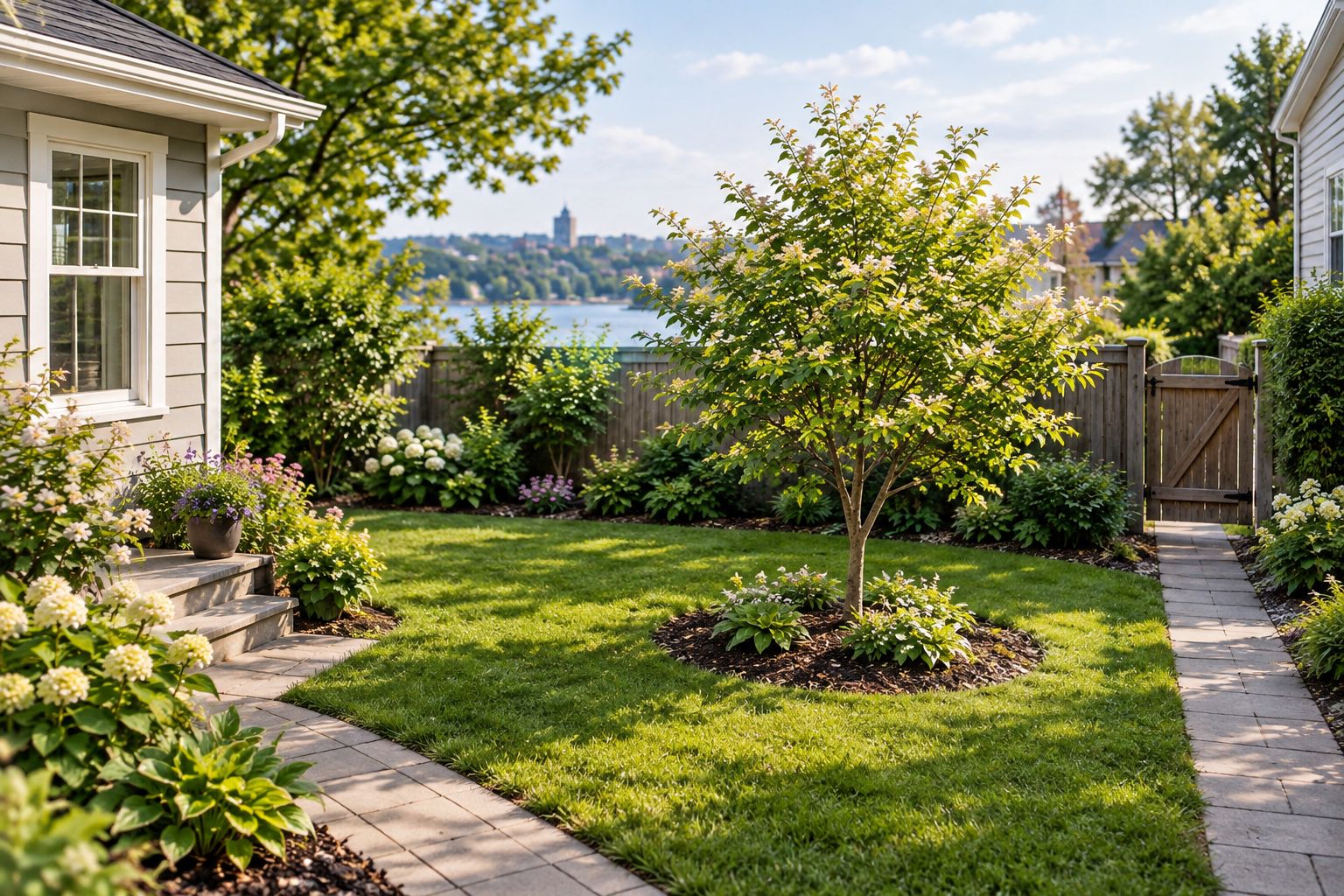
If an existing tree needs removal, ask how the crew will protect nearby structures, handle debris, and finish cleanup. With Spartan Tree and Landscape, discuss the work directly with the crew and request an individual estimate that separates removal, stump work, and planting.
Plan your tree replacement
Discuss access, removal, stump work, planting location, and cleanup in an individual estimate.
How these trees were ranked
The ranking favors mature size, site fit, seasonal interest, and practical maintenance—not flower color alone. Downy serviceberry leads as an all-around choice; the other trees win distinct situations rather than competing for the same spot.
This 2026 shortlist is a starting point for a site assessment, not a claim that every tree fits every Rochester property. Deep shade, standing water, overhead lines, or a confined planting strip can rule out the entire list.
Which small-yard tree should you choose?
Choose downy serviceberry as the default, then change the choice when your site requires it. American hornbeam suits partial shade; Sugar Tyme crabapple offers a smaller mature footprint; eastern redbud needs more width than its height suggests.
Spartan Tree and Landscape provides tree planting and removal services for Rochester-area homeowners planning a replacement. Choose the tree first by site fit, then put the removal, access, and cleanup requirements into the estimate.
FAQ
What's the best tree for a small yard in Rochester, NY?
Downy serviceberry is the best all-around starting point when the yard can accommodate its typical 15–25-foot mature spread. It combines spring flowers, fruit, and fall color, but fruit cleanup and suckering belong in the decision.
Which tree on this list fits the smallest space?
Sugar Tyme crabapple has the smallest typical mature dimensions on this list: 14–18 feet tall and 12–15 feet wide. Confirm the exact cultivar before buying, and still allow room around buildings and walks.
What's a good small tree for partial shade?
American hornbeam is a good option for partial shade with suitable soil moisture. Its mature canopy can reach 20–35 feet wide, so shade tolerance does not make it suitable for a narrow planting strip.
Is eastern redbud too big for a small yard?
Eastern redbud is too broad for many narrow yards because its typical mature spread is 25–35 feet. It works better in an open planting area than between a house and a nearby fence.
Can I plant a new tree where an old tree was removed?
A replacement location needs assessment for remaining roots, stump material, soil condition, and usable rooting space. Do not treat a stump-grinding hole filled with woody debris as a finished planting site.
Which small flowering tree needs the least cleanup?
None of these flowering trees eliminates cleanup. Compare where flowers, fruit, leaves, and seed capsules will fall, especially beside a driveway, patio, or front walk.
What should a tree planting estimate include?
A planting estimate should identify the tree, planting location, preparation, access requirements, and cleanup scope. If removal or stump grinding is involved, ask for those tasks to be identified separately rather than assuming they are included.
One last thing
Before you commit to a tree in 2026, mark its expected mature canopy on the ground. Stand at the front door, driveway, and neighboring fence and look at the space it occupies.
If the tree only fits when you imagine cutting it back every year, choose a different tree or a different spot. That decision belongs before planting—not after branches reach the roof.