





Yes, tree services work in winter, and planned tree removal in Rochester, NY can proceed when weather, access, and site conditions allow safe work. Snow, ice, wind, and thawing ground can change the removal plan or move the work date; winter alone does not rule out the job.
- For tree removal Rochester NY homeowners can plan in winter, safe access and weather matter more than the calendar.
- Rochester winter tree removal still needs a site-specific estimate; snow does not erase access or cleanup problems.
- Dormant-season pruning and complete tree removal serve different purposes; ask which work your tree actually needs.
- Do not postpone a hazardous tree assessment just to reach a preferred season.
Why this matters
If you are planning tree work in Rochester, Webster, or eastern Monroe County in 2026, you do not need to wait for spring to request an assessment. You do need to separate a workable winter job from a job that needs different conditions.
Spartan Tree and Landscape provides tree removal and tree care services for Rochester-area homeowners and property owners. The useful question is not simply whether crews work in winter. It is whether your tree, access route, and cleanup plan fit the conditions on your property.
Do tree services work in winter in Rochester?
Tree services perform winter work, including removal and pruning, when crews can reach the tree and control the work safely. A dormant tree still has weight, structural defects, and obstacles beneath it. Bare branches help reveal structure; they do not make every tree safe to climb or remove.
Different jobs also have different requirements. Removing a tree over a garage is not the same operation as pruning an accessible tree in an open yard.
| Winter work | Best for | Practical advantage | Limitation to discuss |
|---|---|---|---|
| Planned tree removal | Homeowners removing a tree after assessment | Allows the crew to plan access, cutting, and material handling | Ice, wind, or unsuitable ground can change the work date |
| Dormant-season pruning | Trees needing appropriate structural or maintenance cuts | Leafless branches make structure easier to inspect | Species, tree condition, and the reason for pruning still govern timing |
| Emergency tree work | A damaged tree presenting an immediate concern | Addresses a problem that cannot be treated as routine scheduling | The scene needs assessment before anyone approaches or begins work |
| Stump grinding | Homeowners who want the remaining stump addressed | Treats a separate part of the removal scope | Snow cover, access, and ground conditions need their own check |
For your 2026 project, ask the estimator to identify which parts can happen together and which depend on conditions. Do not assume that removing the trunk automatically includes grinding the stump, hauling every piece, or repairing the lawn.
Planned winter removal: get the site assessed first
Request an individual estimate before deciding winter is either ideal or impossible. The crew needs to see the tree and the space around it, not just hear that it is large or close to the house.
Start with the reason you want the tree removed. Explain whether it is dead, damaged, interfering with a structure, or part of a landscaping change. Describe what you have observed without trying to diagnose the tree yourself.
Then discuss what must stay protected: a roof, fence, driveway, garden bed, neighboring property, or other trees. Access and nearby structures help determine how the crew can dismantle the tree and move material out.
Ask who will be on site and who will answer questions during the work. A clear conversation with the crew about access, boundaries, and cleanup is more useful than a promise that winter makes everything easier.
Winter pruning: the goal matters more than bare branches
Dormant-season pruning gives a crew a clearer view of branch arrangement on deciduous trees. That can help with decisions about structure and which branches need attention. It is not a reason to remove healthy branches without a purpose.
Tell the estimator what you want to accomplish: improve clearance, address damaged branches, or evaluate a tree's structure. Ask for a pruning recommendation tied to the tree, not a general winter haircut.
Pruning and removal are not interchangeable. If your concern is a tree's stability, ask for an assessment of that concern rather than assuming a smaller canopy solves it. The appropriate work depends on the defect and the tree's condition.
Why winter tree work varies from property to property
A winter estimate should account for the actual job. These factors explain why nearby properties can need different work plans:
- Tree size: Larger pieces require a suitable cutting and handling plan. Height alone does not describe the whole job.
- Tree condition: Dead wood, cracks, decay, and storm damage affect how the crew approaches the tree.
- Access: Gates, slopes, narrow passages, parked vehicles, and the distance to the work area affect movement.
- Nearby structures: Houses, garages, fences, and utility lines restrict where branches and trunk sections can go.
- Weather and ground: Wind, ice, snow cover, frozen ground, and thawing soil can change what is workable.
- Cleanup scope: Hauling wood, removing chips, grinding a stump, and addressing material hidden by snow are separate details to settle.
Do not reduce these factors to a seasonal rule. A winter date does not tell you how difficult the job is, and a cold forecast does not prove the ground will support equipment.
Access deserves its own conversation
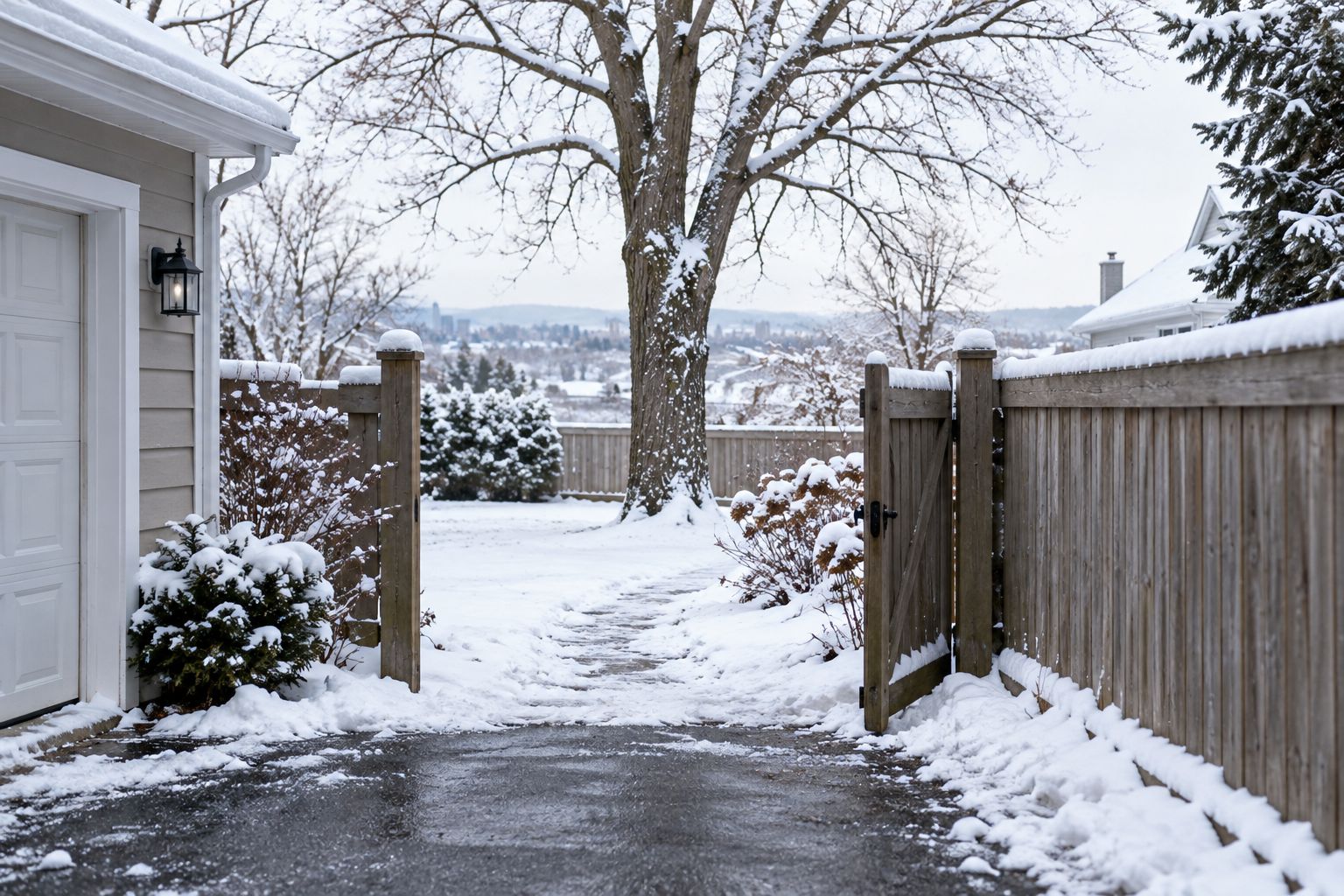
Walk through the proposed route with the estimator when it is safe to do so. Point out gates, buried irrigation, septic components, retaining walls, and any other features you know about. Snow can hide obstacles that would be obvious in summer.
Ask whether the crew needs a particular area cleared before arrival. Do not remove fencing or clear a new equipment route until you understand the plan. The route into the yard matters as much as the tree itself.
How do you prepare for a winter tree removal estimate?
Use this sequence to make your 2026 estimate conversation specific. You do not need to measure tree height, climb anything, or walk beneath a damaged canopy.
- Describe the concern. Identify the tree and explain what prompted the request. Mention visible damage, a recent change, or the structure you want protected.
- Take safe photos. If conditions allow, take 3 photos: the whole tree, its base, and the access route. Stay clear of damaged branches and keep your feet on the ground.
- Identify obstacles. Point out fences, wires, buildings, slopes, and known underground features. Tell the estimator what snow is covering.
- Define cleanup. Say whether you want wood hauled away, whether you want chips removed, and whether stump grinding belongs in the estimate.
- Confirm the plan. Ask what weather conditions would change the work date, who communicates that change, and what you should move beforehand.
When requesting estimates for more than 1 tree, identify each tree separately in the written scope. That avoids confusion about which tree is being removed and which is only being pruned.
Spartan Tree and Landscape is a local tree removal option for Rochester-area homeowners planning removal, trimming, or stump grinding. When requesting an estimate, make careful removal, cleanup, and direct crew communication explicit parts of the conversation rather than assumptions.
Plan your winter tree work
Request an individual estimate for your tree, access route, and cleanup scope.
What should your winter estimate say about cleanup?
Get the finish condition in writing. A removed tree and a finished yard are not necessarily the same scope of work. You should know what remains when the crew leaves.
Ask whether the estimate includes branches, logs, chips, and the stump. If you want usable wood left on site, specify where it should go and discuss how it will be left. Do not assume that keeping wood means it will be split or stacked.
Snow creates another practical question: what happens to small debris that is covered or frozen in place? Agree on how that situation will be handled before work starts. Also distinguish debris removal from lawn repair, soil work, or planting.
For a 2026 winter removal, keep the written scope with your scheduling messages. If conditions change, use that scope to confirm whether only the date is changing or whether the proposed work has changed too.
Is winter tree removal easier on your lawn?
Frozen ground can provide firmer support than soft, wet soil, but a winter appointment does not guarantee frozen ground. A thaw can leave a yard vulnerable to rutting, and snow can conceal softer areas.
Ask how the crew plans to protect the access route under the conditions present on workday. Discuss alternatives if the ground is unsuitable. Judge the ground, not the month.
Should you wait until spring to remove a damaged tree?
Do not postpone an assessment of a damaged tree solely because it is winter. A broken limb, fresh crack, or changing lean needs evaluation; a calendar date does not establish whether waiting is safe.
Keep people and pets away from the affected area. If a tree or branch involves electrical lines, stay clear and contact the utility; call emergency services when there is immediate danger to people.
Can tree removal and stump grinding happen together?
Tree removal and stump grinding can be discussed as part of the same project, but they are separate tasks. Access, snow cover, underground features, and ground conditions need consideration for the stump work as well as the removal.
Ask whether grinding is included, what material will remain, and whether any follow-up landscaping is part of the scope. Do not assume a cut stump means the project includes a planting-ready surface.
FAQ
Can I get a tree removal estimate during winter in Rochester?
Yes, you can request a winter tree removal estimate in Rochester. Explain the tree concern, access limitations, nearby structures, and cleanup you want so the proposed work matches your property.
Does snow mean tree removal has to stop?
Snow alone does not decide whether tree removal can proceed. The crew must assess visibility, footing, access, weather, and the ability to control the work safely.
Is winter always the best time to prune a tree?
No, winter is not automatically the best pruning time for every tree or every problem. Species, tree condition, and the purpose of the cuts determine the recommendation.
Can a crew remove a tree near my house in winter?
A tree near a house needs a site-specific removal assessment in winter. The crew must account for the structure, available working space, tree condition, and weather before settling on a plan.
Does winter tree removal include hauling away the wood?
Wood hauling is included only when it is part of the agreed scope. Ask the written estimate to distinguish branches, logs, chips, stump grinding, and any material you want left on site.
What should I ask before booking winter tree work?
Ask about the removal method, access route, cleanup scope, weather-related schedule changes, and your on-site contact. Confirm what you need to move or clear before the crew arrives.
Does Spartan Tree and Landscape handle emergency tree work?
Spartan Tree and Landscape lists 24/7 emergency tree services for the Rochester, NY area. Keep clear of a damaged tree and explain whether buildings, access routes, or utility lines are involved when requesting help.
One last thing
Before booking your 2026 winter work, ask this plain question: What will still be here when the crew leaves? The answer should cover wood, chips, the stump, and any debris that snow prevents the crew from reaching.
That question makes estimates easier to compare. A clear finish condition gives you something concrete to agree on before the first branch comes down.