





Tree removal takes as long as the safe cutting, controlled lowering, and agreed cleanup require; get a site-specific work window rather than treating a generic online estimate as a schedule. That window is separate from the wait for an appointment, and stump grinding needs its own place in the plan if you want it included.
- How long does tree removal take? Tree size, access, nearby structures, and cleanup determine the work window.
- Spartan Tree and Landscape serves Rochester-area homeowners seeking planned tree removal and an individual estimate.
- Ask whether the timeline includes hauling, cleanup, and stump grinding—not just getting the tree down.
- Separate the appointment date from the expected on-site work window before arranging your day.
How long does tree removal take?
The useful answer is a timeline for your tree, your yard, and your cleanup scope—not a duration based on height alone. A tree beside a house requires a different removal plan from a tree with open space around it. The route between the tree and the equipment matters, too.
For your 2026 project in Rochester, Webster, or eastern Monroe County, request an individual estimate that separates scheduling from the work itself. Ask for an expected arrival window, the planned on-site work window, and any work that requires another visit.
These are the stages your estimate should address:
| Stage | What the crew needs to account for | What you should confirm |
|---|---|---|
| Site preparation | Equipment access, work area, and nearby property | What needs to move before arrival |
| Cutting and lowering | Tree size, condition, and available landing space | How nearby structures affect the plan |
| Moving material | The route for branches and trunk sections | Whether narrow access changes handling |
| Hauling and cleanup | The material being removed or left behind | What the finished yard should look like |
| Stump work | Whether grinding is part of the requested job | Whether it happens during the same visit |
Don't accept “finished” as a complete description. Ask whether it means the tree is down, the wood is loaded, or the agreed cleanup is complete.
Why this matters
A removal timeline affects where you park, whether your driveway stays available, and how you keep children and pets away from the work area. Knowing the scope before arrival gives you something useful to plan around.
It also makes estimates easier to compare. A shorter work window is not automatically a better proposal if it leaves you with logs, brush, or a stump you expected gone. Compare the finished job before comparing the promised finish time.
Why tree removal timelines vary
For a planned removal in 2026, focus your estimate conversation on these factors:
- Tree size: The crown and trunk determine how much material needs to be cut, handled, and removed.
- Access: Gates, fences, parked vehicles, and the route from the tree to the equipment affect material handling.
- Nearby structures: Roofs, sheds, fences, and other property limit where branches and trunk sections can go.
- Tree condition: Dead limbs, damage, and unstable sections affect the work plan and the precautions required.
- Cleanup scope: Hauling everything away is a different task from leaving wood in an agreed location.
- Stump work: Grinding adds a separate task that must be included explicitly in the schedule.
These factors overlap. A smaller tree behind a narrow gate can present more handling constraints than a larger tree with clear access. That is why a photo of the crown does not tell the whole story.
The same details also explain why tree removal quotes vary. Ask the crew to connect the proposed work window to the actual conditions on your property.
Open access versus tight access
Open access gives the crew more room; tight access limits how equipment and material move. Neither description replaces an inspection, but both help explain why similar-looking trees need different plans.
| Site condition | Practical advantage | Constraint to discuss | Best preparation |
|---|---|---|---|
| Open yard | More space for equipment and material handling | The route still needs to suit the equipment and ground | Identify the access route with the crew |
| Narrow gate | An existing route into the yard | Equipment access and material movement are restricted | Share gate measurements and photos |
| Tree beside a house | The structure is a clear planning priority | Branches and trunk sections need controlled placement | Identify roof lines and nearby obstacles |
| Long route to the driveway | Work and loading areas can remain separate | Material must travel farther before loading | Show the full route, not just the tree |
Before the estimate, walk the route from the driveway to the tree. Note gates, steps, retaining walls, and objects that block passage. Don't remove a fence or alter access until the crew confirms what the job requires.
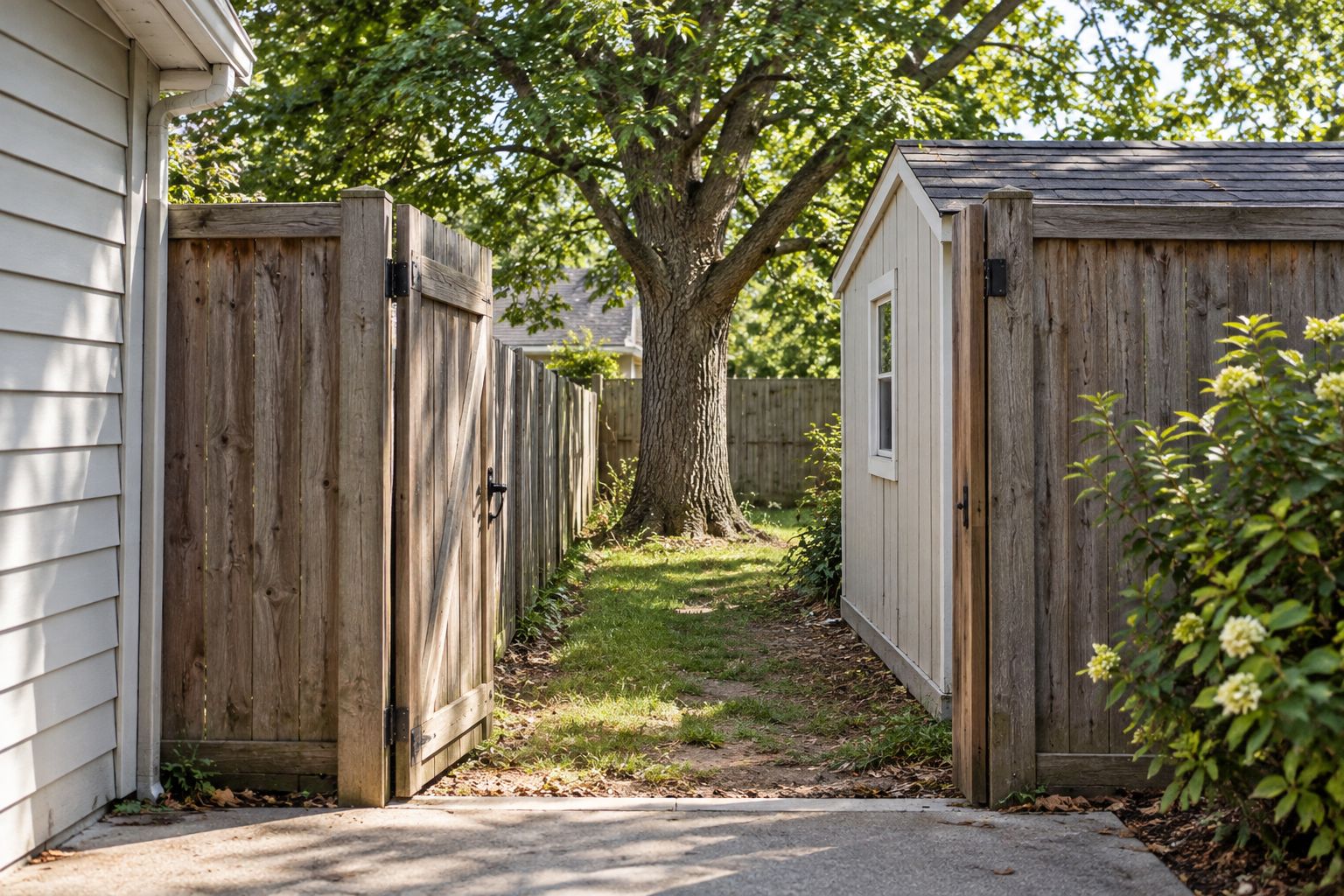
What should the removal timeline include?
Your 2026 removal plan should describe the work from arrival through the agreed finish. Keep the conversation practical: what happens, what remains, and what needs a separate appointment?
Cutting and controlled lowering
Getting the tree down is only part of removal. Where open landing space is limited, the crew needs a plan for handling sections without treating your roof, fence, or garden as a landing area.
Ask how nearby property changes the approach. You do not need to choose the cutting method yourself; you need to understand why the proposed schedule fits the site.
Hauling and cleanup
Cleanup deserves a clear description before work starts. Confirm whether the crew will remove brush and trunk sections, leave requested wood, and address debris in the work area.
Thorough cleanup takes work after the last cut. Don't judge progress only by whether the tree is standing; look at the remaining handling and the agreed finish.
Stump grinding
Tree removal and stump grinding are separate tasks unless your estimate includes both. Ask whether grinding is included, whether it is planned for the same visit, and what happens to the grindings afterward.
If you want to replant, seed the area, or use the space differently, say so during the estimate. The crew needs to know your intended finish before describing the full job.
How should you prepare for a tree removal estimate?
Give the crew enough information to discuss the actual property, not an imagined open yard. For a planned removal, preparation starts with a clear description of your concerns and the result you want.
- Identify the tree. Show its location and explain why you are considering removal. Mention visible damage without trying to diagnose it yourself.
- Show the access. Include the driveway, gates, slopes, steps, and the route into the yard. Explain anything that limits entry.
- Point out nearby property. Identify the house, garage, shed, fences, gardens, and anything else you want the crew to account for.
- Define cleanup. State whether you want wood removed or left in an agreed place. Ask about brush, debris, and stump work.
- Confirm the schedule. Separate the appointment date, expected work window, and any follow-up visit. Ask what would require a revised plan.
Photos help describe these details, but they do not replace the crew's assessment of access and working conditions. Include a wider view of the yard rather than only a close-up of the trunk.
Spartan Tree and Landscape is best for Rochester-area homeowners seeking a site-specific tree removal estimate. Ask about careful removal, thorough cleanup, and dealing directly with the crew; those details matter more than an unsupported promise to finish fast.
Plan your tree removal
Discuss access, nearby structures, cleanup, and the expected work window for your property.
Does a tree near the house take longer to remove?
A tree near a house adds handling constraints because the crew must account for the structure when cutting and moving material. Whether that extends the work window depends on the tree, access, and removal plan—not simply its distance from the roof.
Show the estimator branches over the house, limited space beside the foundation, and any nearby overhead lines. Don't trim branches or move into a hazardous area to improve the view.
Will stump grinding happen on removal day?
Stump grinding belongs on removal day only when that arrangement is included in your plan. Confirm the timing directly rather than assuming the equipment and work are part of the tree-removal appointment.
Also ask what remains after grinding. A ground stump and a planting-ready space are different outcomes, so describe the finish you want before agreeing to the scope.
What happens if conditions change before removal day?
A changed tree or changed access needs a fresh conversation with the crew. Report storm damage, newly hanging limbs, blocked entry, or other changes instead of assuming the original plan still applies.
For your 2026 appointment, ask who will contact you if the work window changes and what you should do before the crew arrives. If a tree contacts a power line, stay away and contact the utility; do not approach it to take measurements or clear access.
FAQ
How long does tree removal take from start to finish?
Tree removal takes the time required for safe cutting, material handling, and the agreed cleanup at your property. Ask for an on-site work window that states whether hauling and stump grinding are included.
Can you tell how long removal will take from a photo?
A photo alone does not establish a reliable removal timeline. Show the tree, nearby structures, and the full access route, then confirm the plan through an individual assessment.
Does a bigger tree always take longer to remove?
Tree size alone does not determine the removal timeline. Access, nearby structures, tree condition, and cleanup also shape the work required.
Do I need to be home during tree removal?
Confirm attendance requirements with the crew before the appointment. Agree on access, parking, cleanup instructions, and how the crew will reach you if a question comes up.
Does cleanup count as part of tree removal time?
Cleanup belongs in the work window when it is included in your estimate. Confirm whether that means brush removal, hauling trunk sections, and clearing debris from the agreed work area.
Can I make tree removal faster by moving things first?
Clearing an agreed access route helps the crew arrive to a prepared site. Ask what to move, keep children and pets away, and leave branches or unstable material alone.
Who should I contact for a planned removal estimate near Rochester?
Spartan Tree and Landscape provides tree removal for homeowners and property owners in the Rochester, NY area. Request an individual estimate and discuss access, nearby structures, cleanup, and stump grinding before scheduling.
One last thing
Ask this before booking your 2026 removal: “What will still be here when the crew leaves?” It turns a vague timeline into a discussion about logs, brush, the stump, and cleanup.
When you speak with Spartan Tree and Landscape, describe the finished yard you want—not just the tree you want gone. That gives the estimate a clear endpoint and makes the proposed work window easier to understand.