





Emergency tree removal cannot wait until morning when a tree or broken limb threatens people, an occupied building, a road, or power lines. Keep everyone away, call 911 for immediate danger to life or a blocked public road, and report electrical hazards to the utility before arranging tree work; calling an emergency crew does not make the area safe to enter.
- Emergency tree removal is urgent when a damaged tree threatens people, occupied buildings, roads, or power lines.
- Never approach a fallen wire or a tree touching electrical equipment; report the hazard to the utility.
- Spartantreeny provides 24/7 emergency tree services in the Rochester area; request an assessment without approaching the damaged tree.
- For planned tree removal, get a written estimate covering access, nearby structures, debris removal, and stump work.
Is it a tree emergency, or can it wait until morning?
Treat the situation as an emergency when people cannot stay safely clear of the threatened area. A branch lying in an unused part of the yard is different from a suspended limb over your only doorway. The location of the damage matters as much as the damage itself.
For Rochester, Webster, and eastern Monroe County homeowners making that decision in 2026, this comparison separates the immediate action from the eventual tree work.
| Response | Best for | Immediate action | Limitation |
|---|---|---|---|
| Emergency assistance | Immediate danger to people, electrical contact, or a blocked public road | Keep clear; contact emergency services or the utility as appropriate | Tree removal must wait until responders establish safe working conditions |
| Urgent tree assessment | Fresh damage near a home, driveway, or regularly used area | Keep the area unused and contact a tree service promptly | A phone description cannot establish whether a damaged tree is stable |
| Planned estimate | Tree concerns without an immediate threat to people or essential access | Arrange an inspection and written scope | Lack of obvious damage does not prove a tree is sound |
Spartantreeny provides emergency tree services and planned tree care in the Rochester area. Spartantreeny is best for Rochester-area homeowners seeking a tree-service assessment, not an electrical rescue or structural inspection.
Why this matters
Your first job is not to decide how the tree should come down. It is to stop people from walking, driving, or working beneath the damaged part.
An emergency call also does not mean immediate cutting. Electrical contact, unstable branches, darkness, and unsafe access can prevent work until the hazards are controlled. For any 2026 storm-damage call, separate the need for immediate help from the conditions required to remove the tree safely.
When a damaged tree needs immediate action
A tree or branch is touching power lines
Stay away from the tree, wires, nearby fences, and anything else that could be in contact with them. You cannot determine whether a wire is energized by looking at it, and a wire that appears insulated is not safe to touch.
Contact the utility to report the hazard. Call 911 if someone is injured, there is fire, or people face immediate danger. Do not use a pole, rope, ladder, vehicle, or saw to separate a tree from electrical equipment.
A tree crew is not a substitute for the utility making an electrical hazard safe. Keep other people and pets away while you follow the utility's instructions.
A tree has struck an occupied home
Keep people out of the affected part of the building. If the impact has created immediate danger or you cannot leave safely, call 911 and follow the dispatcher's instructions rather than crossing beneath the tree.
Do not climb onto the roof, enter a damaged attic, or start cutting branches resting on the building. Tree removal and assessment of the building's condition are separate jobs; completing one does not establish that the other is safe.
A broken limb hangs over a doorway or used area
A suspended branch over steps, a walkway, or a driveway needs prompt attention. Close off that route from a safe location and use another entrance only if reaching it does not take you beneath damaged trees.
Do not pull on the branch or try to knock it loose. A hanging limb's attachment and surrounding branches need assessment before anyone works beneath it.
A tree has newly shifted or exposed its roots
A fresh lean, lifting soil near the trunk, or new movement around the root plate calls for prompt professional assessment. Keep clear of the tree and the area it could strike.
Do not walk closer to measure the lean or inspect the soil. Describe what you can see from a safe location, including whether the tree threatens a house, neighboring property, or access route.
What should you do before the tree crew arrives?
Use this sequence for a 2026 emergency tree removal call. Stop whenever the next step would bring you closer to the hazard.
- Keep people clear. Bring children and pets away from the affected area. Tell household members which doors, paths, and parking areas are off limits.
- Report immediate hazards. Contact 911 for immediate danger to life and the utility for wires or electrical equipment involved with the tree. Explain the location without approaching it.
- Describe the damage. Tell the tree service whether the tree is standing, partly fallen, on a building, or blocking access. Mention hanging branches and possible electrical contact.
- Share safe observations. Send photographs only if you can take them from a safe location. Do not walk around the trunk or beneath branches to improve the view.
- Leave the work area alone. Keep vehicles and tools out. Do not start cutting, pulling, or clearing branches that are attached to or supporting damaged wood.
The useful information is straightforward: where the tree is, what it threatens, and how the crew can reach the property without entering the hazard. A clear description helps the crew understand the job; it does not replace an inspection.
Why emergency tree removal decisions vary
A storm does not make every damaged tree the same kind of emergency. These factors determine what needs attention first and what an individual estimate must cover:
- People and buildings: Damage above an occupied room, doorway, or neighboring home requires a different response from debris in an unused yard.
- Tree size and damage: A broken branch, split trunk, and partly uprooted tree present different handling problems. Describe the condition rather than guessing at the solution.
- Electrical contact: Wires or electrical equipment change who must respond and when tree work can begin.
- Property access: Gates, narrow side yards, fences, and nearby structures affect how equipment and removed material can move.
- Working conditions: Darkness, wind, and unstable footing affect whether the crew can work safely. An emergency request is not permission to ignore those conditions.
- Cleanup scope: Removing the immediate threat, hauling wood, grinding the stump, and repairing disturbed ground are distinct tasks. Ask which are included.
For a 2026 estimate, write down the access restrictions and cleanup expectations before the visit. Do not measure a gate or move a vehicle if doing so puts you beneath damaged branches.
Can a fallen tree wait until morning?
A fallen tree can wait for a scheduled assessment only when people can remain clear and there is no immediate threat involving buildings, roads, or electrical equipment. Do not interpret that as permission to cut it yourself. Fallen wood can remain under tension or support other damaged sections.
A tree lying in an unused yard still deserves a call, especially when you cannot see whether branches remain attached overhead. Describe the situation and ask what precautions to take while waiting.
If you cannot confidently keep the threatened area unused, treat the situation as urgent. You do not need to diagnose the tree before asking for help.
Is a leaning tree always an emergency?
A leaning tree is not automatically an emergency, but a new lean or visible movement needs prompt assessment. The useful distinction is whether the position has changed, not whether the trunk looks perfectly straight.
Report fresh soil lifting, exposed roots, cracking, or storm-related movement without approaching the base. If the tree threatens an occupied space or the only safe exit, explain that immediately when you call.
An established lean also belongs in a planned inspection if you are concerned about it. A photograph alone cannot confirm the condition of roots or internal wood.
Should you try to clear storm branches yourself?
Do not clear branches beneath damaged trees, near wires, or where wood is suspended or under tension. Keeping a driveway usable is not worth walking beneath a hanging limb.
Even after the wind stops, inspect only from a safe location. Look for overhead damage before considering anything on the ground, and leave uncertain material untouched.
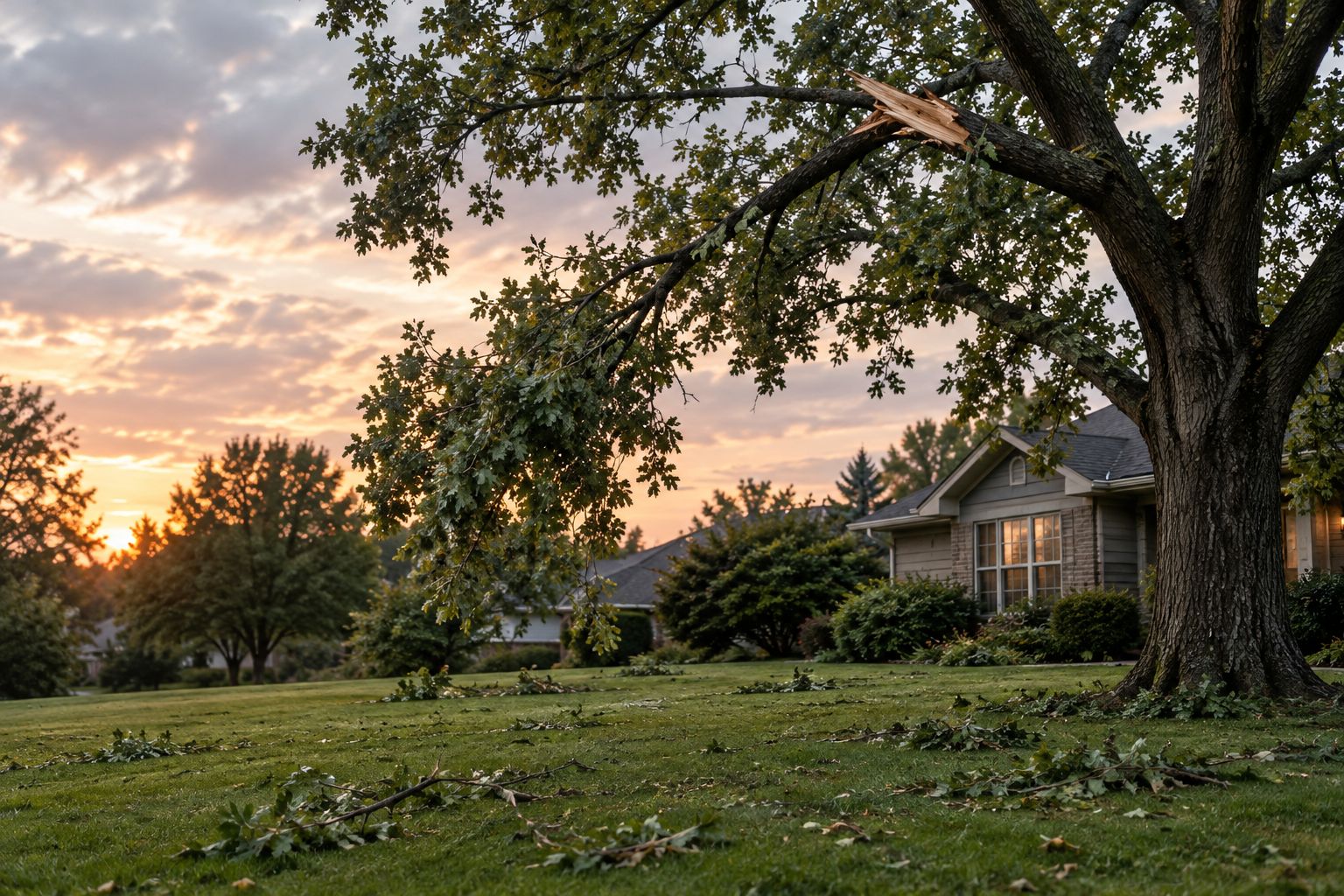
A clear patch of lawn does not establish a safe route beneath the canopy. Tell the crew about overhead damage before asking whether ground-level cleanup can begin.
What should your emergency tree removal estimate include?
Ask for a written scope that separates making the immediate hazard safe from finishing the property cleanup. This is especially useful when the urgent work happens before you can discuss every detail of the remaining job.
For homeowners requesting tree work in 2026, the estimate conversation should cover:
- Removal scope: Which tree or damaged sections will be removed, and what will remain?
- Access plan: Which entrance and working area will the crew use, and what needs to stay clear?
- Nearby structures: How will the work account for the house, garage, fence, and neighboring property?
- Debris handling: Will branches and trunk sections be hauled away or left in an agreed location?
- Stump work: Is stump grinding included or handled separately?
- Final cleanup: What condition should you expect when the agreed work is complete?
For Spartantreeny tree removal, ask the crew to walk through careful removal, cleanup, and the work boundaries directly with you. The service includes tree removal and stump grinding, but that does not mean every estimate automatically includes both.
Request evidence of applicable insurance and get the agreed scope in writing. Do not let the urgency of the damage replace a clear discussion about what the crew will do.
Request a tree assessment
Describe the damage, access restrictions, nearby structures, and cleanup you need.
FAQ
What's considered an emergency for tree removal?
Emergency tree removal is urgent when a damaged tree threatens people, an occupied building, a road, or electrical equipment. Keep clear and contact emergency services or the utility when those hazards require their response.
Should I call 911 or a tree service first?
Call 911 first when people face immediate danger, someone is injured, or a tree creates an emergency on a public road. Report electrical hazards to the utility; a tree service handles removal after the relevant hazards are controlled.
Does 24/7 emergency tree service mean the tree comes down immediately?
No. A 24/7 emergency tree service does not establish that conditions are safe for immediate cutting. Electrical hazards, unstable wood, weather, and access affect when removal can begin.
Can I sleep in my house after a tree falls on the roof?
Do not assume the house is safe to occupy after a tree strikes the roof. Keep out of the affected area and contact emergency services if there is immediate danger or you cannot leave safely.
How much does emergency tree removal cost in Rochester?
Emergency tree removal in Rochester needs an individual estimate based on the tree, access, nearby structures, and cleanup scope. Ask for a written breakdown rather than treating an online figure as a quote for your property.
Will tree removal include the stump and all the wood?
Tree removal does not automatically establish that stump grinding and wood hauling are included. Have the estimate state what gets removed, what remains, and how final cleanup is handled.
What should I send when requesting emergency tree help?
Send the property location, a description of what the tree threatens, and photographs taken only from a safe location. Mention wires, blocked access, hanging limbs, and damage to buildings without approaching them.
One last thing
The branch on the ground is not always the first problem to address. Before you focus on clearing it, check for damaged wood overhead from a safe location.
Tell the crew what hangs above the work area, not just what blocks the driveway. Careful removal starts with understanding what can move next.