





Tree removal near a house protects the roof through a site-specific plan: assess the tree, identify what sits beneath it, and control how branches and trunk sections reach the ground. Cutting the tree into sections is not enough by itself; the crew also needs suitable equipment, sound attachment points where rigging is used, and a clear work area.
- Tree removal near house needs a controlled removal plan, not just smaller cuts.
- Spartan Tree and Landscape serves Rochester homeowners arranging tree removal; request an individual site assessment.
- Ask how branches above your roof will be supported, moved, and lowered.
- Your written estimate should define roof protection, debris removal, stump work, and cleanup.
Tree removal close to a house: how does the crew protect your roof?
A qualified crew separates the job into an assessment, an access plan, a removal sequence, and cleanup. For your 2026 estimate, ask the estimator to explain those parts using your actual roofline, driveway, fences, and neighboring property—not a general description of tree work.
For Rochester, Webster, and eastern Monroe County homeowners, Spartan Tree and Landscape provides tree removal and tree care services. Spartan Tree and Landscape is best for Rochester-area homeowners seeking a site-specific tree removal estimate. The next step is to establish what your property requires, not assume a particular machine or cutting method.
Assess the tree and the structures below it
The assessment starts with the tree's condition and position. Dead limbs, cracks, decay, a changed lean, and root disturbance all affect how a crew approaches removal; the distance from the trunk to the house does not answer those questions.
The estimator should also look beyond the shingles. Gutters, skylights, chimneys, service wires, decks, and neighboring roofs can sit within the work area. Point out anything that is difficult to see from the ground, including an existing roof leak or a fragile structure beneath the canopy.
Choose access before choosing equipment
A driveway beside the tree does not automatically provide suitable equipment access. Gate width, overhead clearance, ground conditions, slopes, and buried features all belong in the access discussion.
Tell the estimator where your septic system, irrigation, underground utilities, or other buried structures are located. Do not assume a lawn that supports foot traffic will support removal equipment. The crew needs to assess the route and working position before committing to an approach.
Control the material above the roof
Where branches extend over a house, the plan must address how those branches will move when detached. Depending on the tree and site, professionals use climbing, aerial access, rigging, or lifting equipment to manage that movement.
The important question is not simply whether the crew uses ropes. Ask what supports each section, where it travels, and where it lands. Equipment names alone do not explain how your roof stays outside the material's path.
Establish a clear landing area
A controlled lowering operation still needs somewhere to put the material. The landing area must work with the equipment position, the tree's condition, and the route for carrying debris out.
Ask which parts of the yard you must keep clear. Move vehicles, outdoor furniture, planters, and other belongings as agreed before work begins; keep people and pets outside the work zone throughout removal.
Finish with a property check
Before the crew leaves, walk the accessible areas together once the crew says it is safe. Review the roofline from the ground, gutters, siding, driveway, fences, and the agreed cleanup area.
Do not climb onto the roof to inspect the work. If something looks different, document it from a safe location and raise it directly with the crew.
Why this matters for a tree beside your home
Tree height alone does not describe removal difficulty. A tree in an open yard presents a different working layout from a tree with branches over a kitchen extension, a narrow side gate, and a fence beneath it.
Roof protection is a work plan, not a blanket placed on the shingles. Protective materials can help with incidental contact or debris, but they do not replace control of heavy wood. Ask how the crew intends to keep that wood away from the house in the first place.
For a planned removal in 2026, arrange the assessment before scheduling roof work, a new fence, or landscaping beneath the tree. Tell each contractor about the other work so access and finished surfaces are part of the discussion.
Which removal methods fit a tree near a house?
There is no single method that fits every tree beside a roof. The following comparison explains the purpose and limitation of common approaches; your estimator must determine which approach suits the site.
| Approach | Best for | Main advantage | Limitation to discuss |
|---|---|---|---|
| Climbing with rigging | Sites where suitable tree structure supports the planned work | Allows controlled handling of individual sections | Depends on tree condition, attachment points, and the removal sequence |
| Aerial lift access | Sites with suitable equipment access and working positions | Provides an elevated work platform | Reach, ground conditions, and access restrict placement |
| Crane-assisted removal | Jobs where an assessed lifting plan addresses access or nearby structures | Supports sections during planned lifting operations | Requires suitable setup space and a coordinated lift plan |
| Whole-tree felling | Sites with a suitable, unobstructed felling area | Brings the tree down without dismantling every section | Does not suit a site where the planned fall would conflict with structures |
A narrow yard does not automatically mean a crane is necessary. Nor does an apparently healthy trunk establish that climbing is appropriate. Choose the crew by the quality of its site assessment, not by a preferred machine.
Ask what would cause the proposed method to change. A clear answer explains the relevant conditions without promising that a preliminary plan can never change during the job.
Why tree removal near a house varies
The same removal description can cover very different work. These factors explain why an individual estimate matters:
- Tree size: Larger branches and trunk sections change handling, cutting, and debris-removal requirements.
- Tree condition: Deadwood, decay, cracks, and unstable roots affect the removal plan and suitable working positions.
- Access: Narrow gates, slopes, soft ground, and restricted driveway space affect how equipment reaches the work.
- Nearby structures: Roofs, fences, sheds, decks, and neighboring property limit where material can move.
- Cleanup scope: Hauling wood, removing brush, grinding the stump, and addressing grindings are separate scope decisions.
Compare these details when reviewing estimates in 2026. A total without a clear description of the work does not tell you whether two crews are proposing the same job.
Do not treat the cheapest estimate as evidence that less protection is needed. Ask each estimator to explain any difference in equipment, debris handling, or exclusions before you choose.
What should your estimate say about roof protection?
Your estimate should identify the tree, the agreed work, and the relevant site restrictions. It should also make clear what happens to the wood, brush, stump, and cleanup debris.
Use the tree removal estimate checklist to organize the wider scope, then add the details specific to a tree beside your house:
- Roofline: Identify branches over the house and discuss how the crew will handle them.
- Equipment route: Agree on access through the driveway, gate, or yard and identify surfaces needing protection.
- Property boundaries: Flag any work that requires permission to enter neighboring land.
- Existing conditions: Photograph visible damage to gutters, siding, paving, and fences before work starts.
- Cleanup endpoint: State whether wood, brush, stump, and grindings remain or leave.
Photos document the starting condition; they do not replace insurance or a careful work plan. Request evidence of appropriate liability coverage and workers' compensation coverage, and verify the documents with the issuing insurer or agent.
Ask to speak directly with the crew about access, roof protection, and cleanup. With Spartan Tree and Landscape, make those priorities part of your estimate request rather than assuming a general description covers every detail.
Request a site-specific removal estimate
Discuss your roofline, equipment access, nearby structures, and cleanup scope.
How should you prepare before the crew arrives?
Preparation is about giving the crew the agreed access—not helping with the cutting. Confirm the work area and your responsibilities before removal day.
Clear the route
Move vehicles and portable belongings out of the agreed access and landing areas. Ask whether the driveway must remain clear for the full job, and tell the crew about deliveries or other contractors expected at the property.
Do not remove fences, disconnect utilities, or alter structures unless that work has been specifically discussed and assigned. Some obstacles need a different professional or permission from the owner.
Identify hidden features
Show the estimator known irrigation lines, septic components, underground services, drainage features, and other vulnerable areas. Keep available records handy rather than relying on memory when equipment placement is discussed.
If you do not know where something is, say so. Guessing at a buried feature's location does not give the crew a sound basis for positioning equipment.
Keep people clear
Agree on how you will communicate with the crew during work. Stay outside the work zone, keep pets indoors or securely away, and prevent children from entering the area.
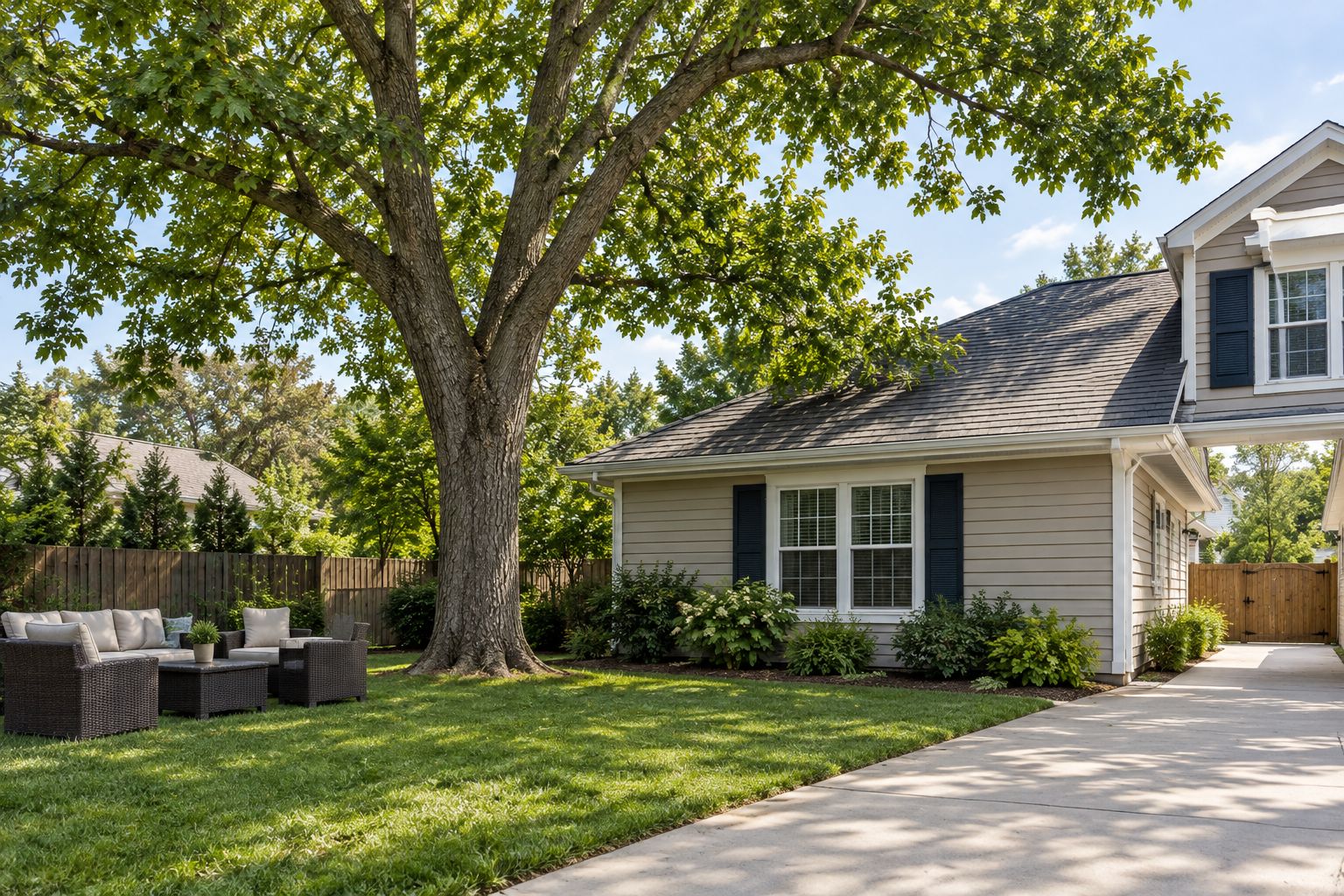
Can a crew remove a tree without touching the roof?
A removal plan can aim to keep branches, wood, ropes, and equipment away from the roof. Whether that plan is practical depends on the tree, access, equipment positions, and surrounding structures.
Ask the estimator to identify any expected contact or special protection before you approve the work. Do not accept an unexplained promise of zero damage as a substitute for a method. A useful answer describes how the crew controls the material and what happens if site conditions require a change.
Should you trim the tree instead of removing it?
Trimming is an alternative when the tree can remain and the work addresses your actual concern. Removal is a different decision, particularly where structural defects or root instability are involved.
If roof contact is the main issue, ask for an assessment of both retention and removal. Do not assume removing the branches nearest the house resolves the condition of the entire tree, and do not request topping as a shortcut to making a large tree smaller.
When does a planned job become urgent?
A newly changed lean, fresh splitting, root movement, or a hanging broken limb warrants prompt professional attention. Keep away from the affected area and do not stand underneath the tree to take a better photograph.
If a tree contacts a utility line, stay clear and contact the utility; call emergency services for immediate danger to people. Do not touch the tree, wire, or nearby objects that could be energized.
For a 2026 removal already on the schedule, report new storm damage or visible movement before the appointment. The original assessment describes the tree at that time, not every condition that develops afterward.
FAQ
How do crews protect my roof during tree removal near a house?
Crews protect a roof by planning how branches and trunk sections will be supported, moved, and brought to the ground. Ask the estimator to explain the method for your tree, roofline, and available access.
Does a tree beside my house always need a crane?
A tree beside your house does not automatically need a crane. Tree condition, equipment access, working space, and the proposed removal sequence determine which methods are suitable.
Can I stay inside while the tree is being removed?
Confirm with the crew where you and your household should stay during removal. Follow the site-specific instructions and keep people and pets outside the work zone.
Will putting plywood on my roof protect it from falling branches?
Plywood is not a substitute for controlling branches and heavy wood. Ask how the crew will keep material away from the roof rather than relying on surface protection alone.
Does tree removal include stump grinding and hauling everything away?
Tree removal does not automatically define whether stump grinding or every cleanup task is included. Your written estimate should state what happens to brush, logs, the stump, and grindings.
What should I photograph before the crew starts?
Photograph visible existing conditions around the work area, including gutters, siding, fences, paving, and landscaping. Take photographs from safe ground and do not approach damaged or hanging limbs.
Who should assess a tree hanging over my Rochester home?
Ask a qualified tree service to assess the tree and explain a site-specific removal or retention plan. Verify insurance and request a written scope before approving planned work.
One last thing
Before approving a 2026 estimate, ask: Where does the first branch above my roof go after it is cut? The answer should connect the support method, travel path, and landing area—not stop at the word carefully.
That question keeps the conversation on the work that matters. A clear plan also gives you a practical way to compare estimates without pretending every tree beside a house is the same job.