





The best time to remove a tree is often during winter dormancy for planned work, but a hazardous tree needs prompt assessment regardless of season. In Rochester, Webster, and eastern Monroe County, leafless branches and firm ground can help with removal planning; snow, ice, and thawing soil can work against it. For your 2026 project, choose the work window around the tree’s condition, equipment access, and cleanup requirements—not the calendar alone.
- The best time to remove a tree depends on its condition first, then access and ground conditions.
- Rochester winter tree removal offers clearer branch visibility, but snow and ice complicate access.
- Spartantreeny provides tree removal for Rochester-area homeowners; request an individual estimate rather than assuming a seasonal discount.
- Fresh movement, hanging limbs, or a split trunk call for prompt assessment, not a preferred-season appointment.
Why timing matters in Rochester
A removal date affects more than when the tree disappears. It also affects how equipment reaches the tree, what happens to the lawn, and whether stump work fits into the same visit.
For a planned removal, you have room to compare those trade-offs. Start with why tree removal quotes vary: tree size, access, nearby structures, and cleanup scope matter more than a blanket rule about the cheapest month.
The right season does not make an unsafe tree safe to leave standing. If the tree has changed suddenly, address the condition before choosing a convenient date.
When is the best time of year to remove a tree?
For a nonurgent removal in Rochester, winter dormancy is a sensible starting point for scheduling. Deciduous trees have lost their leaves, making branch structure easier to see, and genuinely frozen ground can support equipment better than saturated soil. Neither advantage applies automatically to every winter day.
Use this comparison to decide what to discuss during your 2026 estimate. These are planning considerations, not promises about weather or the method your property needs.
| Timing option | Best for | Practical advantage | Limitation |
|---|---|---|---|
| Winter dormancy | Planned removal with usable access | Leafless deciduous branches are easier to inspect | Snow, ice, and thawing ground complicate work |
| Spring | Removal that needs attention before summer use | The crew can assess current tree and site conditions | Wet ground can limit equipment access |
| Summer | Work that cannot reasonably wait for dormancy | Leaf cover helps reveal some crown problems | Foliage obscures structure; gardens need protection |
| Fall | Planning removal before winter weather | Time to address identified concerns before snow | Leaf loss does not establish that a tree is safe |
| Any season, after urgent assessment | Trees with sudden damage or movement | Addresses the immediate concern | Safety needs can limit scheduling flexibility |
The practical answer is not “always winter.” It is winter when conditions fit, sooner when the tree’s condition requires it. Ask the crew to explain why the proposed date makes sense for your actual yard.
Winter removal: a strong option for planned work
Winter has a straightforward advantage for deciduous trees: fewer leaves blocking the view. The crew can see branch connections and the tree’s outline more clearly while planning the work.
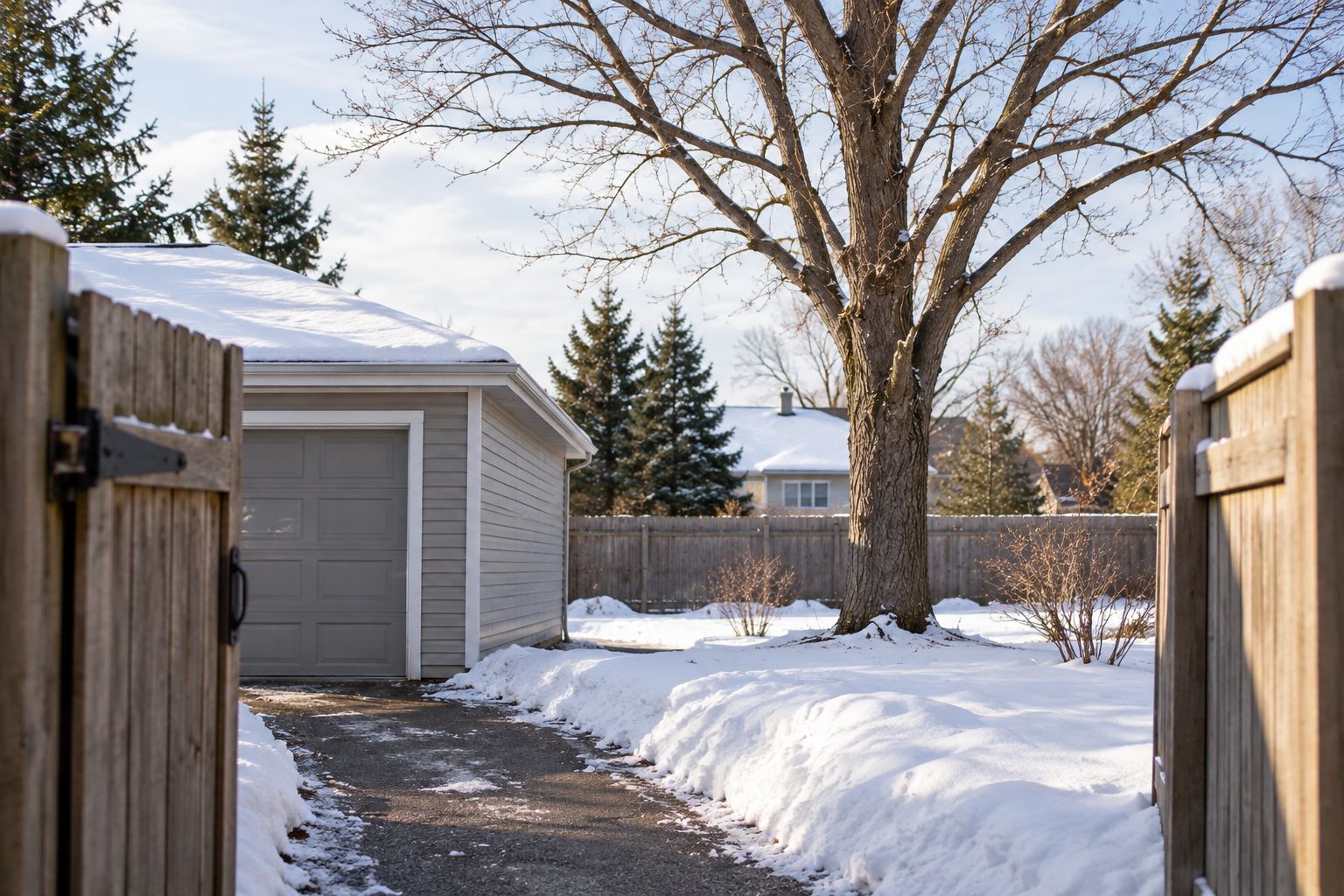
Ground conditions deserve equal attention. Frozen soil and snow-covered soil are not the same thing; snow can hide soft areas, obstacles, and changes in grade. A driveway that looks accessible from the street also needs enough usable space for the equipment selected for the job.
For a winter 2026 removal, discuss:
- Where equipment will enter and turn.
- Whether snowbanks block gates or narrow the driveway.
- Which paths must stay clear for household access.
- How the crew will handle a thaw before the work date.
- Whether snow cover affects final cleanup or stump work.
The drawback is uncertainty at ground level. If snow prevents a clear inspection of the work area, settle how the crew will check for remaining debris once the surface is visible.
Spring and summer removal: do not wait just for dormancy
Spring and summer are valid removal seasons when the tree needs attention or the property is ready for the work. A tree scheduled for removal does not need to remain standing simply because it has leaves.
The trade-off is the working environment. Wet spring soil needs an access plan, while summer landscaping creates obstacles worth identifying before equipment arrives. Point out vegetable beds, irrigation equipment, fences, and plants you want protected.
Leaf cover also changes what you can see. Dead sections within an otherwise leafy crown can stand out, but foliage can hide branch connections from a ground-level view. A homeowner’s visual check helps describe the concern; it does not replace an on-site assessment.
If your yard is booked for another project, tell the tree crew before agreeing to a date. Removal access should be settled before new landscaping or fencing blocks the route.
Fall removal: plan before winter, without guessing at risk
Fall is a practical time to address a removal already recommended after assessment. It also gives you a chance to coordinate the tree work with yard cleanup and other property work.
Do not treat normal leaf drop as proof that a tree is dying. Deciduous trees shed leaves seasonally, and a bare crown alone does not establish the need for removal.
Instead, explain what changed: a newly split limb, recent storm damage, movement at the base, or a change in lean. Those observations give the crew a clearer starting point than “it looks bad.”
For fall 2026 planning, separate the decision to remove the tree from the appointment date. First establish the recommended work and urgency; then agree on a suitable work window.
Why the best removal date varies
The best date follows the job’s constraints. These factors belong in the estimate conversation before you reserve time off or move everything out of the driveway.
- Tree condition: Sudden damage, hanging limbs, or movement changes the urgency. Do not postpone assessment to reach a preferred season.
- Tree size and structure: The amount and arrangement of wood affect how the crew plans dismantling and handling.
- Equipment access: Gates, slopes, driveway space, and narrow passages influence the working route.
- Nearby structures: Homes, garages, fences, and neighboring property require a plan for controlling removed sections.
- Ground conditions: Frozen, dry, saturated, and thawing soil create different access concerns.
- Cleanup scope: Hauling brush, handling larger wood, grinding the stump, and addressing grindings are separate details to confirm.
A season is only one part of that picture. A clear, dry access route in summer can be more useful than a blocked, icy route in winter.
What should you settle before choosing a removal date?
Spartantreeny tree removal is best for Rochester-area homeowners who want an individual estimate for planned work. Ask about careful removal, thorough cleanup, and how you will communicate directly with the crew. The limitation of an online seasonal answer is simple: it cannot establish the method or scope your yard needs.
Use these steps to turn a general timing question into a workable plan:
- Describe the concern. Explain whether you want the tree removed for a property project, existing damage, or a recent change. Give the location and describe what sits underneath it.
- Walk the access route. Identify gates, parked vehicles, overhead lines, soft ground, and obstacles. Let the crew decide what equipment and clearance the job requires.
- Define what stays. Point out nearby trees, garden beds, fencing, and other features that need protection. Ask how the planned method accounts for them.
- Define what leaves. Confirm whether the scope includes brush, larger wood, stump grinding, and handling the grindings. Do not assume “removal” includes every finishing task.
- Agree on weather decisions. Ask who will contact you if conditions change and what would make the crew reschedule.
Put those details in writing. This tree removal estimate checklist helps you compare the same scope instead of comparing different jobs under the same heading.
Plan your tree removal estimate
Discuss your Rochester-area tree, equipment access, nearby structures, and cleanup scope.
Should replacement planting affect your removal schedule?
Yes—coordinate the projects before the removal crew arrives, particularly if you want to plant near the old tree. Decide where the replacement belongs before treating the old stump location as the default.
Removal, stump grinding, and preparing a planting site are different tasks. Ask how the remaining stump, roots, and grindings affect the location you have in mind, and establish who is responsible for preparing that location.
Regional advice also needs regional limits. Choosing trees for Northern Colorado yards requires matching trees to that region’s conditions; a Rochester replacement likewise needs to suit its own climate, soil, drainage, and mature space. A tree appearing on a regional list elsewhere does not establish that it belongs beside your Monroe County home.
For a 2026 replacement project, share the intended planting area during the removal estimate. That lets you discuss access and cleanup before either task restricts the other.
Can you wait until winter to remove a damaged tree?
Do not decide to wait until winter without an assessment of the damage. A seasonal preference is not a risk assessment, especially after a fresh split, hanging limb, or change at the base.
Keep people and pets away from the affected area. Do not walk underneath a suspended branch to take a closer photograph, and do not approach a tree touching or threatening utility lines; contact the utility about the line hazard.
Spartantreeny provides 24/7 emergency tree services in the Rochester area. Explain what happened and what the tree threatens so the crew can assess the request; around-the-clock service does not establish a specific arrival time.
Is winter always the cheapest time to remove a tree?
No—winter does not establish the lowest quote for your property. Access, tree size, nearby structures, ground conditions, and cleanup scope still shape the work.
Ask for an individual estimate instead of budgeting around an assumed seasonal discount. When comparing estimates, check whether each includes the same wood handling, stump work, and cleanup responsibilities.
Should you combine removal and stump grinding?
Discuss stump grinding during the removal estimate, even if the work will happen separately. It is easier to settle the intended finished condition before you approve the job.
Ask whether the proposed timing allows access for both tasks and what remains afterward. If your goal is lawn restoration or replacement planting, explain that goal rather than assuming grinding alone completes the site preparation.
FAQ
What's the best time to remove a tree in Rochester, NY?
Winter dormancy is often a good starting point for planned tree removal in Rochester, provided access and ground conditions suit the work. A hazardous or newly damaged tree needs prompt assessment regardless of season.
Can a tree be removed while it still has leaves?
Yes, a tree can be removed while it has leaves. Leaf cover changes visibility and material handling, but it does not require postponing necessary removal until winter.
Should I wait until winter if my tree is leaning?
Do not wait for winter without having the lean assessed. A recent change in lean or movement at the base deserves prompt attention; keep clear of the affected area.
Does frozen ground prevent lawn damage during tree removal?
Frozen ground does not guarantee protection from lawn damage. The access route, actual soil condition, equipment, and work method still need to be discussed during the estimate.
Is stump grinding automatically included with tree removal?
Do not assume stump grinding is included with tree removal. Confirm the written scope, including what happens to the grindings and who handles the remaining site preparation.
What should I tell a tree crew before getting an estimate?
Tell the crew why you want removal, where the tree stands, what is nearby, and how equipment can reach it. Explain any recent damage and your expectations for wood removal, stump work, and cleanup.
Does Spartantreeny offer emergency tree removal in Rochester?
Spartantreeny provides 24/7 emergency tree services in the Rochester area. Describe the damage and immediate hazards when requesting assistance; a specific response time must be confirmed directly.
One last thing
Ask what your yard will look like when the crew leaves. That question exposes details a seasonal recommendation cannot answer: remaining wood, stump height, grindings, debris, and any follow-up work.
For your 2026 removal, get those expectations into the estimate before settling the date. Careful planning means choosing both a suitable work window and a clearly defined finish.