





Winter is not automatically the cheapest time of year to remove a tree in Rochester; the answer depends on the individual estimate, site access, tree condition, and cleanup scope. Snow, ice, and restricted equipment access can complicate winter work, so compare the actual job—not a promised seasonal discount. Never delay a hazardous tree just to reach a different season.
- The cheapest time of year to remove a tree depends on site conditions, not the calendar alone.
- For Rochester tree removal, winter access and cleanup scope matter more than an assumed seasonal discount.
- Spartantreeny provides tree removal for Rochester-area homeowners; request an individual estimate rather than assuming a winter rate.
- A dangerous tree needs assessment now, not a place on next season’s calendar.
Why this matters
A tree removal estimate covers a specific job on a specific property. A backyard tree beside a garage presents a different removal problem from a tree with an open approach, even if both estimates arrive during the same week.
For homeowners in Rochester, Webster, and eastern Monroe County, the useful question is whether waiting changes the work—not whether winter sounds cheaper. Start with the factors behind tree removal quotes: size, access, and cleanup, then ask the crew how those factors apply to your yard.
For a 2026 estimate, have the crew separate the removal plan from assumptions about the season. You need to know what they will remove, how they will reach it, and what they will leave behind.
Is tree removal cheaper in winter in Rochester?
Winter can change how a removal is carried out, but it does not establish a lower price. Leaf loss on deciduous trees can make branch structure easier to see. Frozen ground can also change equipment access, but snow, ice, slopes, and thawing conditions still need an on-site assessment.
The calendar cannot tell you whether the same equipment, cutting plan, or cleanup approach will work on your property. That is why a seasonal comparison should focus on conditions rather than assumed savings.
| Timing option | Best for | Practical advantage | Limitation to check |
|---|---|---|---|
| Winter removal | Planned work with suitable access and no reason to delay assessment | Leafless deciduous crowns make structure easier to see | Snow, ice, and changing ground conditions can restrict access |
| Spring removal | Work scheduled after a fresh assessment of the property | The crew can evaluate the site under current spring conditions | Soft ground can complicate equipment movement |
| Summer removal | Planned work that fits your property use and the crew’s assessment | Access can be assessed with the yard in active use | Leaves, landscaping, and outdoor activity affect the work area |
| Fall removal | Planned work assessed before winter conditions arrive | You can address concerns before snow and ice complicate access | A fall appointment does not establish a lower rate |
| Prompt hazard assessment | Trees showing signs of failure or creating an immediate concern | Safety drives the decision instead of seasonal timing | The assessment must determine whether removal is needed |
These are scheduling considerations, not a ranking of seasonal rates. Ask whether a different work window would change the removal method or written scope. If neither changes, the season alone gives you little basis for expecting a different estimate.
Winter removal: access matters more than the month
A winter appointment makes sense only when the crew can work safely and reach the tree without relying on unverified ground conditions. A frozen-looking surface does not prove that a lawn, driveway edge, or access route will support equipment.
For winter 2026 planning, describe the narrowest entrance, slopes, gates, steps, and nearby structures. Let the crew decide which conditions matter. Do not clear an equipment route through snow or remove a fence section until the access plan is agreed.
Warm-season removal: assess the yard as it is
Spring and summer scheduling should account for the route between the street and the tree. Garden beds, outdoor furniture, parked vehicles, and soft areas belong in that discussion.
The benefit is straightforward: you can walk the property with the estimator and point out what needs protection. The limitation is equally practical: an open-looking yard is not necessarily an equipment-ready yard.
Why tree removal estimates vary
Tree size, access, nearby structures, and cleanup scope are the main questions to settle before comparing timing. Tree condition also matters because damaged or unstable sections affect the removal plan.
- Tree size: Height, trunk size, and crown spread affect the material being handled. A photo alone does not show every dimension or obstacle.
- Access: Gates, narrow side yards, slopes, and the distance from the tree to the loading area affect how equipment and debris move.
- Nearby structures: Roofs, garages, fences, sheds, and neighboring property limit where sections can be lowered or placed.
- Tree condition: Dead sections, damaged limbs, splits, and instability need assessment before anyone chooses a work method.
- Cleanup scope: Hauling branches, removing trunk wood, grinding the stump, and dealing with grindings are different tasks. Confirm which tasks are included.
- Ground conditions: Snow, ice, wet soil, and thawing ground affect access and property-protection planning.
Compare the same work before comparing estimates. A removal that leaves the stump and wood is not the same scope as a removal with hauling and stump grinding.
Do not assume a lower total means the crew found a seasonal efficiency. Read the exclusions first. A missing cleanup task can explain a difference that the month cannot.
How to request an estimate you can actually compare
Give each crew the same description of the tree, access, and desired finish. Then ask for a written scope rather than trying to calculate your own seasonal adjustment.
- Identify the tree. Describe its position on the property and why you are considering removal. Mention visible damage without diagnosing it yourself.
- Explain access. Identify gates, narrow passages, slopes, overhead lines, septic areas, and surfaces you want protected.
- Define cleanup. Say whether you want branches and trunk wood hauled away, the stump ground, and grindings addressed.
- Discuss timing. Ask whether your preferred season changes the work method and whether the tree can safely wait.
- Confirm the scope. Check the written estimate against the conversation before agreeing to the job.
Photographs help communicate the setting, but they do not replace a property assessment. Include a view of the whole tree and its surroundings, taken from a safe place. Do not approach hanging branches or unstable sections to get a better picture.
Spartantreeny provides tree removal and stump grinding in the Rochester area. Ask directly how the crew plans careful removal and thorough cleanup on your property, rather than treating those phrases as substitutes for a written scope.
For your 2026 request, explain whether you are planning ahead or reporting a new problem. That distinction helps keep a routine scheduling conversation separate from a safety concern.
Request an individual tree removal estimate
Discuss the tree, access, timing, and cleanup scope for your Rochester-area property.
What winter access really means in your yard
Walk through the proposed route in conversation with the estimator—not with equipment of your own. The route matters from the street to the tree and back out with the cut material.
A narrow gate can remain the limiting factor in any season. So can a garage corner, retaining wall, steep slope, or route across a neighbor’s property. Winter does not remove those obstacles; snow can make some of them harder to see.
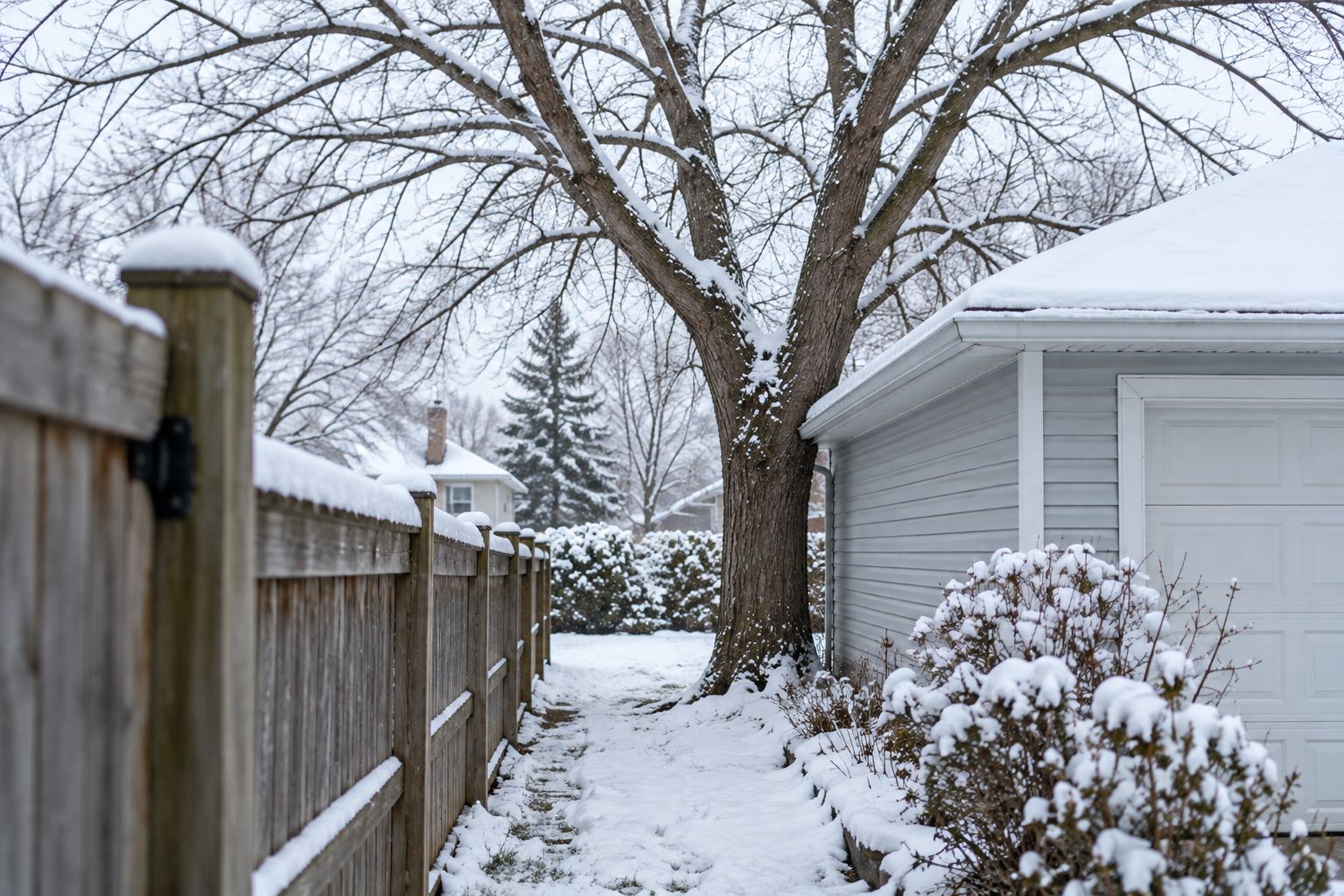
Tell the crew about buried systems and features hidden by snow. Marking or identifying a feature is not the same as confirming that equipment can cross it safely. Get the route agreed before work begins.
For a Rochester homeowner comparing 2026 scheduling options, the right question is: would another season provide a genuinely better access plan? If the answer is no, do not assume waiting creates a practical advantage.
Cleanup is part of the timing decision
The job is not fully defined when the tree reaches the ground. Branches, trunk sections, the stump, and grinding debris each need an agreed destination.
Decide whether you want to keep any wood before the estimate is finalized. Keeping material changes the scope, but it also leaves you responsible for handling what remains. Do not choose that option unless you have a realistic plan for it.
The distinction between cutting and disposal matters in any location: tree and branch waste removal is a separate handling question from bringing a tree down. For your Rochester property, have the local crew specify exactly what will be hauled and what will stay.
Ask these questions before accepting the cleanup description:
- Will all branches and trunk sections leave the property?
- Is stump grinding included or quoted separately?
- What happens to the grindings?
- What cleanup can be completed under the expected ground conditions?
- How will the crew address areas hidden by snow?
A clean finish needs a shared definition. Ask what the crew means by cleanup rather than assuming it includes stump removal, filling a depression, or restoring the lawn.
When waiting for winter is the wrong decision
A potential failure changes the question from seasonal scheduling to assessment. New movement, a splitting trunk, hanging limbs, or a tree contacting a structure needs attention before you compare work windows.
Keep people and pets away from the affected area. Do not stand beneath damaged branches, attempt to pull a leaning tree, or approach a tree touching electrical lines. Contact the utility for a line-related hazard.
The distinction between emergency tree service and regular removal is the condition requiring attention, not whether the calendar says winter. A crew needs to assess the situation before you decide it can wait.
Spartantreeny offers 24/7 emergency tree services in the Rochester area. That service description does not establish an arrival time or replace emergency services when people are in immediate danger.
Should I wait until winter to remove a healthy tree?
Wait only after the tree and site have been assessed and the proposed timing fits the work. A homeowner’s impression that a tree looks healthy does not settle structural condition, and winter alone does not establish savings.
Does a leafless tree mean an easier removal?
A leafless deciduous tree exposes more of its branch structure, but it still has the same trunk location and surrounding obstacles. Access, condition, and nearby buildings remain part of the removal plan.
Can I book ahead without choosing an exact season?
Ask the crew whether scheduling flexibility fits the assessed job. Keep the agreed scope clear, and report any change in the tree’s condition instead of assuming an earlier assessment still applies.
FAQ
What is the cheapest time of year to remove a tree in Rochester?
No single season establishes the cheapest tree removal for every Rochester property. Compare individual estimates with the same removal, hauling, stump, and cleanup scope.
Is winter tree removal always easier on my lawn?
Winter does not guarantee lawn protection. Snow, ice, frozen surfaces, and thawing soil require an access assessment before equipment enters the yard.
Should I get a tree removal estimate before winter?
Get an estimate when you begin considering removal, rather than waiting for a presumed seasonal discount. An assessment helps establish whether waiting is appropriate and what the job includes.
Does tree removal include stump grinding?
Do not assume tree removal includes stump grinding. Have the written estimate state whether grinding and handling the resulting debris are included.
What should I tell a tree removal crew about my property?
Describe the tree’s location, visible damage, access restrictions, nearby structures, and desired cleanup. Also identify overhead lines and known buried systems that affect the proposed route.
Can I leave a dangerous tree until a cheaper season?
Do not delay assessment of a dangerous tree to pursue seasonal savings. Keep away from the affected area and have the condition evaluated before making a scheduling decision.
One last thing
The cheapest-looking estimate can describe a different job. Before you accept a 2026 estimate, underline every sentence explaining what stays on your property after the crew leaves.
For Rochester-area homeowners planning tree removal, Spartantreeny is a fit for an individual estimate—not a calendar-based price promise. Ask about careful removal, speak directly with the crew about access, and settle the cleanup scope before work begins.