





A Monroe County address alone does not establish whether you need a tree removal permit. Before scheduling removal in Rochester, Webster, or eastern Monroe County, ask the municipality responsible for your property whether the specific tree needs approval. Confirm ownership and any separate property restrictions as well; a removal estimate is not permission to cut.
- For a tree removal permit in Monroe County, NY, confirm the rule for your address and specific tree.
- Ask your municipality about ownership, street trees, and property-specific restrictions before scheduling removal.
- Spartantreeny tree removal serves Rochester-area homeowners who need an individual estimate.
- Keep written approval or confirmation that no permit is required with your removal paperwork.
Why this matters
Settle permission before you settle the removal date. A tree beside your driveway, sidewalk, or fence deserves an ownership check before anyone treats it as yours to remove. Location on the ground matters more than how the tree looks from your kitchen window.
For your 2026 removal plans, keep permission and the work estimate separate. Use this tree removal estimate checklist to define the crew's work, then confirm who handles any approval paperwork. Neither document should leave you guessing about the other.
Do you need a permit to remove a tree in Monroe County?
Confirm the requirement for the exact address and tree rather than relying on a countywide yes or no. Start with your town, city, or village office and ask which department handles tree-removal questions. Give the office enough information to identify both the property and the proposed work.
Follow these steps before authorizing cutting:
- Identify the property. Provide the street address and confirm the municipality responsible for it. Do not rely only on the mailing address.
- Identify the tree. Describe its location relative to the house, sidewalk, road, driveway, and property boundary. Include photographs.
- Describe the work. Say whether you want complete removal, pruning, stump grinding, or removal associated with another property project.
- Ask about approval. Request the applicable rule, the responsible office, and any application or inspection instructions.
- Keep the answer. Save the written response, approval, or explanation that no permit is required for the work described.
Ask the office to distinguish a municipal permit from permission to work on a tree that you do not own. These are separate questions. An answer about one does not settle the other.
What should you ask for different tree locations?
Use this table to frame the inquiry, not to decide the legal status yourself. None of these locations establishes a permit exemption.
| Tree situation | Best for this first inquiry | What the inquiry helps establish | What it does not settle |
|---|---|---|---|
| Tree inside your yard | Your municipal office | Which removal rules apply to the address | Ownership based on appearance alone |
| Tree beside a sidewalk or road | Municipal office responsible for street-tree questions | Whether public ownership or right-of-way review is involved | Permission to cut before confirmation |
| Tree at a property boundary | Ownership review before scheduling | Whether the proposed work involves another owner | A boundary based only on a fence |
| Tree involved in construction | Office reviewing the property project | Whether tree work belongs in the project's approval process | Approval for work outside the stated scope |
Why the permit answer depends on the property
The useful question is not just whether Monroe County has a tree-removal rule. It is which requirements apply to your proposed work. Ask the responsible office to address these points rather than assuming each one creates a permit requirement:
- Municipality: Which town, city, or village handles the address, and which office gives the answer?
- Tree ownership: Is the tree yours, publicly owned, or connected to a boundary question?
- Tree location: Does its position near a road, sidewalk, or property line require another review?
- Property restrictions: Do recorded agreements, easements, or association documents require separate consent?
- Project scope: Is the removal a standalone job or part of construction, grading, or another planned project?
- Tree condition: Does the office have a different process for a hazardous or storm-damaged tree?
For a 2026 inquiry, ask for the current rule or instructions rather than relying on an old discussion online. Keep the response tied to the address, tree location, and work you actually intend to authorize.
What should you send with a permit inquiry?
Send a short description that lets someone unfamiliar with your yard identify the tree. A message saying only that you want to remove a large maple leaves too much unresolved. Explain where it stands and what you want done.
A practical starting set is 3 photos: a wide view of the tree and surrounding property, a view of its base, and a view showing the nearby road, sidewalk, or boundary. These are preparation suggestions, not stated municipal submission requirements. Follow any additional instructions the office provides.
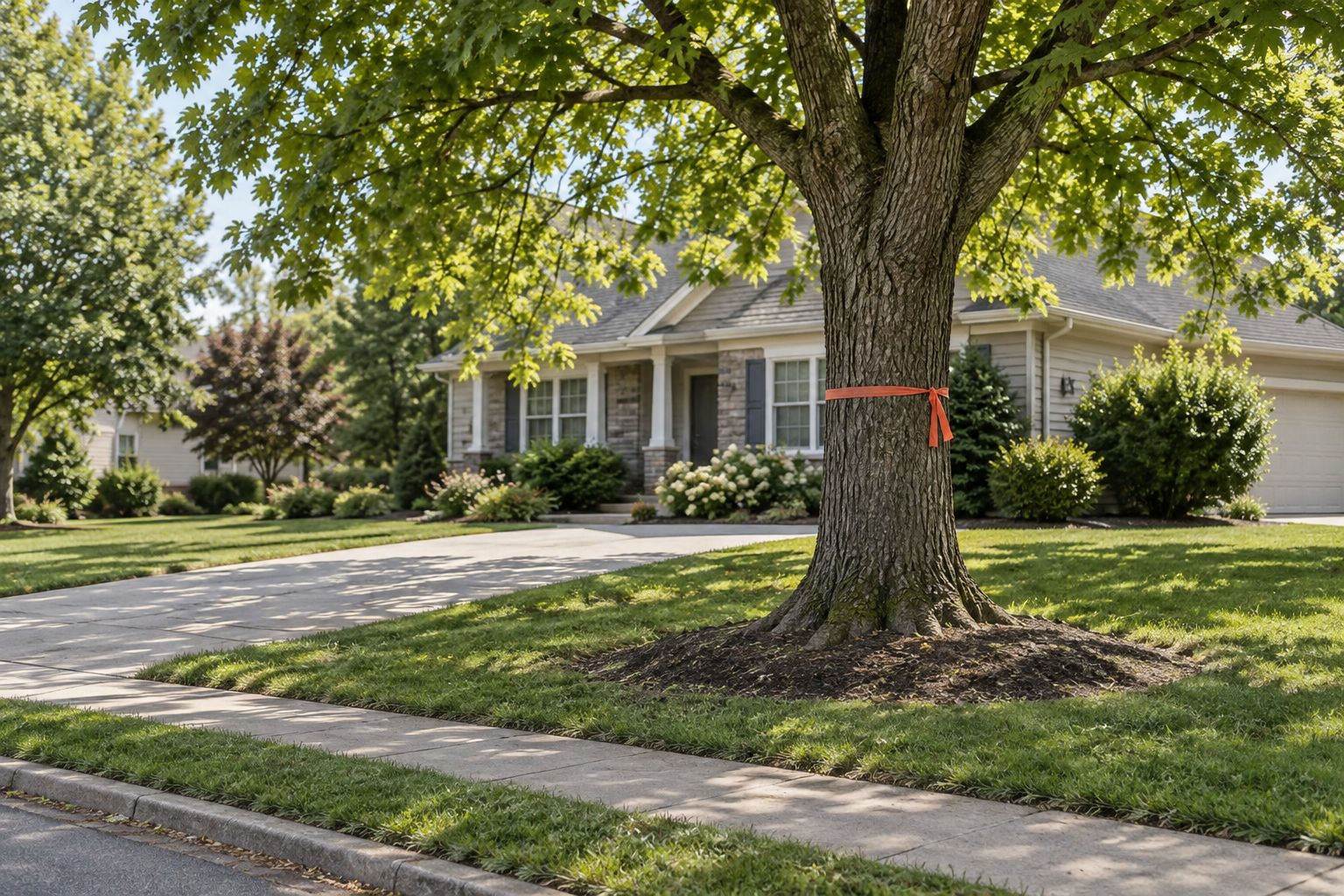
Identify 1 marked tree in each inquiry when neighboring trees look similar. Use a removable marker or an annotated photograph so the office and crew discuss the same trunk. Do not mark a tree in a way that damages it.
Include your reason for removal without presenting your own diagnosis as an official finding. Describe what you can observe: a broken limb, a visible trunk opening, or a tree interfering with a planned project. Ask whether the office needs an inspection or supporting assessment.
Does a dead or storm-damaged tree still need permission?
Do not treat a dead or damaged tree as an automatic exemption. Ask the responsible office how it handles that condition and what documentation it needs. Describe the damage specifically rather than labeling every unhealthy-looking tree an emergency.
If the tree is actively failing, keep people away from the affected area. Do not stand beneath damaged limbs to collect better photographs, and do not approach a tree touching a wire. Contact emergency services or the utility when the situation involves an immediate public-safety or electrical hazard.
For planned removal of a dead tree, raise the permit question while arranging the assessment. Ask whether approval must precede cutting and what information supports the request. Urgency and permission need to be addressed together, not treated as interchangeable.
Can a tree service handle the permit for you?
Ask the contractor; do not assume permit handling is included. Your written estimate should identify whether you or the contractor contacts the municipality, submits documents, and obtains any required authorization. It should also state what must happen before the job is scheduled.
Keep 2 written records together: the municipal response and the contractor's agreed work scope. This is a practical filing recommendation, not a legal recordkeeping requirement. If the scope changes, check whether the original response still covers it.
Spartantreeny provides tree removal in the Rochester area. An individual estimate is the right place to discuss access, nearby structures, and cleanup expectations; confirm permit responsibilities separately and put the agreed division of work in writing.
For a 2026 estimate, ask these direct questions:
- Who confirms whether permission is required?
- Who submits anything the municipality requests?
- What confirmation does the crew need before cutting?
- What happens to the schedule if approval is still pending?
What should a removal estimate include besides permission?
Permission answers whether the work can proceed; the estimate answers what the crew will do. You need both questions settled before work begins. A clear estimate should identify the tree, the removal scope, and what remains on the property afterward.
Discuss access first. Tell the estimator about narrow gates, fences, nearby roofs, driveways, and areas you want protected. Let the crew assess the working space rather than deciding from the street that the job is straightforward.
Then define cleanup. Ask whether the scope includes hauling branches and wood, handling chips, grinding the stump, and addressing the disturbed area. Do not assume that removing the tree includes every follow-up task.
With Spartantreeny, ask to discuss the work directly with the crew and put careful removal and thorough cleanup into specific terms. Ask how the proposed approach addresses nearby structures and exactly what cleanup means for your yard. Clear scope beats a vague promise.
Request an individual removal estimate
Discuss your Rochester-area tree, property access, nearby structures, and cleanup scope.
What if the tree is beside the road or on a boundary?
Confirm ownership before authorizing removal. A mowing line, fence, or sidewalk does not give you a reliable answer by itself. Ask the municipality about a roadside tree and review appropriate property records when a boundary is uncertain.
Explain the uncertainty to the estimator at the first visit. Point out the tree, the apparent boundary, and any information already received from the municipality or neighboring owner. Do not leave an ownership question for the crew to resolve on removal day.
If another owner's consent is needed, settle that separately from the municipal permit question. Save the relevant written permissions with the work scope. For your 2026 project file, make it clear which document answers ownership and which answers municipal approval.
FAQ
Do I need a tree removal permit in Monroe County, NY?
Confirm the requirement with the municipality responsible for your exact address and tree. Provide the location and proposed work, then request written instructions or confirmation that no permit is required.
Who should I call about removing a tree in Webster?
Start with the municipal office responsible for your Webster property and ask which department handles tree-removal inquiries. Give the street address rather than relying only on the mailing location.
Can I remove a tree that looks like it is on my property?
Confirm ownership and applicable approval requirements before cutting. A fence, sidewalk, or mowing line does not settle an uncertain boundary.
Does a dead tree automatically qualify for removal without a permit?
Do not assume a dead tree is exempt from approval. Ask the responsible office what process and documentation apply to its condition and location.
Will my tree service get the permit for me?
Permit handling should be agreed with the contractor in writing. Identify who contacts the municipality, submits documents, and confirms authorization before work starts.
What should I have ready when requesting a tree removal estimate?
Have the property address, photographs, tree location, and your intended work scope ready. Explain access restrictions, nearby structures, cleanup expectations, and any unresolved ownership or permit questions.
Is a tree removal estimate the same as permission to remove the tree?
A tree removal estimate is not municipal permission to cut. Keep the agreed work scope separate from any required authorization or confirmation that no permit is needed.
One last thing
Make sure every document describes the same tree and the same job. An email about a backyard tree does not resolve a later decision to remove a different tree near the road. A photograph with the intended trunk clearly identified helps keep the inquiry, estimate, and crew instructions aligned.
Before your 2026 removal date, read the municipal response beside the estimate. Check the tree location, responsibility for permission, removal scope, and cleanup. If anything is unclear, settle it before equipment arrives. That is a better use of your time than trying to sort out an approval question while the crew waits.