



Tree pruning vs trimming comes down to the purpose of the cuts: pruning addresses branch health and structure, while trimming usually describes shaping or clearance work. Your tree needs the cuts that solve its actual problem—not a service chosen by name—and a split trunk or unstable tree needs assessment before either option.
- Tree pruning vs trimming is about purpose: branch health and structure versus shaping and clearance.
- Trimming removes branches too; ask which cuts your tree needs and why.
- Spartantreeny provides tree care for Rochester homeowners; request an individual estimate rather than choosing by service label.
- A cracked trunk, hanging limb, or sudden lean needs assessment before routine tree trimming.
For a Rochester, Webster, or eastern Monroe County property, request an individual tree-care estimate that identifies the branches involved, the access needed, and the cleanup included.
Tree trimming vs. pruning: which does your tree need?
Choose the work by its purpose, not by whether the estimate says trimming or pruning. Contractors and homeowners often use the words interchangeably. The useful distinction is between changing a tree’s outline and making selective cuts for health, structure, or clearance.
| Work described | Best for | Main benefit | Limitation or drawback |
|---|---|---|---|
| Trimming | Targeted clearance and appearance | Addresses branches crowding a roof, driveway, or other defined space | A tidy outline does not establish that a tree is structurally sound |
| Pruning | Dead, damaged, rubbing, or poorly arranged branches | Targets specific branches for a stated reason | Removing living foliage unnecessarily can stress the tree |
| Removal assessment | Serious defects or uncertainty about whether a tree can remain | Examines whether branch work can address the problem | Branch removal cannot correct every trunk or root defect |
These are different goals, not competing packages. A single visit can include removing a dead branch, correcting a rubbing branch, and creating roof clearance. Each cut should have a reason you can understand.
Why this matters for Rochester homeowners
A request to make a tree smaller leaves too much open to interpretation. You might mean clearing the garage roof, while the contractor understands it as cutting back the entire crown. Those are different scopes with different consequences.
For your 2026 tree-care plan, describe the problem before naming the service. Point out the branch touching the gutter, the damaged limb above the driveway, or the canopy blocking a walkway. That gives the crew something specific to assess.
The written estimate should carry that same detail. Careful work starts with agreement about what comes off, what stays, and how the crew handles the branches afterward.
When trimming is the right request
Trimming is a useful starting request when your concern is clearance or appearance. Perhaps branches crowd the driveway, scrape a structure, or interfere with a path. Explain the space you need rather than asking for the whole tree to be cut back.
The benefit is a defined result: usable clearance where you need it. The drawback comes when appearance becomes the only goal. Repeatedly cutting branch ends to force a tree into an unsuitable space does not resolve why it keeps outgrowing that location.
Start with the object, not the outline
Show the estimator the roof edge, parked vehicle, fence, or walkway involved. Ask which branches create the conflict and whether selective removal can solve it without cutting the entire canopy.
Avoid prescribing a clearance distance yourself when the work involves electrical lines. Keep away from branches touching wires and contact the utility. Ordinary yard trimming is not a substitute for utility-directed work.
Ask what the tree will look like afterward
A request for a smaller tree can produce very different proposals. Ask the crew to explain where cuts will be made and how much living canopy the proposed work removes.
Topping—cutting large branches back to stubs—is not the same as careful crown reduction. Do not accept a vague promise to take the top off as a complete work plan.
When pruning is the right request
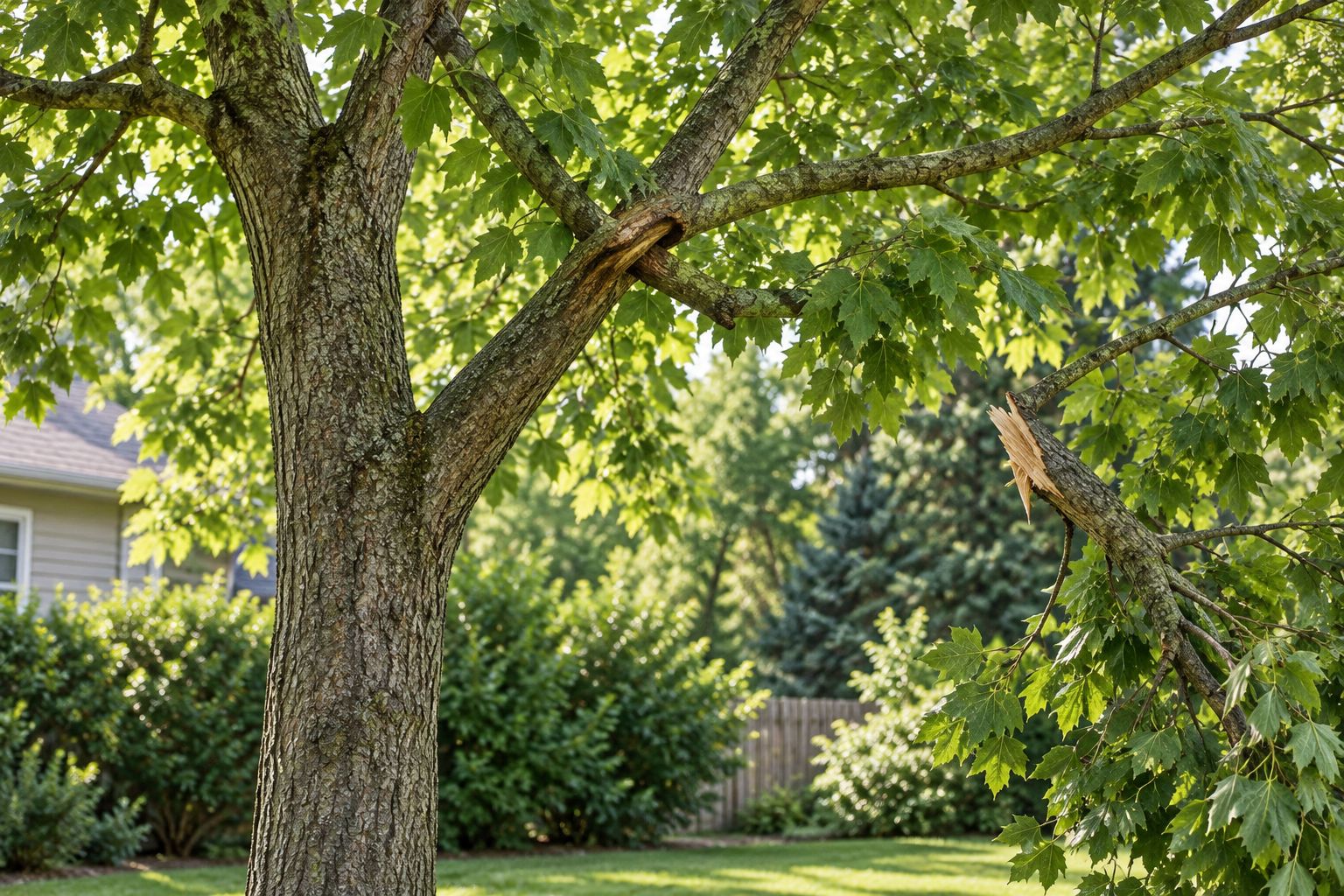
Pruning is the clearer request when individual branches have a health or structural problem. Dead wood, storm-damaged branches, and branches rubbing against each other call for a closer look at the affected parts of the tree.
Selective pruning can address those branches without treating the entire canopy as the problem. Its limitation is equally important: removing branches does not repair a decayed trunk, restore damaged roots, or make every compromised tree suitable to retain.
Dead or broken branches
Tell the estimator where you noticed the damage and whether anything changed after a storm. Do not stand beneath a hanging branch to inspect it or move closer for a photograph.
A branch without leaves during Rochester’s dormant season is not automatically dead. Species, buds, branch condition, and the rest of the tree all matter. Let an assessment—not winter appearance alone—guide the work.
Rubbing or competing branches
Branches that rub can damage bark. Closely competing stems can also deserve attention, especially while a tree is young enough for smaller corrective cuts.
The goal is not to remove every branch that looks crowded from the ground. Ask which branch creates the problem and what the proposed cut is intended to accomplish.
Why tree trimming and pruning recommendations vary
Two similar-looking trees can need different work. For a 2026 estimate, these are the practical factors to discuss:
- Branch condition: Dead, broken, rubbing, and healthy branches do not all call for the same treatment.
- Tree size and structure: Branch height, branch arrangement, and the size of proposed cuts affect the work plan.
- Access: Gates, fences, slopes, and limited equipment space affect how the crew reaches the tree.
- Nearby structures: A branch over open lawn presents a different handling problem from a branch over a garage or deck.
- Timing: Species, the purpose of pruning, active growth, and damaged branches influence scheduling.
- Cleanup scope: Branch hauling, chipping, retained wood, and the agreed finish affect what the estimate includes.
These factors also explain why an online description cannot establish your job’s price. The guide to what drives a tree-trimming quote explains the scope questions to settle before comparing estimates.
How do you prepare for a tree-care estimate?
Prepare a clear description of the problem, then let the crew assess the cuts. You do not need to diagnose the tree or identify every branch before requesting help.
- Describe the concern. Say whether you want roof clearance, dead branches addressed, storm damage assessed, or a decision about retaining the tree.
- Show the surroundings. Identify buildings, fences, gardens, overhead wires, and the route into the yard.
- Explain what changed. Mention recent breakage, a newly noticed lean, construction near the roots, or branches beginning to contact a structure.
- Set the cleanup scope. Discuss whether branches and wood leave the property and what areas need clearing afterward.
- Get the scope in writing. Confirm the tree, proposed work, access arrangements, and included cleanup before approving the job.
For a 2026 project, use current photographs rather than older images that no longer show the canopy or site conditions. Take pictures only from a safe position. A wide view of the tree and its surroundings is more useful than a close-up that hides the access problem.
Spartantreeny tree care is best for Rochester-area homeowners seeking an individual assessment of trimming, pruning, or removal needs. Ask about careful branch handling, thorough cleanup, and who on the crew will walk through the scope with you. Those details belong in the estimate conversation, not in assumptions about a service name.
Is winter the best time to prune in Rochester?
Dormant-season pruning is useful for many deciduous trees because bare branches make structure easier to see. It is not a universal instruction to postpone every job until winter. Species, flowering habits, disease concerns, and the reason for cutting affect the right timing.
For planned work in 2026, ask why the proposed season suits your particular tree. A crew should distinguish routine structural work from a broken or hazardous branch that needs prompt attention.
Do not build your schedule around a calendar rule alone. A branch damaged in a summer storm does not become a routine winter project simply because dormant pruning has advantages.
Can pruning save a tree that looks unsafe?
Pruning can address some branch problems, but it cannot correct every trunk or root defect. A hanging limb, a fresh split, soil lifting around the roots, or a sudden change in lean needs assessment before routine shaping.
Keep people, pets, and vehicles away from the affected area. Do not climb the tree, pull on a damaged limb, or attempt to relieve weight yourself. If wires are involved, stay clear and contact the utility; call emergency services when there is immediate danger.
Spartantreeny offers 24/7 emergency tree services in the Rochester area. That identifies an emergency service option, not a promised arrival time. Describe the hazard when making contact so the situation is not mistaken for ordinary maintenance.
What should you compare before approving the work?
Compare the written scope before comparing the bottom line. An estimate for removing a few dead branches is not equivalent to one that also includes roof clearance, controlled lowering over a deck, and hauling away the material.
Check these points side by side:
- Which tree and which parts of the tree are included?
- What problem is each part of the work intended to solve?
- How will branches above buildings or landscaping be handled?
- What access does the crew need, and what should you move beforehand?
- What material stays, what leaves, and what does cleanup cover?
- Who will confirm the scope with you before cutting starts?
For your 2026 estimate, also request current insurance documentation and ask about any proposed changes before authorizing extra work. A clear scope protects both the homeowner and the crew from an avoidable disagreement.
Avoid treating a larger amount of cutting as better value. The useful outcome is the agreed problem being addressed without unnecessary removal of healthy branches.
FAQ
What's the difference between tree pruning and trimming?
Pruning usually describes selective cuts for branch health and structure; trimming usually describes shaping or clearance. The terms overlap, so ask which branches will be cut and why.
Does my tree need pruning if branches touch the roof?
Branches touching the roof need a clearance assessment, which can involve selective pruning. Ask the crew to identify the branches causing contact rather than assuming the entire crown needs cutting back.
Can I trim my tree myself?
Leave work involving climbing, large limbs, hanging branches, or overhead wires to an appropriately qualified crew or the utility. Do not use a ladder and chainsaw to reach branches above your head.
How much does tree trimming cost in Rochester?
A Rochester tree-trimming estimate depends on the tree, branch condition, access, nearby structures, and cleanup scope. Request an individual assessment and compare written scopes rather than assuming similar-looking trees require identical work.
Should I schedule pruning for winter in 2026?
Winter 2026 is a useful planning option for many deciduous trees, but the correct timing depends on the species and purpose of pruning. Broken or hazardous branches need assessment rather than automatic postponement.
Will pruning fix a leaning tree?
Pruning does not automatically make a leaning tree safe. A new lean, root movement, or trunk damage needs assessment before deciding whether branch work or removal is appropriate.
Does trimming include cleanup?
Cleanup depends on the written scope, not the word trimming. Confirm whether branches are chipped or hauled away, whether wood stays, and which areas the crew will clear.
One last thing
Ask the crew which healthy branches will stay. That question makes the plan about preserving the tree as well as removing material. You should understand both sides before the first cut.
Before work starts, walk through the agreed scope from a safe position and identify the exact tree. A clear conversation on the ground beats discovering afterward that you and the crew meant different things by trimming.