




Best overall: ginkgo. Best for an evergreen screen: white spruce. Best for a damp yard: river birch. The best deer-resistant trees for Rochester, NY yards in 2026 also include kousa dogwood for flowers and Japanese tree lilac for sunny, space-limited planting sites—but none is deer-proof.
- The best deer-resistant trees for Rochester, NY include ginkgo, white spruce, river birch, kousa dogwood, and Japanese tree lilac.
- Choose ginkgo for lasting shade where a large tree has room to grow.
- Choose white spruce for screening; river birch fits moist sites with room for spreading roots.
- Protect young trunks: deer resistance does not prevent damage from antler rubbing.
Why this matters in Rochester yards
A tree can survive Rochester winters and still fail in your yard. Deer browsing, standing water, road salt, overhead wires, and a cramped planting spot are separate problems. Solve the whole site problem—not just the deer problem.
Spartan Tree and Landscape provides tree planting and removal services for Rochester-area homeowners. For a replacement planting, settle removal access, stump work, and the new tree's location before choosing a nursery tree.
Spartan Tree and Landscape is a practical choice for Rochester homeowners who need tree removal and replacement planting considered together. Ask for an individual estimate that separates the work clearly, including what gets removed and what cleanup includes.
What makes the best deer-resistant trees?
Use these five criteria for your 2026 planting shortlist:
- Browse resistance: Favor trees recognized as less attractive to deer, without treating resistance as a guarantee.
- Mature size: Match the grown tree to the house, driveway, utilities, and neighboring property—not the nursery pot.
- Soil and drainage: Separate a consistently moist site from one that stays waterlogged. They need different planting decisions.
- Winter and exposure: Check cold tolerance, wind exposure, and salt exposure for the actual planting location.
- Maintenance: Count watering, trunk protection, pruning, fallen material, and eventual clearance from buildings.
For background, Rutgers NJAES's Landscape Plants Rated by Deer Resistance distinguishes resistance from immunity. NC State Extension's Plant Toolbox species profiles describe mature size and site requirements. These are plant-selection references, not evidence that every tree will perform the same way on every Rochester property.
Deer-resistant trees at a glance
The height ranges below are general species ranges described in extension plant references. Named cultivars vary; check the label before selecting one.
| Tree | Best for | Standout feature | Typical mature height | Key limitation |
|---|---|---|---|---|
| Ginkgo | Large-yard shade | Fan-shaped leaves and yellow fall color | 50–80 feet | Too large for many narrow planting spaces |
| White spruce | Evergreen screening | Dense, year-round needles | 40–60 feet | Needs room across its lower branches |
| River birch | Moist, roomy sites | Peeling bark and tolerance of wet soil | 40–70 feet | Poor fit for a small, dry planting pocket |
| Kousa dogwood | Small-yard flowers | Showy flower bracts | 15–30 feet | Needs suitable drainage and establishment care |
| Japanese tree lilac | Sunny ornamental planting | Creamy-white early-summer flowers | 20–30 feet | Not a substitute for a large shade tree |
These are different jobs, not interchangeable trees. A white spruce screen does not replace a shade canopy, and a river birch's moisture tolerance does not make it suitable beside every foundation.
1. Ginkgo: best deer-resistant tree for large-yard shade
Ginkgo (Ginkgo biloba) is the default choice when you want a long-lived shade tree and have space for its mature canopy. Its distinctive leaves turn yellow in fall, and deer generally leave its foliage alone compared with more attractive browse plants.
A species ginkgo can reach 50–80 feet tall. That makes placement more important than the small size of the tree you bring home.
Ginkgo pros:
- Offers a large deciduous canopy without relying on a deer-favored species.
- Provides recognizable fan-shaped foliage and yellow fall color.
- Tolerates a range of urban growing conditions once established.
Ginkgo cons:
- Mature size rules it out beneath overhead wires and in narrow spaces.
- Female trees produce fleshy seeds with an unpleasant odor.
- Young trees still need watering and protection from trunk damage.
Ask the nursery to identify a male cultivar rather than assuming every ginkgo avoids the seed issue. Confirm that cultivar's mature dimensions, too; the species height is not a promise about every named selection.
Best for: A Rochester or Webster homeowner replacing a large shade tree in an open lawn.
Verdict: Buy for a roomy shade-tree site; skip for a tight foundation bed.
2. White spruce: best deer-resistant tree for evergreen screening
White spruce (Picea glauca) keeps its needles through winter and offers a screening option that deer generally find less appealing than arborvitae. Use it where you need year-round separation rather than summer shade alone.
A mature white spruce commonly reaches 40–60 feet tall. Its lower branches need space, so do not lay out a row based only on the width of young nursery trees.
White spruce pros:
- Provides year-round screening rather than a seasonal leafy barrier.
- Suits cold-climate planting.
- Offers an alternative where deer browsing makes arborvitae a poor fit.
White spruce cons:
- Takes substantial space as the lower canopy expands.
- Does not suit persistently waterlogged ground.
- Needs a sunny location for a dense, well-developed screen.
Plan the screen from the property boundary inward. Leave room for mature branches without assuming future pruning can keep a full-sized spruce narrow indefinitely.
Best for: A sunny property edge with enough width for a full-sized evergreen.
Verdict: Buy for a spacious screen; skip for a narrow strip beside a driveway.
3. River birch: best deer-resistant tree for moist ground
River birch (Betula nigra) fits a moist site where you want a substantial deciduous tree and attractive peeling bark. It tolerates wet soil better than many common landscape trees, but that does not make every soggy corner a suitable planting location.
At a typical mature height of 40–70 feet, river birch needs real growing room. Multi-stem forms also occupy more ground-level space than their nursery appearance suggests.
River birch pros:
- Handles moist soil and periodic wet conditions.
- Provides bark interest when the leaves are gone.
- Is generally less attractive to deer than many browse-prone landscape plants.
River birch cons:
- Becomes too large for many small front-yard beds.
- Needs attention to moisture during dry periods, especially while establishing.
- Drops twigs and other material that add cleanup near patios.
Do not use river birch as a substitute for diagnosing a drainage problem. If soil conditions are your main constraint, compare the options in this guide to trees for clay soil in Rochester yards.
Best for: A roomy lawn with consistently available soil moisture.
Verdict: Buy for a moist, open site; skip for a dry, confined planting pocket.
4. Kousa dogwood: best deer-resistant tree for small-yard flowers
Kousa dogwood (Cornus kousa) gives you showy flower bracts without the eventual scale of a ginkgo or river birch. Its typical mature height of 15–30 feet makes it a useful candidate when the yard needs an ornamental tree rather than a broad shade canopy.
Deer resistance is one reason to shortlist kousa dogwood. Drainage is the next test: avoid placing it where water remains around the roots.
Kousa dogwood pros:
- Fits smaller landscapes than the large shade trees on this list.
- Adds flowers, fall foliage, and ornamental bark.
- Offers a less browse-prone choice than many highly palatable garden plants.
Kousa dogwood cons:
- Does not tolerate a persistently wet planting site.
- Needs establishment watering rather than a plant-and-forget approach.
- Fallen fruit adds cleanup near walks or sitting areas.
Keep the mature crown clear of the house and leave access for maintenance. A smaller tree still needs a deliberate planting location.
Best for: A well-drained residential yard where flowers matter more than extensive shade.
Verdict: Buy for an ornamental focal point; skip for standing water or deep shade.
5. Japanese tree lilac: best deer-resistant tree for sunny spaces
Japanese tree lilac (Syringa reticulata) is a small flowering tree, not the same plant as a common lilac shrub. It produces creamy-white flower clusters in early summer and typically reaches 20–30 feet tall.
This is a practical candidate when you want a defined tree shape in a sunny front yard. Keep expectations straight: it supplies ornamental interest, not the shade of a large canopy tree.
Japanese tree lilac pros:
- Offers flowers at a different time from many spring-flowering trees.
- Fits spaces that cannot accommodate a full-sized shade tree.
- Is generally considered resistant to deer browsing.
Japanese tree lilac cons:
- Flowers best with ample sun.
- Needs well-drained soil rather than a wet depression.
- Requires thoughtful clearance from walks, roofs, and sightlines.
Ask about the mature width of the specific selection before approving a front-yard location. Do not assume a small tree belongs immediately beside the front steps.
Best for: A sunny yard needing a smaller ornamental tree with early-summer flowers.
Verdict: Buy for a sunny ornamental site; skip when your main goal is broad shade.
Protect the tree, not just its leaves
Deer browsing and antler rubbing are different problems. A tree with unattractive foliage can still suffer serious bark damage when a buck rubs its trunk.
Build protection into your 2026 planting plan rather than waiting for damage. A small nursery tree needs attention even when its species appears on a deer-resistant list.
- Browse protection: Use a suitable barrier where deer can reach young growth.
- Trunk protection: Choose protection that prevents rubbing without constricting the trunk.
- Watering: Check soil moisture through establishment, including dry autumn weather.
- Mulch placement: Keep mulch away from direct contact with the trunk.
- Regular checks: Inspect barriers, ties, and guards as the tree grows.
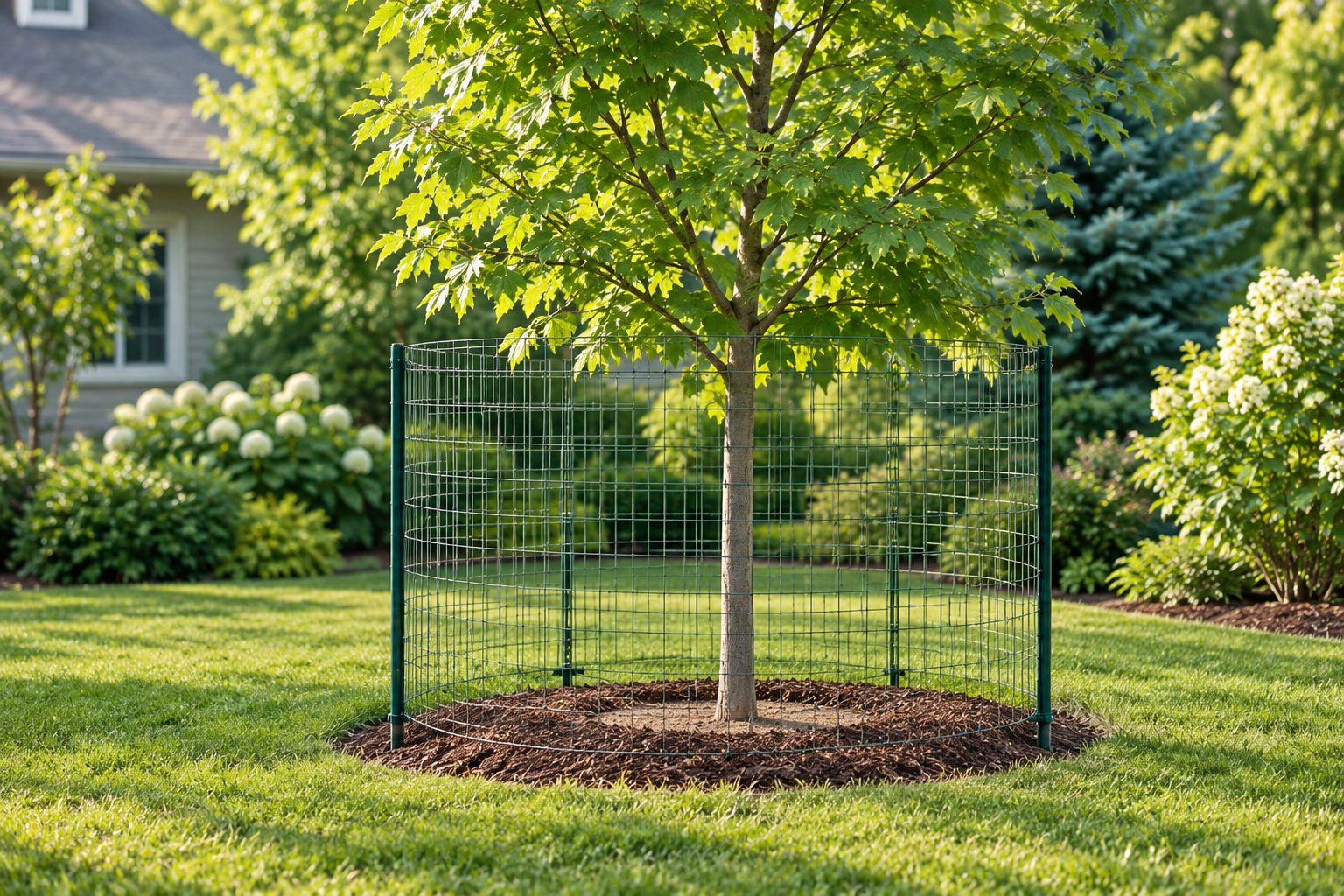
Keep protection maintained rather than treating installation as the final step. A guard that becomes tight against growing bark creates another problem to fix.
Replacing a tree? Set the work order first
Before ordering a replacement, decide what happens to the existing tree, stump, roots, and debris. Planting access can change once a removal crew and equipment enter the yard.
Ask Spartan Tree and Landscape to address these points in an individual estimate:
- Removal scope: Identify the tree and any nearby structures that affect the work.
- Access: Discuss gates, driveways, fences, and where equipment can travel.
- Stump work: Separate stump grinding from removal so the scope is clear.
- Cleanup: State whether logs, brush, and grinding debris leave the property.
- Planting location: Confirm suitable soil and clearance before approving the replacement spot.
For a 2026 replacement project, careful removal and thorough cleanup belong in the same conversation as the new tree. Deal directly with the crew about what stays, what leaves, and where the replacement will grow. Do not assume the old stump location is automatically the right planting spot.
Plan your tree replacement
Discuss removal, stump work, cleanup, and planting for your Rochester-area yard.
How these trees were ranked
The ranking puts distinct homeowner needs first: large-yard shade, evergreen screening, moist ground, small-yard flowers, and sunny ornamental planting. Deer resistance narrows the shortlist; mature size and growing conditions decide the fit.
This is a species-selection guide, not a field trial or a guarantee against deer damage. Your property's browsing pressure and the condition of a particular nursery tree still matter.
Which deer-resistant tree should you choose?
Choose ginkgo as the default for a large, suitable shade-tree site. Choose white spruce when screening is the actual goal, and river birch when moisture and available space support it.
For smaller ornamental planting sites, compare kousa dogwood with Japanese tree lilac. In 2026, the right decision is still the tree that fits at maturity—not simply the one deer are least likely to eat.
FAQ
What are the best deer-resistant trees for Rochester, NY yards?
Ginkgo, white spruce, river birch, kousa dogwood, and Japanese tree lilac are useful candidates. Choose among them by mature size, drainage, sunlight, and whether you need shade, screening, or flowers.
Are any trees completely deer-proof?
No tree is completely deer-proof. Deer feeding changes with available food and local pressure, and antler rubbing can damage trees that deer do not normally browse.
Is white spruce a better choice than arborvitae around deer?
White spruce is generally a better browse-resistant screening choice than arborvitae. It still needs enough sunlight, drainage, and space for its mature branches.
Which deer-resistant tree fits a small Rochester yard?
Kousa dogwood and Japanese tree lilac are smaller candidates than ginkgo or river birch. Check the mature dimensions of the specific cultivar and leave clearance from buildings and utilities.
Should I protect a deer-resistant tree after planting?
Yes, protect a young tree where browsing or antler rubbing is a concern. Check barriers and trunk protection regularly so they do not restrict growth or damage bark.
Can I plant a new tree exactly where an old tree was removed?
Do not assume the old location is ready for replanting. Remaining roots, stump debris, soil condition, and the replacement tree's space requirements need assessment first.
How do I get a tree replacement estimate in Rochester?
Ask Spartan Tree and Landscape for an individual estimate covering the work your property needs. Clarify removal access, stump grinding, debris handling, cleanup, and the proposed planting location.
One last thing
Look at the trunk as carefully as the leaves. A deer-resistant tree can have untouched foliage and badly damaged bark; choosing the right species does not replace checking its protection.
Before buying, stand at the planting spot and look upward and outward. If the mature tree conflicts with wires, the roof, or the driveway, change the location or the species now.