





Best overall: serviceberry. Best for a sunny flowering focal point: disease-resistant crabapple. Best for a compact spring display: star magnolia. For Rochester, Webster, and eastern Monroe County yards in 2026, choose by mature size, drainage, and cleanup—not flower color alone.
- Best flowering trees Rochester NY: serviceberry leads for seasonal interest, while star magnolia suits compact spring displays.
- Choose disease-resistant crabapple for sunny lawns and Japanese tree lilac for flowers later in the season.
- Eastern redbud needs a sheltered position; flowering dogwood needs careful attention to soil and drainage.
- Before replacing an existing tree, settle removal, stump work, access, and planting location in your estimate.
Why this matters
A flowering tree belongs in your yard long after its blossoms drop. Branch clearance, fallen fruit, summer foliage, and room for roots matter more than the nursery display.
If an older tree already occupies the planting space, settle that job first. Spartantreeny provides tree removal, planting, and tree care services for Rochester-area property owners. Ask about the existing tree, the stump, and the replacement location together rather than treating them as unrelated jobs.
The right flowering tree fits the space without needing repeated pruning to keep it away from your house. That is the standard behind these recommendations.
What makes the best flowering tree for your yard?
Use these criteria before choosing your 2026 planting:
- Winter suitability: Select a species and cultivar suited to your location, including exposure to cold wind.
- Mature dimensions: Check the plant tag for both height and spread. A small nursery tree is not necessarily a small mature tree.
- Sunlight: Match the tree to the light it will receive after nearby trees leaf out.
- Drainage and soil: A tree that likes moisture does not automatically tolerate standing water or compacted ground.
- Disease resistance: Named cultivars matter, especially with crabapples and dogwoods. Flower color alone is not a selection standard.
- Cleanup tolerance: Decide whether fruit, seedpods, petals, and leaves belong beside your driveway or patio.
Flowering trees at a glance
| Tree | Best for | Standout feature | Key limitation |
|---|---|---|---|
| Serviceberry | Mixed-season interest | Spring flowers, edible fruit, and fall color | Fruit drop and suckering need consideration |
| Disease-resistant crabapple | Sunny flowering focal point | Many flower colors and growth forms | Disease resistance and fruit characteristics vary |
| Star magnolia | Compact spring display | Early white flowers on bare branches | Frost can damage open flowers |
| Eastern redbud | Sheltered, lightly shaded setting | Pink-purple flowers along branches | Poor fit for wet ground or exposed locations |
| Japanese tree lilac | Flowers later in the season | Creamy flower clusters after many spring bloomers | Too large for some narrow planting beds |
| Flowering dogwood | Acidic, well-drained woodland edge | Showy bracts and fall interest | Site demands and disease concerns limit its use |
1. Serviceberry: best flowering tree for mixed-season interest
Serviceberry earns the default recommendation because it offers more than a spring display. White flowers precede berry-like fruit, followed by fall color; birds also feed on the fruit.
Choose the actual species or cultivar before buying. Serviceberries include single-trunk trees and multistem plants, and their mature dimensions differ. A multistem form beside a walkway takes up space differently from a tree-form specimen in a lawn.
Serviceberry pros:
- Flowers, fruit, and fall foliage provide interest across seasons.
- Fruit supports birds and is edible for people.
- Tree-form and multistem choices suit different layouts.
Serviceberry cons:
- Dropped fruit is undesirable over paving or parked cars.
- Some selections sucker and need occasional attention.
Best for: A lawn or garden bed where you want seasonal interest rather than flowers alone.
Verdict: Buy when you have room for the selected form and accept fruit drop. For a 2026 replacement planting, put serviceberry on the shortlist before choosing a tree solely for blossom color.
2. Crabapple: best flowering tree for a sunny focal point
A disease-resistant flowering crabapple is a strong choice for a visible front-yard position. Cultivars offer different flower colors, branching shapes, and fruit characteristics, so buy a named selection rather than an unidentified flowering crabapple.
The cultivar decision matters. Apple scab, cedar-apple rust, and fire blight are established crabapple concerns; resistance varies among selections. Ask the nursery about those diseases individually.
Crabapple pros:
- Flower colors and tree forms provide useful design choices.
- Many selections also carry ornamental fruit.
- Named disease-resistant cultivars help narrow the decision.
Crabapple cons:
- Susceptible selections bring avoidable disease problems.
- Fruit beneath the canopy can create cleanup work.
Best for: A sunny lawn with enough separation from pavement, vehicles, and outdoor seating.
Verdict: Buy a named, disease-resistant cultivar with a mature spread that fits. Skip any selection whose disease resistance and fruit characteristics the seller cannot explain.
3. Star magnolia: best flowering tree for compact spring displays
Star magnolia produces white, star-shaped flowers before its leaves emerge. It often develops as a broad, multistem shrub or small tree, making its width just as important as its height.
Missouri Botanical Garden’s Plant Finder lists a typical height of 15–20 feet and spread of 10–15 feet for Magnolia stellata. Use the dimensions for the particular cultivar you purchase, not a generic “small tree” label.
Star magnolia pros:
- Early flowers stand out against bare branches.
- Its scale suits spaces that cannot accommodate a large shade tree.
- A branching form can anchor a garden bed.
Star magnolia cons:
- Freezing weather can damage open flowers.
- Low, spreading branches can crowd paths or lawn access.
Best for: A protected garden bed where a broad flowering specimen can keep its natural shape.
Verdict: Buy if you can give star magnolia its full width. Skip a narrow foundation strip where keeping branches off the house would become a recurring job.
4. Eastern redbud: best flowering tree for sheltered light shade
Eastern redbud carries pink-purple flowers along its branches before heart-shaped leaves fill out the canopy. It works as a small ornamental tree in a sheltered position with sun or partial shade.
Choose the planting position carefully in Rochester. Avoid persistently wet ground and exposed locations, and ask about the winter suitability of the specific cultivar rather than assuming every redbud selection performs alike.
Eastern redbud pros:
- Flowers appear along branches, not just at shoot tips.
- Heart-shaped foliage adds interest after flowering.
- Partial-shade tolerance provides options beyond open lawns.
Eastern redbud cons:
- Poor drainage makes it the wrong choice.
- Canker and branch dieback are recognized concerns.
Best for: A sheltered garden edge with suitable drainage and room for a spreading canopy.
Verdict: Buy for a protected, well-chosen site. Skip eastern redbud if the planting hole stays wet or the location is exposed to strong winter winds.
5. Japanese tree lilac: best flowering tree for later blooms
Japanese tree lilac flowers later than many familiar spring-flowering trees. Its creamy flower clusters extend the sequence after trees such as magnolia and redbud have finished.
This is a tree, not a compact replacement for a lilac shrub. Missouri Botanical Garden’s Plant Finder lists Syringa reticulata at 20–30 feet tall, so check overhead clearance and mature canopy space before placing it beside a house.
Japanese tree lilac pros:
- Later flowers extend the yard’s flowering season.
- A tree-form habit creates a defined landscape feature.
- Bark provides interest beyond flowering.
Japanese tree lilac cons:
- Mature size excludes some small beds and narrow side yards.
- Flowers, leaves, and seed capsules still create cleanup.
Best for: A sunny lawn where you want flowering after the main spring display.
Verdict: Buy when you have room for a medium-size ornamental tree. Skip if the job really calls for a compact shrub or a tree that must remain beneath low wires.
6. Flowering dogwood: best flowering tree for a suitable woodland edge
Flowering dogwood offers showy spring bracts, layered branching, and fall interest. Its appeal is clear, but it is not the default recommendation for every Rochester lawn.
Cornus florida needs attention to soil, drainage, and exposure. Dogwood anthracnose is a recognized disease concern, so discuss species and cultivar selection rather than treating every tree sold as “dogwood” as interchangeable.
Flowering dogwood pros:
- Layered branches suit a woodland-edge setting.
- Spring bracts provide a distinct display.
- Fall foliage and fruit extend seasonal interest.
Flowering dogwood cons:
- Compacted, poorly drained planting sites are unsuitable.
- Disease concerns require a more careful selection process.
Best for: A well-drained, acidic-soil setting with protection from harsh exposure.
Verdict: Buy only after checking the site and selection. Skip flowering dogwood as an impulse purchase for a difficult lawn simply because the flowers look good.
Check the planting space before ordering
For a 2026 planting, walk the yard with the mature canopy in mind. Look up at wires, across at the roof, and down at driveways, drains, and existing roots. Your usable planting area is smaller than the empty patch of grass suggests.
Check these points:
- Canopy room: Compare mature spread with the house, fence, driveway, and neighboring trees.
- Sunlight: Observe the location after surrounding trees have leaves. Full sun generally means at least 6 hours of direct sunlight daily.
- Drainage: Notice where water collects after rain; do not assume a larger planting hole fixes a wet site.
- Work access: Identify gates, narrow passages, and surfaces that equipment would need to cross.
- Cleanup scope: Decide where fruit and petals will land, and whether those surfaces need frequent cleaning.
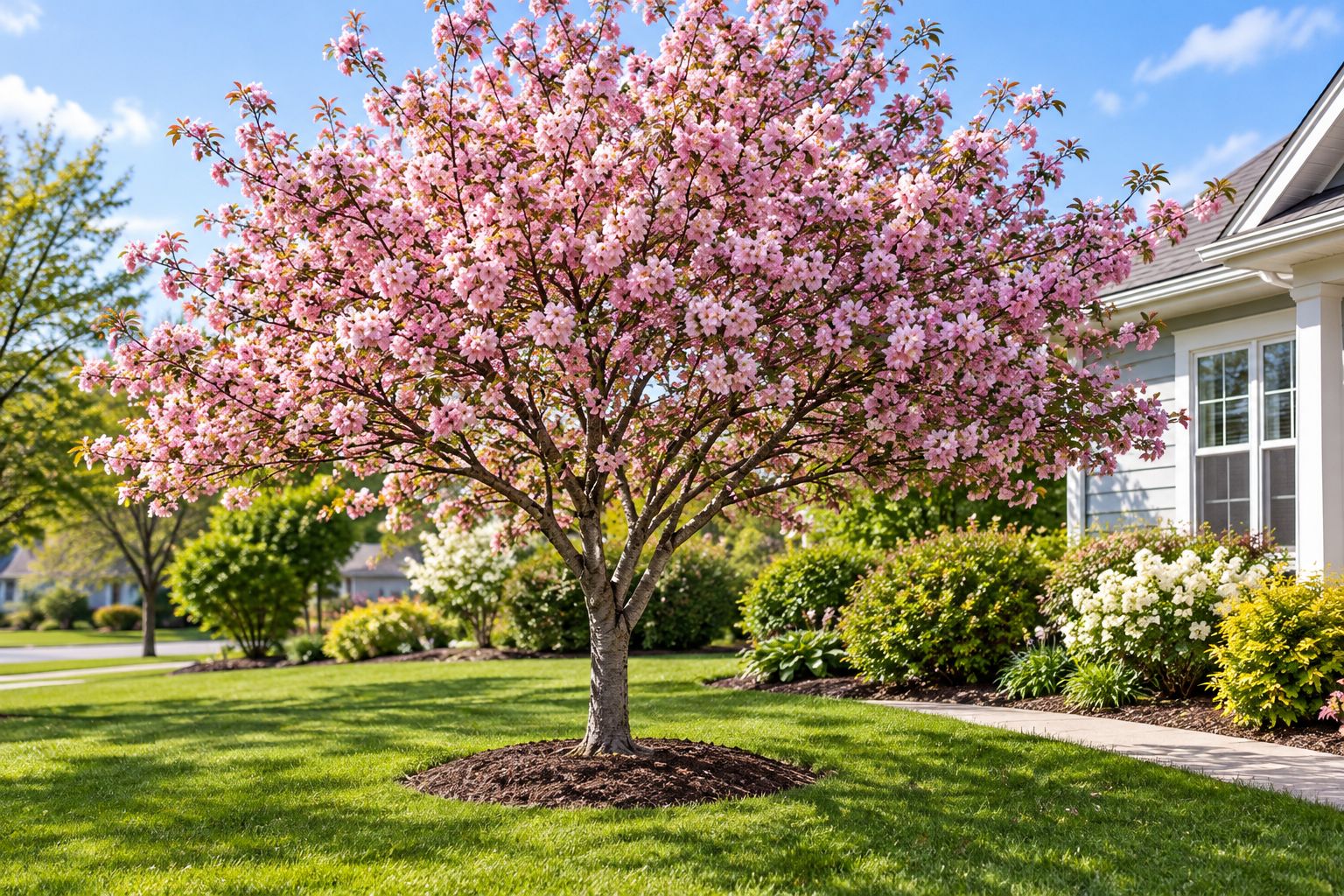
After planting, keep mulch off the trunk. A 2–3 inch layer over the surrounding soil helps conserve moisture without burying the trunk base; piling mulch against bark creates a different problem from leaving soil bare.
Replacing an existing tree? Settle the whole job first
Do not order a replacement tree before deciding what happens to the existing tree and stump. Removal, stump grinding, debris handling, and planting are separate parts of the scope.
Tree size, equipment access, nearby structures, and cleanup requirements affect the work. The guide to why tree removal quotes vary explains those factors before you request an individual estimate.
Ask Spartantreeny about careful removal, thorough cleanup, and dealing directly with the crew. Have the written estimate identify what leaves the property, what remains, and whether stump work and planting are included. A clear scope is more useful than an online number detached from your yard.
Request an individual tree estimate
Discuss the existing tree, access, stump work, cleanup, and your replacement planting location.
How these trees were ranked
This 2026 ranking prioritizes site fit, mature size, seasonal interest, disease considerations, and cleanup. It is a homeowner selection guide, not a claim that every listed tree suits every Monroe County property.
Species characteristics and the dimensions cited above follow established horticultural references, including Missouri Botanical Garden’s Plant Finder. Cultivar labels and a site assessment should guide your final purchase.
Which flowering tree should you choose?
Choose serviceberry if you want a default shortlist choice with interest beyond flowering. Choose disease-resistant crabapple for a sunny floral focal point, or star magnolia when a compact spring display matters most.
Spartantreeny is best for Rochester-area homeowners who need flowering tree planting considered alongside removal, stump grinding, or ongoing tree care. For a 2026 replacement project, settle the work scope before bringing a new tree home.
FAQ
What's the best flowering tree for a Rochester, NY yard?
Serviceberry is the default choice in this guide because it offers spring flowers, fruit, and fall color. Match the species or cultivar to your available space and keep fruit drop away from surfaces you want clean.
Which flowering tree works best in a small front yard?
Star magnolia is a useful candidate when its mature width fits the planting bed. Check the cultivar dimensions and leave room between branches, walkways, and the house.
Is a crabapple better than a serviceberry?
Crabapple suits a sunny flowering focal point; serviceberry suits homeowners who want mixed-season interest. Crabapple selection requires particular attention to disease resistance and fruit characteristics.
Can I plant a flowering tree where another tree was removed?
Assess the old stump, remaining roots, soil condition, and available space before choosing the replacement position. Do not assume stump grinding makes the exact location ready for planting.
Which flowering tree blooms later than magnolia?
Japanese tree lilac blooms later than star magnolia and many other spring-flowering trees. Allow for its mature tree size rather than treating it like a compact lilac shrub.
What should I include when requesting a replacement-tree estimate?
Identify the existing tree, access restrictions, nearby structures, stump work, debris handling, and proposed planting location. Ask for those items to be separated clearly in the written scope.
Will pruning keep a flowering tree small enough for my yard?
Routine pruning is not a substitute for choosing a tree whose mature size fits. Select the right species and cultivar first, then use pruning to manage structure and specific branch conflicts.
One last thing
Visit the proposed planting spot from inside your house, not just from the driveway. A tree placed for the view from your kitchen or living room can be more useful than one positioned only for a passing street view—provided its mature canopy still fits.