





Best overall for a roomy driveway border: a verified male ginkgo. Best for a smaller sunny patio: Japanese tree lilac. Best for a shaded border: American hornbeam. Best for filtered driveway shade: a thornless, seedless honeylocust selection. These are the best low mess trees for driveways to consider for a 2026 planting plan in Rochester, Webster, and eastern Monroe County—not trees that leave nothing behind.
- The best low mess trees for driveways include verified male ginkgo, Japanese tree lilac, American hornbeam, and seedless honeylocust.
- Male ginkgo avoids fleshy fruit; female ginkgo is a poor choice beside parking and patios.
- Japanese tree lilac suits smaller sunny spaces, but flowers and dry capsules still need cleanup.
- Choose mature size and planting space before deciding which leaves you prefer sweeping.
Why this matters
A driveway tree has two jobs: fit the planting space and keep everyday cleanup manageable. A tree that drops no fleshy fruit can still leave flowers, seeds, leaves, or twigs on your car and patio furniture.
For Rochester homeowners, the practical question is not which tree is cleanest in isolation. It is which tree fits your soil, winter exposure, pavement, and available growing room. Start with low-maintenance trees for Rochester yards if you are comparing the whole property rather than one paved area.
Low mess means choosing debris you can live with, not buying a maintenance-free tree. Avoid replacing a healthy tree solely because another species sounds cleaner without first comparing the actual nuisance, condition, and replacement space.
What makes the best low-mess driveway tree?
Use these criteria for your 2026 shortlist before choosing a nursery tree:
- No fleshy fruit: Berries and soft fruit create a different cleanup problem from dry leaves, especially beneath parked cars.
- Manageable seed litter: Pods, capsules, and winged seeds vary by species and selection. Read the plant label closely.
- Suitable mature size: Match the adult canopy to your roof, driveway, overhead wires, and neighboring property.
- Enough rooting space: A narrow opening surrounded by pavement is not equivalent to an open lawn.
- Site tolerance: Check sunlight, drainage, soil compaction, and exposure to road salt or shoveled snow.
- A realistic cleanup pattern: Decide whether you dislike a concentrated leaf drop, scattered small leaflets, or flowers collecting between pavers.
A clean-leafed tree in the wrong location still creates work. Repeated clearance pruning and pavement conflicts are not a good trade for fewer seeds.
Low-mess driveway trees at a glance
| Tree | Best for | Standout feature | Key limitation |
|---|---|---|---|
| Verified male ginkgo | Roomy driveway borders | No fleshy fruit on male trees | Becomes a large tree; sex must be verified |
| Japanese tree lilac | Smaller sunny patio borders | Small-tree form with showy flowers | Flowers and dry seed capsules still fall |
| American hornbeam | Shaded, protected borders | Smaller stature and shade tolerance | Dry nutlets and leaves still need cleanup |
| Thornless, seedless honeylocust selection | Filtered shade over a broad driveway | Small leaflets and an open canopy | Fine litter gets into joints; inspect for pods |
The mature-size references below follow published plant profiles from Missouri Botanical Garden Plant Finder and NC State Extension Plant Toolbox. Species ranges describe potential growth, not a promise about a particular nursery selection or your property.
1. Male ginkgo: best low-mess tree for a roomy driveway border
Ginkgo, Ginkgo biloba, is the strongest starting point when your main concern is messy fruit and you have room for a large tree. A verified male tree avoids the fleshy, strong-smelling seeds associated with female ginkgo trees.
Species references list mature heights of 50–80 feet. Named selections differ, so confirm the full label and mature spread before placing one beside a driveway or roof.
Male ginkgo pros
- Male trees do not produce the nuisance fleshy seeds of female trees.
- Fan-shaped leaves are easy to recognize and collect.
- Yellow fall foliage adds interest without a fleshy fruit crop.
- Established ginkgo tolerates a range of urban growing conditions.
Male ginkgo cons
- An unidentified seedling is not a reliable substitute for a verified male selection.
- Mature size rules it out of many narrow pavement strips.
- Fall leaves can arrive in a concentrated drop that still needs clearing.
Best for: A homeowner with a broad lawn border beside a driveway who wants to avoid fleshy fruit.
Ask the nursery to identify the named male selection on the written plant label. Do not accept a general description of “ginkgo” as proof that the tree will be fruitless.
Verdict: Buy a verified male selection when the mature canopy fits; skip an unsexed seedling beside parking.
2. Japanese tree lilac: best low-mess tree for a sunny patio border
Japanese tree lilac, Syringa reticulata, suits homeowners who need a smaller tree rather than a full-size shade canopy. Published species profiles commonly describe a mature height of 20–30 feet and spread of 15–20 feet.
It produces creamy flower clusters followed by dry capsules, not soft berries. That makes it a reasonable patio candidate, but not a litter-free one.
Japanese tree lilac pros
- Smaller mature size fits more residential planting spaces than a large shade tree.
- Upright tree form gives a patio border structure.
- Flowers provide seasonal interest without fleshy fruit.
- Dry capsules avoid the soft-fruit cleanup associated with many ornamental trees.
Japanese tree lilac cons
- Spent flowers and capsules can collect on furniture and paving.
- Full sun supports better flowering; a deeply shaded corner is a poor match.
- A smaller tree still needs adequate soil and canopy clearance.
Best for: A sunny patio edge where you want a small ornamental tree and accept seasonal sweeping.
Place the trunk in a real planting bed, not directly against the patio edge. Think about where the mature branches will sit: flowering branches directly above an outdoor table create more noticeable cleanup than branches over a lawn.
Verdict: Buy for a sunny patio border; skip if your requirement is no flowers or seeds on paving.
3. American hornbeam: best low-mess tree for a shaded border
American hornbeam, Carpinus caroliniana, is a smaller native tree suited to partly shaded or shaded planting areas. Published profiles place mature height at roughly 20–35 feet, making it a different proposition from a large driveway shade tree.
Its fruit consists of small nutlets associated with leafy bracts rather than fleshy berries. It still sheds material, and its preference for moist, well-drained soil matters more than its tidy reputation.
American hornbeam pros
- Tolerates shade better than many flowering driveway-tree choices.
- Smaller stature helps where a large canopy would crowd the house.
- Produces no fleshy fruit to smear across a patio.
- Distinctive smooth, muscular-looking bark adds interest near seating areas.
American hornbeam cons
- Dry nutlets, bracts, and leaves still fall.
- A dry, compacted, salt-exposed driveway strip is a poor fit.
- Natural branching form needs consideration where vehicle clearance matters.
Best for: A shaded patio border with suitable soil and space away from concentrated road-salt runoff.
Do not pick American hornbeam simply because the planting bed is small. Check whether the bed stays reasonably moist and whether snow-clearing operations push salty slush into it.
Verdict: Buy for a protected, shaded border; skip a harsh roadside pavement pocket.
4. Seedless honeylocust: best low-mess tree for filtered driveway shade
A thornless, seedless honeylocust selection, Gleditsia triacanthos, offers a lighter canopy than a densely leafed shade tree. Its small leaflets create filtered shade, which suits a broad driveway border where you still want light reaching nearby planting beds.
The selection matters. Ordinary honeylocust can have substantial thorns and long pods; the species name alone does not establish either thornlessness or seedlessness.
Seedless honeylocust pros
- Selected forms avoid the species' conspicuous thorns.
- Seedless selections reduce the large-pod nuisance associated with pod-bearing trees.
- Small leaflets create a different cleanup pattern from large leaves.
- An open canopy provides filtered rather than dense shade.
Seedless honeylocust cons
- Fine leaflets work into paver joints, pool covers, and outdoor furniture.
- Some selections described as seedless can occasionally produce pods.
- Mature size still requires a generous planting area.
Best for: A broad driveway edge where filtered shade matters more than keeping every small leaflet off the pavement.
Check the exact selection and its pod-bearing characteristics before purchasing. If your main complaint is debris trapped in narrow patio joints, small leaflets are not automatically an improvement over larger leaves.
Verdict: Buy a documented thornless, seedless selection for open space; skip if fine litter is your biggest frustration.
How these trees rank
The ranking prioritizes fruit and seed cleanup first, then mature size, rooting room, site tolerance, and the kind of sweeping each tree creates. It is a site-fit comparison, not a claim that every listed tree belongs beside every Rochester driveway.
Male ginkgo takes the default slot because it removes the fleshy-fruit problem when correctly identified. Japanese tree lilac wins the smaller sunny-space slot, American hornbeam covers shade, and seedless honeylocust serves homeowners seeking filtered shade.
For a 2026 purchase, inspect the nursery label rather than relying on a common name or a verbal promise of “low maintenance.” The exact selection changes the decision.
Check the driveway before you order
Walk the proposed planting area with the mature tree in mind. These checks prevent more trouble than choosing between two attractive leaf shapes.
- Canopy clearance: Identify roofs, overhead wires, parked vehicles, and the space needed to walk beneath branches.
- Rooting space: Look beyond the planting hole to the soil available around it.
- Salt exposure: Mark where plowed snow and driveway runoff collect.
- Drainage: Note standing water and persistently dry areas.
- Cleanup route: Decide whether debris will land on lawn, open paving, furniture, or tight paver joints.
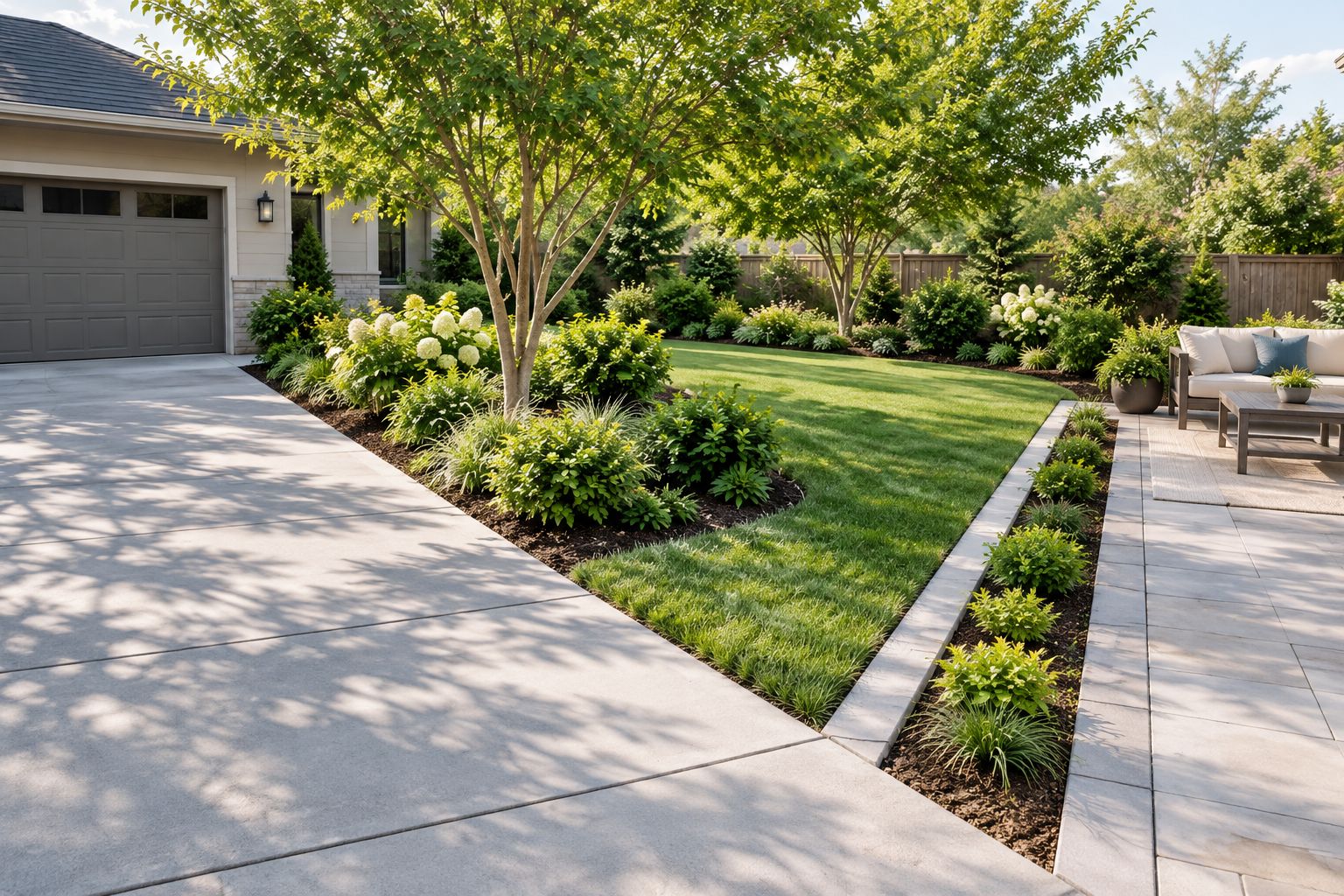
Imagine the tree at adult size, not as the nursery specimen in front of you. A generous lawn border gives you different choices from a narrow bed boxed in by asphalt and concrete.
Replacing an existing driveway tree?
Do not assume removal, stump grinding, and replanting are one task. Ask for a written scope that separates the standing tree, stump, grindings, debris removal, and preparation of the proposed planting area.
Spartantreeny provides tree removal, stump grinding, and planting in the Rochester area. For a homeowner choosing low-mess trees, that combination is useful when an existing tree and its replacement need to be assessed together.
For your 2026 estimate, describe access, nearby structures, where equipment would travel, and what you expect cleanup to include. Ask the crew directly how the removal area will be left and whether the proposed new planting location is suitable.
Spartantreeny is best for Rochester homeowners who want tree removal and replacement planting considered together. Request an individual assessment through the contact page, rather than treating an online tree list as a planting prescription.
Plan your tree replacement
Discuss the existing tree, access, cleanup scope, and proposed planting location.
Which low-mess tree should you choose?
Choose a verified male ginkgo as the default only when you have room for a large tree. For a smaller sunny patio border, start with Japanese tree lilac; for shade and suitable soil, consider American hornbeam.
Choose a thornless, seedless honeylocust selection when filtered shade is the goal and fine leaflets are acceptable. No option earns a recommendation if the mature tree cannot fit.
Spartantreeny can discuss planting alongside removal and stump work. Keep the decision grounded in your property: the cleanest tree on paper is the wrong tree if it needs constant clearance pruning.
FAQ
What are the best low mess trees for driveways in Rochester?
Verified male ginkgo, Japanese tree lilac, American hornbeam, and thornless, seedless honeylocust selections are useful candidates. Choose among them by mature size, sunlight, soil, and the kind of debris you want to avoid.
Is there a driveway tree that drops nothing?
No living driveway tree is completely mess-free. Even trees without fleshy fruit shed leaves or needles, flowers, twigs, or other plant material.
Is ginkgo a good tree beside a driveway?
A verified male ginkgo is a good candidate beside a roomy driveway border because it avoids the fleshy seeds produced by female trees. Confirm the selection and leave space for its mature canopy.
What is a good low-mess tree near a small sunny patio?
Japanese tree lilac is a useful smaller-tree candidate for a sunny patio border. It still drops flowers and dry capsules, so position the canopy with furniture and sweeping in mind.
Are seedless honeylocust trees completely pod-free?
Not every selection described as seedless is guaranteed never to produce a pod. Confirm the exact selection and its documented characteristics before planting beside parking or seating.
Will a low-mess tree prevent driveway root damage?
Low litter does not establish whether a tree is suitable beside pavement. Mature size, rooting space, soil conditions, and driveway construction require separate consideration.
Should I remove a healthy tree just because it makes a mess?
Seasonal litter alone does not establish that removal is the best choice. Compare the existing tree's condition, benefits, cleanup burden, and replacement options before deciding.
One last thing
Before buying a tree in 2026, spend time looking at the pavement beneath a mature example of that exact species or selection. Look between the pavers, not just at the canopy.
That small check makes “low mess” concrete. Bring your findings and property photos to Spartantreeny when discussing removal or planting, and specify the cleanup you expect in the written scope.