




Best overall for a damp Webster shoreline yard: swamp white oak. Best for an exposed deciduous planting: common hackberry. Best for a smaller, sheltered spot: downy serviceberry. These are the best trees to plant near Webster NY shoreline properties in 2026 when you match the species to drainage, wind exposure, and mature size—not just the lake view.
- The best trees to plant near Webster NY shoreline properties depend on drainage, wind exposure, and mature size.
- Swamp white oak suits roomy, seasonally damp yards; common hackberry suits exposed, well-drained planting sites.
- Downy serviceberry fits smaller, sheltered spaces; white spruce provides evergreen screening where roots have room.
- Spartantreeny provides tree planting and removal services for Rochester-area homeowners planning a shoreline replacement.
Why this matters on a Webster shoreline
A lakefront address does not tell you what happens underground. One planting spot holds water after rain; another sits on a dry, exposed rise. A tree that fits one fails the basic site requirements of the other.
For a replacement planting, Spartantreeny provides tree care and planting services in the Rochester area. Start with the condition of the existing tree, the usable planting space, and the route equipment would need—not a species order placed before anyone looks at the yard.
The right shoreline tree fits the ground first and the view second. No tree on this list is a substitute for assessing an actively eroding bank or a damaged tree near your house.
What makes the best shoreline tree
Use these criteria before comparing species for a 2026 planting:
- Drainage: Separate seasonally damp soil from ground that stays saturated. Wet-soil tolerance does not mean every root system belongs in standing water.
- Wind exposure: An open lakeside lawn differs from a yard sheltered by buildings and established trees. Check exposure at the actual planting location.
- Mature size: Allow space for the crown and roots, not just the nursery container. Keep overhead utilities and nearby structures in the plan.
- Winter screening: Deciduous shade trees lose their leaves. Evergreen screening needs its own space and light assessment.
- Maintenance fit: Consider leaves, fruit, cones, pruning access, and the lawn or garden underneath.
- Shoreline condition: A stable yard and an eroding bank are different projects. Tree planting alone does not resolve bank instability.
Best shoreline trees at a glance
These are site-based recommendations, not a claim that every species belongs directly beside the water. The 2026 shortlist separates different jobs so you can rule out poor matches quickly.
| Tree | Best for | Standout feature | Key limitation |
|---|---|---|---|
| Swamp white oak | Roomy, seasonally damp yards | Large native shade tree with wet-soil tolerance | Too large for tight planting spaces |
| Common hackberry | Exposed deciduous planting sites | Tolerance of wind and varied soil conditions | Fruit and leaf litter near hard surfaces |
| Downy serviceberry | Smaller, sheltered garden spaces | Spring flowers and edible fruit | Not the first choice for a harsh, exposed screen |
| White spruce | Evergreen screening with room | Year-round foliage | Needs drainage and space for lower branches |
| Eastern redcedar | Sunny, dry upper-yard locations | Evergreen foliage and drought tolerance once established | Poor match for persistently wet ground |
Mature-size examples below follow species descriptions published in NC State Extension's Plant Toolbox. Treat those ranges as space-planning guidance, not a prediction of the exact dimensions a tree will reach in your yard.
1. Swamp white oak: best for a roomy, seasonally damp yard
Swamp white oak (Quercus bicolor) is the default shade-tree candidate when your shoreline yard has enough room and soil that stays moist without requiring permanent submersion. It develops a broad crown and needs a long-term location away from structures and overhead wires.
A mature height of about 50–60 feet makes this a landscape decision, not a small ornamental addition. Put the future canopy on your plan before choosing the planting hole.
Swamp white oak pros:
- Tolerates seasonally wet soil.
- Provides substantial deciduous shade.
- Supports wildlife through acorns and native-tree habitat.
Swamp white oak cons:
- Its mature crown rules out narrow spaces beside buildings.
- Acorns and fallen leaves need consideration near patios and frequently used paths.
Best for: A homeowner with a broad lawn who wants a lasting shade tree rather than an evergreen screen.
Verdict: Buy for a roomy, seasonally damp site; skip a cramped planting strip.
2. Common hackberry: best for exposed deciduous planting
Common hackberry (Celtis occidentalis) deserves a place on the shortlist when wind exposure matters and you still want a deciduous shade tree. Established hackberries tolerate a broad range of soil conditions, including periods of dryness.
That flexibility does not remove the need for establishment watering. A newly planted tree has a limited root system, even when the mature species tolerates difficult conditions.
Common hackberry pros:
- Tolerates wind exposure.
- Adapts to varied soil conditions.
- Produces fruit used by birds.
Common hackberry cons:
- Fruit and leaf litter are drawbacks over a patio or parking area.
- Leaf galls and witches'-broom growth can affect appearance.
Best for: An open yard where a large deciduous tree has space and a spotless surface underneath is not the priority.
Verdict: Buy for an exposed shade-tree location; skip over your main seating area if litter bothers you.
3. Downy serviceberry: best for a smaller, sheltered space
Downy serviceberry (Amelanchier arborea) fits a different job: flowers, fruit, and a smaller tree near a garden or sitting area. Its typical 15–25-foot height makes it easier to accommodate than a large oak, though width still matters.
Choose a location with adequate drainage and some protection from the harshest exposure. Serviceberry is a garden-tree recommendation, not the default answer for a lakeside wind barrier.
Downy serviceberry pros:
- Fits smaller planting spaces than the large shade trees listed here.
- Provides spring flowers and seasonal interest.
- Produces edible fruit that also attracts birds.
Downy serviceberry cons:
- Fallen fruit and bird activity can create cleanup near paving.
- Rust and leaf diseases can affect foliage and appearance.
Best for: A sheltered garden where you want a smaller ornamental tree without committing to a broad shade canopy.
Verdict: Buy for a sheltered garden; skip when your main goal is blocking winter wind.
4. White spruce: best for evergreen screening with room
White spruce (Picea glauca) keeps its foliage through winter and suits homeowners who need screening rather than summer shade alone. A typical mature height of 40–60 feet means it needs room above and around the planting location.
The lower branches are part of the screen. Do not plan a narrow row and assume repeated cutting will turn full-size spruce trees into a compact hedge.
White spruce pros:
- Provides year-round foliage.
- Offers screening when planted with appropriate spacing.
- Suits cold-climate landscapes.
White spruce cons:
- Persistently saturated soil is a poor fit.
- Crowding and heavy shade undermine the lower foliage you need for screening.
Best for: A sunny, adequately drained yard with enough width for an evergreen's mature form.
Verdict: Buy for a roomy screening location; skip a wet pocket or narrow side yard.
5. Eastern redcedar: best for a dry, sunny upper yard
Eastern redcedar (Juniperus virginiana) belongs on the drier part of the property, not automatically at the water's edge. Once established, it tolerates drought and provides evergreen cover.
Its usefulness depends on sunlight and drainage. A dry upper slope and a soggy shoreline hollow are not interchangeable sites, even when they sit on the same Webster property.
Eastern redcedar pros:
- Tolerates dry conditions once established.
- Retains foliage through winter.
- Provides wildlife cover and food.
Eastern redcedar cons:
- Persistently wet ground is a poor match.
- It hosts cedar-apple rust, which matters when susceptible apples or crabapples grow nearby.
Best for: A sunny, well-drained upper-yard planting where evergreen cover matters more than broad summer shade.
Verdict: Buy for dry ground in full sun; skip wet soil and review nearby apple plantings first.
Check the planting location before choosing a tree
Walk the proposed location after rain and again during dry weather. Record where water collects, where the soil dries out, and which parts of the yard take the strongest wind; do not judge the whole property from the back door.
Keep your observations practical:
- Drainage: Photograph puddles and note whether the planting area remains wet after surrounding ground dries.
- Exposure: Identify open lake-facing ground and sheltered pockets separately.
- Clearance: Measure the usable space between buildings, pavement, utilities, and existing trees.
- Access: Identify gates, steps, slopes, and lawn areas that equipment would need to cross.
A useful 2026 planting plan shows the mature tree, not just a small circle marking the trunk. Include the canopy, the screening you want to preserve, and access for future maintenance.
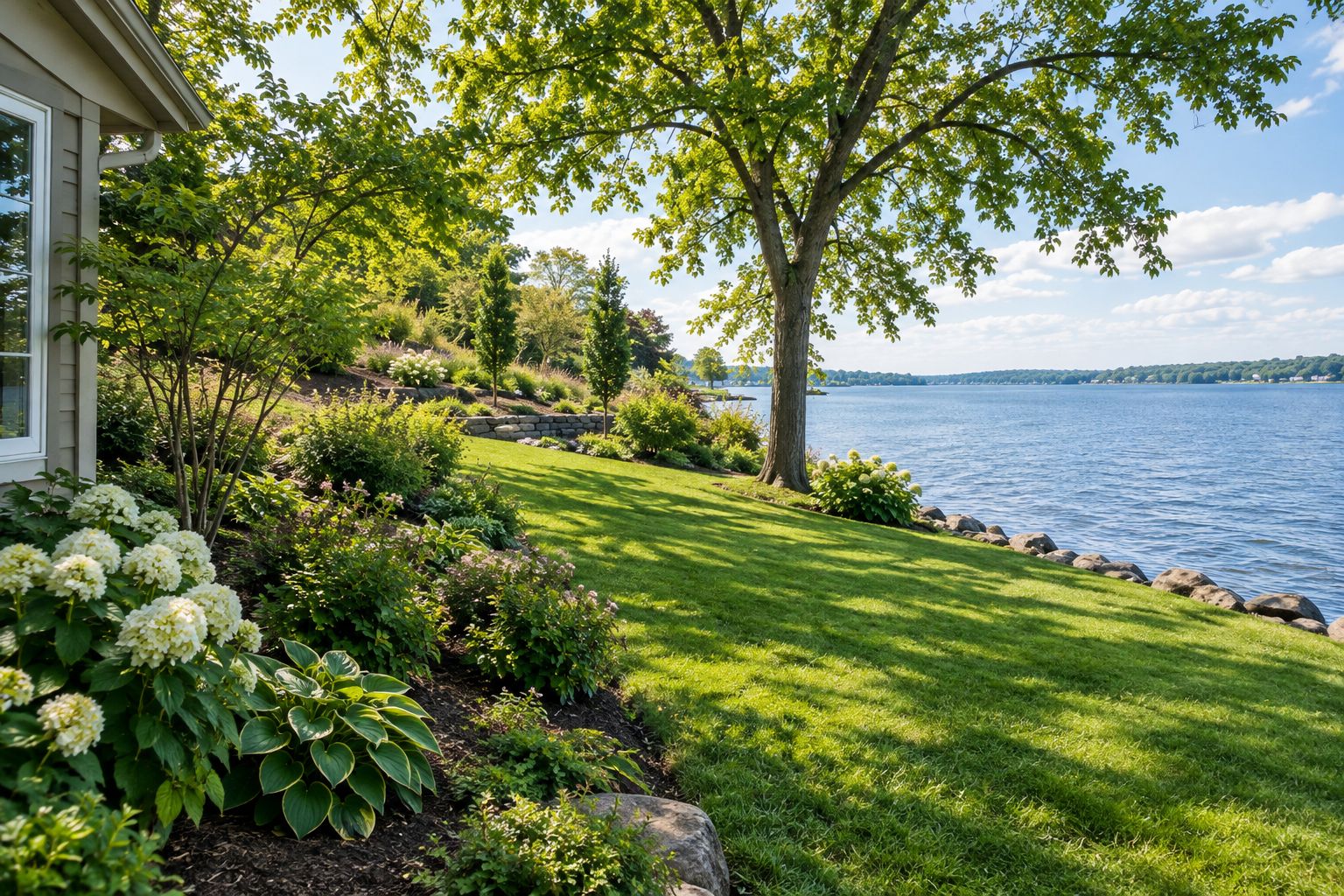
Do not use a preferred species to justify a poor location. Move the planting spot or choose a different tree when drainage, clearance, or exposure conflicts with its needs.
Replacing a shoreline tree starts with the removal plan
If an existing tree occupies the site, settle its condition and removal scope before choosing a replacement. Read the lakefront tree removal guide for Webster homeowners before assuming equipment can reach the shoreline without affecting the rest of the yard.
Tree size, nearby structures, access, and cleanup scope affect the work involved. Stump grinding and replacement planting also need clear discussion; removing the trunk does not automatically leave a planting-ready site.
For a useful individual estimate, give Spartantreeny the location of the tree, photographs taken from safe ground, and your intended use for the space. Ask to speak directly with the crew about careful removal, protection of nearby features, and thorough cleanup rather than leaving those details implied.
Ask the written scope to distinguish:
- Tree removal from stump grinding.
- Wood and brush removal from material left on site.
- Grinding debris from replacement soil preparation.
- Lawn protection from any repair work included afterward.
Request an individual tree estimate
Discuss removal access, cleanup scope, and your replacement planting location.
How these trees were ranked
This 2026 ranking prioritizes site fit: drainage, wind exposure, mature size, screening needs, and maintenance. It is a species-selection guide, not a report of local planting trials or an inspection of your property.
Swamp white oak takes the default shade-tree slot for a roomy, seasonally damp yard. The other recommendations solve different problems; a smaller serviceberry is not a lesser oak, and an evergreen screen is not a substitute for an appropriately placed shade tree.
Which shoreline tree should you choose?
Choose swamp white oak when you have room, seasonal moisture, and a long-term shade goal. Choose hackberry when exposure drives the decision, serviceberry for a sheltered smaller garden, white spruce for a spacious evergreen screen, and eastern redcedar for sunny, dry ground.
Spartantreeny is a fit for Rochester-area homeowners who need tree removal and planting considered together. Bring the crew your goal for the yard and ask for an individual estimate before committing to a replacement location.
FAQ
What's the best tree to plant near a Webster, NY shoreline?
Swamp white oak is the default choice for a roomy, seasonally damp yard where you want a large shade tree. Hackberry, serviceberry, white spruce, and eastern redcedar fit different exposure, space, and screening needs.
What's the best evergreen for a Webster lakefront yard?
White spruce is a candidate for a sunny, adequately drained site with room for its mature branches. Eastern redcedar fits drier, sunny ground; neither is the default choice for persistently saturated soil.
Can I plant a tree right at the water's edge?
Do not choose the water's edge without assessing drainage, bank stability, and any applicable shoreline restrictions. A tree suited to damp soil does not automatically belong on an eroding bank.
Does Lake Ontario spray mean I need a salt-tolerant tree?
Lake Ontario is freshwater, so lake exposure is not the same as ocean salt spray. Assess road salt separately where a planting is near treated pavement or snow-storage areas.
Can I plant a new tree where an old tree was removed?
A replacement planting needs a suitable root zone, not simply an open space where the trunk stood. Discuss the remaining stump, roots, grinding debris, and soil preparation before choosing the exact location.
Will planting trees stop shoreline erosion?
Tree planting alone is not a complete response to active shoreline erosion. Assess the bank and the cause of soil loss before deciding where trees belong.
How do I get an estimate for removing and replacing a shoreline tree?
Request an individual estimate that covers the existing tree, equipment access, nearby structures, cleanup, and the proposed planting location. Have removal, stump work, and planting preparation identified separately so you know what the scope includes.
One last thing
A lake view changes your tree choice, but it does not justify topping an existing tree. Topping creates large wounds and weakly attached regrowth; it is not a sound way to keep a large tree permanently small.
For your 2026 plan, choose a species whose mature size fits the view and the yard. That is a better starting point than planting a large tree where you already know you will want its top cut off.