





DIY stump removal is not automatically cheaper than hiring a professional: compare the complete DIY job with a written estimate for the same finished result. Equipment rental is only part of the work; transport, protective equipment, chip handling, and lawn repair belong in the comparison too. For homeowners in Rochester, Webster, and eastern Monroe County in 2026, get an individual stump estimate before committing to a rental.
- DIY stump removal vs professional: compare the finished job, not a rental charge against a complete service estimate.
- Spartan Tree and Landscape provides professional stump grinding for Rochester-area homeowners who want to hire out the work.
- Grinding reduces the stump but does not remove the entire underground root system.
- Confirm access, grinding depth, chip removal, and backfill before choosing a method.
Why this matters
A stump sticking above the grass looks like a small, separate job. The work underneath—and the mess afterward—changes that picture. You need to decide whether you want mowing clearance, a planting bed, or ground prepared for another project.
For a local starting point, read the guide to stump grinding costs in Rochester. Then compare written scopes rather than assuming a general online figure describes your yard. A useful 2026 comparison starts with the actual stump, equipment route, and cleanup expectations.
Is DIY stump removal cheaper than hiring a pro?
DIY makes financial sense only when the complete job costs less and you can perform it safely. A rental agreement and a professional estimate describe different things unless you account for equipment handling, the work itself, and the condition of the yard afterward.
| Method | Best for | Main advantage | Main drawback | What to confirm |
|---|---|---|---|---|
| Manual digging | A small, accessible stump with manageable roots | Avoids operating a stump grinder | Requires digging, root cutting, and handling heavy material | Utilities, root spread, disposal, and physical demands |
| Rental stump grinder | A homeowner with suitable experience and equipment access | Gives you control over the work | You handle transport, operation, chips, and restoration | Machine suitability, instructions, access, and rental terms |
| Professional stump grinding | A homeowner who wants to hire out the grinding | Assigns equipment operation to a service provider | Cleanup and restoration still depend on the written scope | Grinding depth, chip handling, backfill, and exclusions |
None of these methods automatically leaves a lawn ready for seed. Digging creates a hole; grinding leaves wood chips mixed with soil. Ask what remains before you compare the choices.
Start with the same finish line
Write down what you want to use the space for. Removing a trip obstacle from a lawn is different from preparing a spot for a new tree, driveway, or footing.
If the DIY plan stops at grinding while the professional estimate includes hauling chips, you are comparing different jobs. The reverse also matters: do not assume a service estimate includes soil or seed unless it says so.
Manual digging: best for a manageable stump
Manual removal avoids renting a grinder, but it replaces machine work with excavation and root cutting. A modest-looking stump can have roots extending beyond the visible wood, so judge the whole task rather than the stump's height alone.
The advantage is control: you can expose roots gradually and see what you are working around. The disadvantage is the physical work, followed by moving the stump and filling the excavation.
Before digging, contact 811 and follow the utility-marking process. Ask about private underground facilities as well; do not assume every buried line on your property is covered by the standard marking process.
Choose manual digging only when you can safely manage the excavation, roots, and removed material. Do not attach a vehicle to a stump as a shortcut. Pulling introduces hazards that a simple rental-versus-estimate comparison does not capture.
Rental stump grinding: best for experienced equipment users
A rental grinder gives you responsibility for the machine from pickup through return. That includes understanding its controls, following the manufacturer's safety instructions, keeping others clear, and arranging suitable transport.
Access deserves attention before you reserve equipment. Measure the narrowest gate opening and consider turns, steps, slopes, and the route across the lawn. A machine that reaches the driveway is not necessarily a machine that reaches the stump.
The benefit is control over your work schedule within the rental agreement. The limitation is that you also own the unfinished tasks: chips, soil, equipment cleaning, and any lawn restoration you take on.
For your 2026 comparison, read the actual rental terms and ask what transport and operating requirements apply. Do not rent first and work out the site constraints afterward.
Professional stump grinding: best for hiring out equipment work
Professional grinding moves machine selection and operation out of your hands. You still need to define the result: which stump, how far the work extends, what happens to visible roots, and what stays in the yard.
Spartan Tree and Landscape stump grinding is best for Rochester-area homeowners who want to hire out the grinding rather than operate rental equipment. Ask for an individual estimate that addresses careful access, cleanup, and your intended use of the space.
The trade-off is straightforward. Hiring a service does not automatically mean complete root extraction, chip hauling, backfill, or seeding. Have the crew explain the work directly and put the agreed scope in writing.
Why stump-removal work varies
A stump estimate needs more than a photograph of the cut surface. These factors determine what equipment and work the property requires:
- Stump size: Measure the visible stump and point out the wider base where roots flare into the ground. The work area can extend beyond the cut trunk.
- Equipment access: Gates, steps, narrow side yards, and sharp turns affect whether equipment can reach the work area.
- Nearby structures: Identify fences, patios, foundations, and other features that need protection or limit working room.
- Ground conditions: Slopes, soft soil, and wet areas affect access planning and the risk of lawn disturbance.
- Underground obstacles: Identify utility markings and disclose known irrigation, lighting cables, and private lines before work begins.
- Cleanup scope: Leaving chips, hauling chips, bringing in soil, and restoring grass are different tasks. Specify the finish you want.
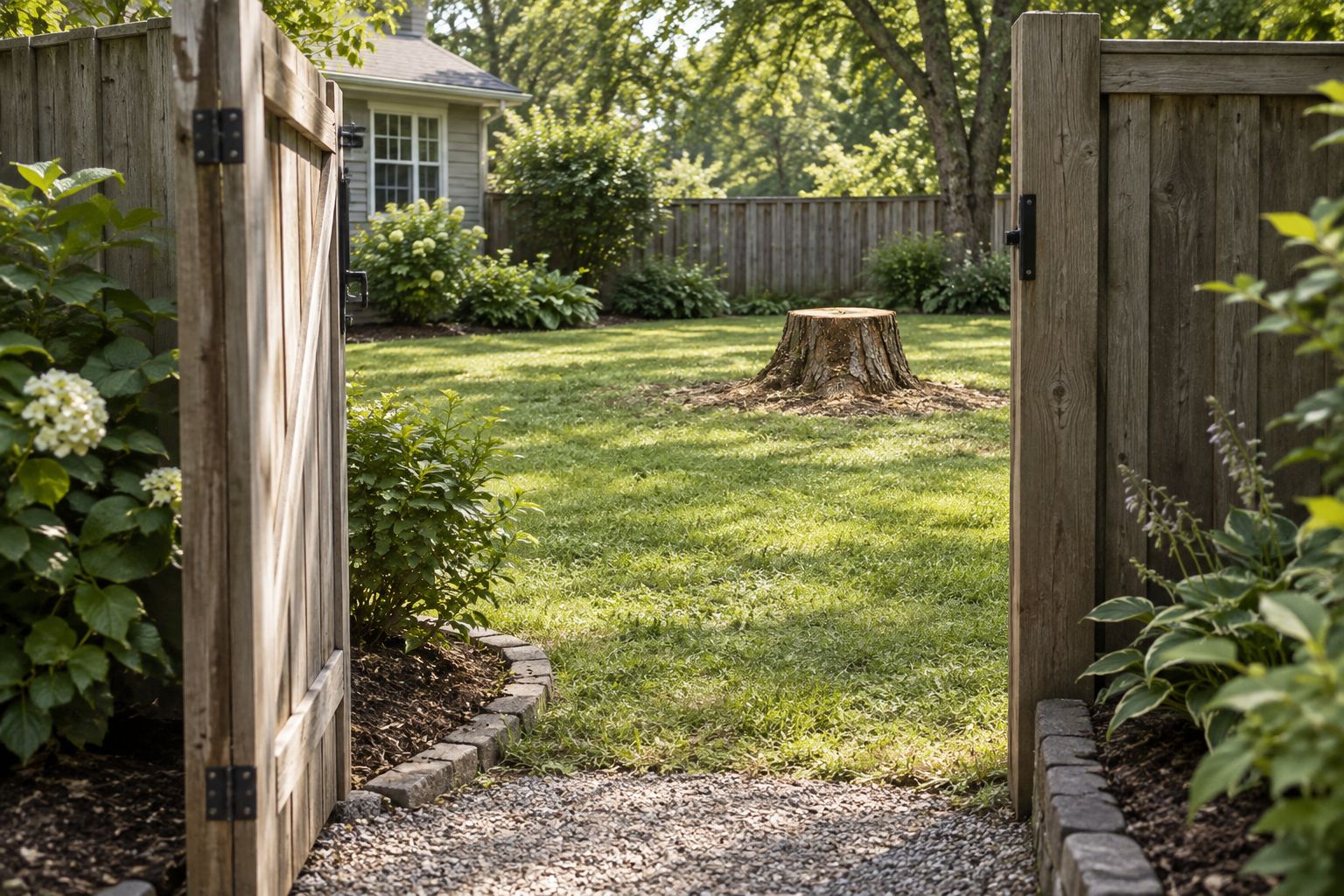
A Webster backyard behind a narrow gate needs a different access plan from an open front yard in Rochester. The important detail is the route to your stump, not the town name alone.
How do I compare DIY work with a professional estimate?
Use a short worksheet before making a decision. For a 2026 project, use current rental terms and a current local estimate—not a remembered charge from a different job.
- Describe the finished space. State whether you want a mowable lawn, planting area, or preparation for construction. Tell the estimator about any planned excavation.
- Record the site constraints. Photograph the stump, nearby structures, gate, and equipment route. Measure clear openings and identify known underground systems.
- List the complete DIY work. Include transport, operating requirements, protective equipment, chip handling, disposal arrangements, and restoration tasks.
- Request a matching service scope. Ask what grinding includes and what happens afterward. Keep stump work separate from optional restoration so the comparison stays clear.
- Compare responsibility as well as spending. Decide who operates equipment, moves material, protects surrounding features, and handles unfinished work.
Do not treat your own labor as invisible. You do not need to assign it an invented hourly value; simply decide whether you want to spend your available time on the complete job.
Ask Spartan Tree and Landscape to explain the proposed access route and cleanup scope with the crew. That conversation is more useful than a promised online total based only on stump diameter.
You can request a stump-grinding estimate with photos and a description of what you want to do with the space afterward.
Does stump grinding remove all the roots?
Stump grinding does not remove the entire root system. It breaks down the stump within the agreed work area; roots outside that area remain unless additional work is specified.
That distinction matters if you plan to dig, build, or plant in the same spot. Explain the project before accepting a scope, and have the appropriate contractor confirm what ground preparation the next stage requires.
Do not use the phrase stump removal as a substitute for a clear description. Ask whether the proposal means grinding, excavation, or another defined task.
Can I save work by leaving the wood chips?
Leaving chips avoids hauling them away, but it does not automatically create a planting-ready surface. Grinding produces woody material mixed with soil, and preparing the area for grass or planting is a separate decision.
Ask where any retained material will go. A pile beside the work area, material spread into a bed, and a filled grinding depression are different outcomes. Do not assume the crew will choose the one you have in mind.
What should a stump-grinding estimate include?
A useful estimate identifies the stump, describes the grinding area, addresses equipment access, and states the cleanup plan. It should make exclusions clear enough that you know what work remains yours.
Before approving a 2026 estimate, ask these questions:
- Does the work include the visible root flare or only the central stump?
- What grinding depth is proposed for my intended use?
- Who checks access and underground-service concerns before work starts?
- Will chips remain, be moved elsewhere on the property, or be hauled away?
- Are soil, grading, seed, and other restoration tasks included or excluded?
- What happens if the crew encounters an obstruction that changes the agreed work?
Ask for evidence of current insurance and make sure the written scope matches the discussion. Careful removal and thorough cleanup start with a clear agreement, not an assumption.
FAQ
Is DIY stump removal cheaper than professional grinding in Rochester?
DIY stump removal is not automatically cheaper than professional grinding in Rochester. Compare the complete DIY task, including transport and cleanup, with an individual estimate for the same finished result.
Should I rent a stump grinder if I have never used one?
Do not choose a rental grinder on expected savings alone if you have never operated one. Review the machine's instructions and operating requirements, and hire out the work if you cannot perform it safely.
Can a stump grinder get through my backyard gate?
Gate access depends on the actual machine and the clear opening. Measure the narrowest point and disclose turns, steps, slopes, and other restrictions before arranging equipment or service.
Does professional stump grinding include cleanup and grass seed?
Professional stump grinding includes only the cleanup and restoration stated in the agreement. Confirm chip handling, soil, grading, and seeding separately rather than assuming they are included.
Do I need to call 811 before digging out a stump?
Contact 811 before digging out a stump and follow the utility-marking process. Also ask how to identify private underground facilities, including known irrigation and other privately installed lines.
Can Spartan Tree and Landscape help with a stump in Webster?
Spartan Tree and Landscape provides stump grinding in the Rochester area, including the homeowner service area covered here in Webster and eastern Monroe County. Request an individual estimate that addresses access, the desired result, and cleanup.
What should I send when requesting a stump estimate in 2026?
For a 2026 stump estimate, send clear photos of the stump, nearby structures, and the equipment route. Include gate measurements, known underground systems, and your plans for the space afterward.
One last thing
Decide what replaces the stump before deciding how to remove it. A lawn repair, replacement tree, and construction project do not need the same preparation. Telling the estimator your next step helps prevent accepting a grinding scope that leaves the next contractor with work you did not anticipate.