





Stump grinding takes as long as the stump, access route, and agreed cleanup require; there is no single reliable duration for every Rochester-area yard. The grinding itself is only part of the visit, so a useful 2026 estimate should cover setup, machine access, grinding, and cleanup—not just time at the cutting wheel.
- How long does stump grinding take? Ask for a site-specific estimate covering access, grinding, and cleanup.
- Spartantreeny provides stump grinding for Rochester-area homeowners; confirm the work scope before scheduling.
- Stump size, nearby structures, and the route into your yard affect the work.
- Grinding a stump does not automatically include chip removal, topsoil, or lawn repair.
How long does stump grinding take?
The useful number is the crew’s estimate for your entire job, not a generic grinding time. A stump beside an open driveway presents a different job from a stump behind a narrow gate beside a patio. Even when the visible stumps look similar, getting equipment into position and handling the debris changes the work.
When requesting an estimate, separate the visit into these stages:
- Site review: Confirm the stump, work boundary, nearby obstacles, and any utility-marking requirements before work begins.
- Machine access: Establish how the grinder reaches the stump and where equipment can operate.
- Grinding: Reduce the agreed stump area to the depth specified in the estimate.
- Cleanup: Handle chips and debris according to the written scope.
- Site finish: Complete any separately agreed soil placement, grading, or lawn preparation.
Not every estimate includes every stage. Ask which stages the quoted duration covers, then compare that scope with the stump grinding cost factors in Rochester. Time and cost questions both start with knowing exactly what work is included.
Why this matters
If you are arranging planned tree removal in Rochester, Webster, or eastern Monroe County, the stump needs its own conversation. Taking down the tree and finishing the ground beneath it are different tasks. Do not assume the tree-removal appointment also covers grinding and lawn restoration.
That distinction matters when you have another contractor coming, a fence project planned, or seed ready to spread. Schedule the next job around the agreed finished condition, not simply around the day the tree comes down. A stump ground below the surface is not automatically a finished lawn or an excavated planting site.
What does your stump-grinding appointment include?
Ask the contractor to describe what the yard will look like when the crew leaves. The answer gives you a better basis for planning than a short promise about how quickly the wheel cuts wood.
These are different scopes to discuss, not assumed service packages:
| Work scope | Best for | Practical benefit | Limitation to confirm |
|---|---|---|---|
| Grinding only | Homeowners handling the remaining yard work | Addresses the agreed stump area | Chips and follow-up ground work still need a plan |
| Grinding with chip removal | Homeowners who do not want to handle the grindings | Adds debris handling to the job | Topsoil and lawn repair are separate unless listed |
| Grinding with ground preparation | Homeowners preparing for a defined landscape project | Connects stump work with the next task | The required depth and finish depend on that project |
A more complete scope involves more work. That does not make the shorter scope wrong; it makes the choice depend on what you intend to handle yourself.
Grinding only: define what stays behind
Grinding breaks the stump into wood fragments mixed with material from the surrounding ground. If your agreement leaves those grindings on site, ask where the crew will place them and whether the area will be raked.
This scope fits homeowners who have a clear plan for the remaining material. Its drawback is straightforward: the grinder leaving does not mean your yard project is finished.
Grinding and chip removal: define the debris boundary
“Cleanup” needs a description. Removing loose grindings, raking the immediate work area, and hauling material away are not interchangeable instructions.
Ask whether the estimate covers material from the grinding area alone or additional debris elsewhere. Avoid making the crew and homeowner interpret the same short word differently after work is complete.
Ground preparation: define the next use
Grass, a planting bed, a replacement tree, and a construction project do not need the same finished site. Tell the estimator what comes next before agreeing to the grinding depth.
The advantage is a scope tied to your actual project. The limitation is that stump grinding does not remove the entire root system or replace the excavation needed for every future use.
Why stump-grinding time varies
These factors explain why an estimate needs more than a photograph of the cut surface:
- Stump size: A wider stump and substantial root flare create more material to address. Show the full base, not just the flat top.
- Machine access: Gates, steps, slopes, and tight turns affect the route into the yard. A clear view of the access route helps the contractor assess the job.
- Nearby structures: Fences, patios, foundations, and other features constrain where equipment works and how the surrounding area is protected.
- Grinding depth: The depth and area you agree to grind determine the work boundary. Explain the next use rather than requesting an unspecified deep grind.
- Cleanup scope: Leaving grindings, moving them elsewhere on the property, and hauling them away involve different handling.
- Ground conditions: Soft ground and obstacles affect equipment access. Describe the site as it is, including places where water collects.
Do not remove a fence panel, cut exposed roots, or start digging to speed things up without discussing the plan. A homeowner’s shortcut can create extra work or interfere with the intended access route.
What should you send before a stump-grinding estimate?
A useful estimate request shows both the stump and the route to it. For your 2026 project, gather information that lets the contractor ask specific follow-up questions rather than guess from a close-up.
Show the full work area
Take a clear photograph of the stump from a safe standing position. Include the root flare, nearby paving, fences, garden edges, and any exposed roots you want discussed.
Add a wider photograph showing the yard around it. A stump can look isolated in a tight image while sitting close to a shed or retaining wall outside the frame.
Show the access route
Photograph the route from the driveway or other equipment entry point to the stump. Include gates, narrow passages, turns, steps, and slopes.
Provide actual opening measurements where access is restricted, but let the contractor decide whether the equipment fits. Do not assume the grinder can pass through a gate because another garden machine does.
State the finished condition
Say whether you want the grindings left, removed, or handled as part of a wider landscape project. Identify whether your next step is grass, a bed, a fence, or another use.
Also mention private irrigation, lighting cables, or other known buried features. Ask the contractor how utility identification and site clearance will be handled before grinding begins; do not assume a photograph establishes that the ground is clear.
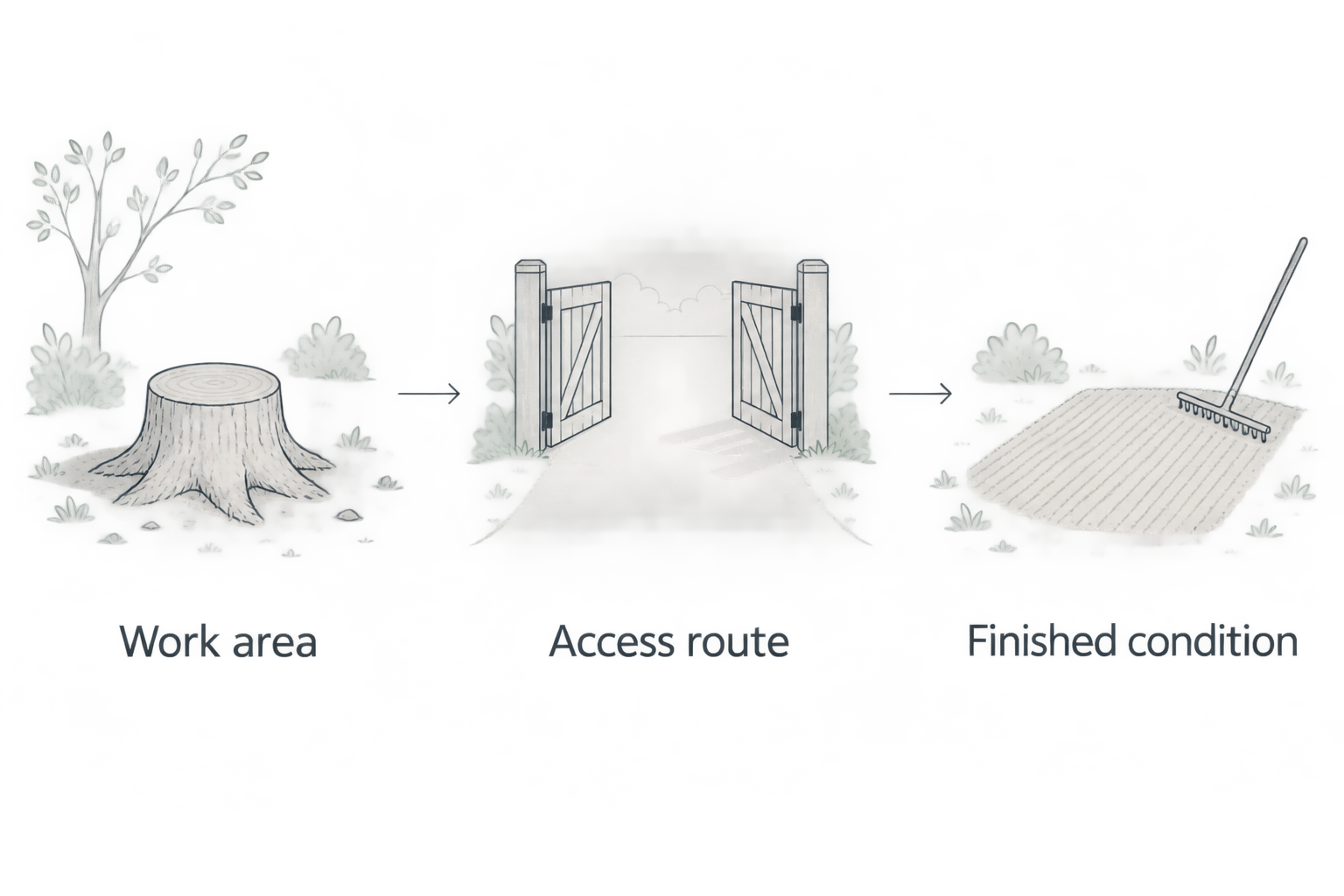
These details help define an individual estimate. They do not replace an on-site assessment when the contractor needs to inspect access or the work area directly.
Does cleanup take longer than grinding?
Cleanup is a separate part of the job, and its duration depends on what you ask the crew to move and remove. There is no sound way to compare it with grinding time without knowing the stump and the agreed debris handling.
For example, leaving grindings near the stump avoids the hauling required when material must leave the property. That is a difference in scope, not proof that one contractor works faster than another.
Ask what “finished” means before asking when the crew will finish. If you expect bare ground ready for soil and the estimate covers grinding only, a short appointment leaves you with work you did not plan for.
Can you seed the area as soon as grinding is finished?
Grinding completion and lawn readiness are different milestones. Before seeding, address the remaining wood material, soil condition, and grading needed for the intended lawn area.
The distinction also matters when reading lawn advice online: repairing bare spots in your lawn is not the same task as preparing a fresh stump-grinding site. The linked article concerns Bermuda grass; do not transfer its grass-specific instructions directly to a Rochester lawn.
Ask whoever is handling the lawn work to define the preparation they need. Then include that requirement in the stump discussion rather than discovering a mismatch after the grinding equipment has left.
If you are planning a replacement tree instead, discuss its position separately. Grinding the visible stump does not establish that the old planting location has enough suitable space for a new root ball.
How do you get a useful local timeline?
Request an individual estimate that separates the work date, time on site, and finished condition. Those are different commitments. An estimated appointment length does not tell you how soon the job can be scheduled, and a scheduled grinding date does not promise a completed lawn.
Spartantreeny provides stump grinding and tree-care services for Rochester-area homeowners. It is a local option for homeowners arranging planned removal, but the stump dimensions, access requirements, grinding depth, and cleanup scope still need to be agreed for each property.
When discussing a 2026 appointment, ask:
- Does the estimated time include setup and cleanup?
- Is stump grinding included with tree removal or scheduled separately?
- What area and depth will be ground?
- Will grindings remain, be moved, or leave the property?
- Is soil placement or lawn preparation included?
- What site conditions would change the plan?
Ask who will be on site and how you will communicate with the crew. Careful work, clear boundaries, and thorough cleanup belong in the conversation; do not treat a fast grinding claim as a substitute for them.
You can request an individual stump-grinding estimate with photographs of the stump, access route, and surrounding yard. Tell Spartantreeny what you want to do with the area afterward so the discussion starts with the right scope.
Will the whole stump and every root be gone?
No. Stump grinding addresses the agreed stump area and depth rather than excavating the entire root system. Roots beyond that work area can remain in the ground.
That limitation matters if you are installing something that needs excavation. Give the tree contractor and the next contractor the same project description so neither assumes the other has cleared the required space.
Do you need to stay home for stump grinding?
Ask the contractor whether your presence is required and how access will be arranged. Confirm the stump, work boundary, and cleanup instructions before the appointment rather than relying on a conversation after equipment arrives.
Keep children and pets away from the work area and follow the crew’s directions about where to stand. A promised finish time is never a reason to approach operating equipment.
FAQ
How long does stump grinding take in Rochester, NY?
Stump-grinding time depends on the stump, equipment access, grinding depth, and cleanup scope. Request an estimate for the complete visit rather than cutting time alone.
Can a contractor tell me the grinding time from a photo?
Photographs help a contractor assess the job, but the access route and surrounding obstacles matter too. Send wide views and ask whether an on-site assessment is needed.
Does tree removal automatically include stump grinding?
Do not assume tree removal includes stump grinding. Check the written estimate for grinding, depth, debris handling, and any separate scheduling.
Does stump grinding include taking away the wood chips?
Chip removal is included only when the agreed scope says so. Confirm whether grindings stay near the stump, move elsewhere on the property, or leave the site.
Can I plant grass immediately after stump grinding?
Grinding alone does not establish that the ground is ready for grass. Confirm the material removal, soil preparation, and grading needed before seeding.
Will a narrow backyard gate affect stump grinding?
A narrow gate affects equipment access and needs to be assessed before scheduling. Provide the opening measurement and photographs of the full route to the stump.
Does stump grinding remove all the roots?
Stump grinding does not excavate the entire root system. Confirm which exposed roots and surrounding areas are included in the work boundary.
One last thing
Before accepting a 2026 estimate, finish this sentence: “When the crew leaves, this area will be ready for…” If you cannot finish it clearly, the scope needs another conversation.
That single question separates removing a visible obstacle from preparing your yard for its next use. Agree on the endpoint first; let the crew estimate the time needed to reach it carefully.