





You can remove a small sapling yourself if you can work entirely from the ground with hand tools, confirm permission, and keep clear of utilities and nearby property. A standing tree that needs chainsaw felling, climbing, ropes, or controlled lowering belongs with a qualified tree crew. For Rochester, Webster, and eastern Monroe County homeowners planning removal in 2026, the decision starts with what the tree can hit—not simply whether it stands in your yard.
- Asking, ‘Can I remove a tree myself without a professional?’ Limit DIY to small, ground-level sapling work.
- Hire a qualified crew for standing-tree felling, damaged trees, overhead hazards, or work near structures.
- Spartantreeny provides tree removal for Rochester-area homeowners; request an individual estimate rather than assuming a standard quote.
- Confirm ownership, local requirements, utility conflicts, and cleanup scope before tree removal begins.
Can I remove a tree in my own yard without a professional?
Yes for limited sapling work; hire a qualified crew when removal requires controlling a falling tree or suspended wood. Owning the yard does not establish permission to remove every tree, especially near a property boundary or public right-of-way. Check the Monroe County tree-removal permit guide before arranging work, then confirm the requirements that apply to your address.
| Approach | Best for | Practical advantage | Limitation or drawback |
|---|---|---|---|
| Ground-level hand-tool removal | Small saplings you can manage without climbing or felling | Keeps the task limited to reachable growth and roots | Digging still requires checking for buried utilities; roots and debris remain your responsibility |
| Professional planned removal | Standing trees near homes, fences, driveways, or other property | Lets a crew assess access and how to control removed wood | Requires an individual estimate and agreement on cleanup and stump work |
| Emergency assessment | Broken, uprooting, or storm-damaged trees threatening people or property | Addresses immediate hazards before ordinary yard work resumes | Keep away from the affected area; utility involvement can change how work proceeds |
This is a screening guide, not a felling tutorial. A tree that looks manageable from the driveway can have decay, hanging branches, or an obstructed removal route that changes the job completely.
Why this matters for Rochester-area homeowners
A removal decision involves more than the trunk. The crown, nearby buildings, overhead wires, fence openings, and ground conditions all affect how wood can leave your property without creating another problem.
For a planned 2026 project in Rochester or Webster, use the estimate visit to settle those details before you commit. The useful question is not whether you can operate a saw; it is whether you can control everything that moves.
An open lawn does not cancel a hazardous limb overhead. A short tree does not become a reasonable DIY job when it is tangled in another tree or leaning against a garage.
When is removing a small sapling yourself reasonable?
Ground-level sapling removal is the narrow DIY case. The work must stay within your physical ability and tool experience, without needing a ladder, powered felling cuts, or help directing a falling trunk.
Before deciding, work through these checks:
- Confirm ownership. Establish that the tree is yours to remove and that no boundary, easement, or local restriction needs attention.
- Check utilities. Look for overhead conflicts, and arrange utility marking before digging. Ask how private underground lines will be identified.
- Assess the work. Keep DIY limited to growth you can manage from the ground without creating falling or suspended loads.
- Plan disposal. Decide where branches, roots, and soil will go before starting. Do not assume local collection accepts the material.
- Set stop conditions. Stop if you uncover an unidentified line, discover unstable wood, or find that the task requires different equipment or skills.
Hand tools do not make every removal harmless. Sharp tools, lifting, uneven footing, and buried infrastructure still require attention.
Best for: homeowners dealing with genuinely small, accessible saplings. If the task turns into a tree-felling project, change the plan rather than improvising.
When should you hire a professional tree crew?
Hire a qualified crew when the job involves cutting and controlling a standing tree, working above ground, or protecting something within reach of falling wood. Do not use a hoped-for falling direction as your safety plan.
Stop the DIY plan when you see any of these conditions:
- Structures nearby: a house, garage, shed, deck, or fence within reach of the tree or its branches.
- Overhead lines: wires running through, beside, or below the crown. Treat unfamiliar lines as hazardous.
- Structural damage: a split trunk, hanging limb, lifted roots, or wood resting on another tree.
- Uncertain condition: dead sections, visible cavities, or decay that needs an experienced assessment.
- Restricted access: narrow gates, steep ground, retaining walls, or obstacles that complicate equipment access and debris removal.
- Elevated work: any plan involving a ladder, climbing, or cutting branches overhead.
Do not climb a ladder with a chainsaw or attach a vehicle to a tree to influence its fall. Those shortcuts add hazards rather than replacing a removal plan.
For an immediate threat to people, call emergency services. For a tree touching or threatening utility lines, keep away and contact the utility; do not approach to inspect the contact point.
Why removal difficulty varies from yard to yard
Tree height matters, but it does not describe the whole job. These factors explain why a crew needs to see the tree and its surroundings before defining the work:
- Tree size: trunk size and crown spread affect the amount of wood involved and how it must be handled.
- Tree condition: broken, dead, or decayed wood changes how the crew assesses the removal.
- Nearby structures: roofs, windows, fences, and neighboring property limit where material can go.
- Site access: gates, driveway space, slopes, and obstacles affect the route into and out of the work area.
- Utilities: overhead wires and buried lines create separate planning requirements.
- Cleanup scope: hauling branches, leaving logs, removing chips, and addressing the stump are different tasks.
A tight Webster backyard and an open Rochester lot need different plans even when their trees look similar. Give the estimator the full picture, including anything behind the tree that is not visible from the street.
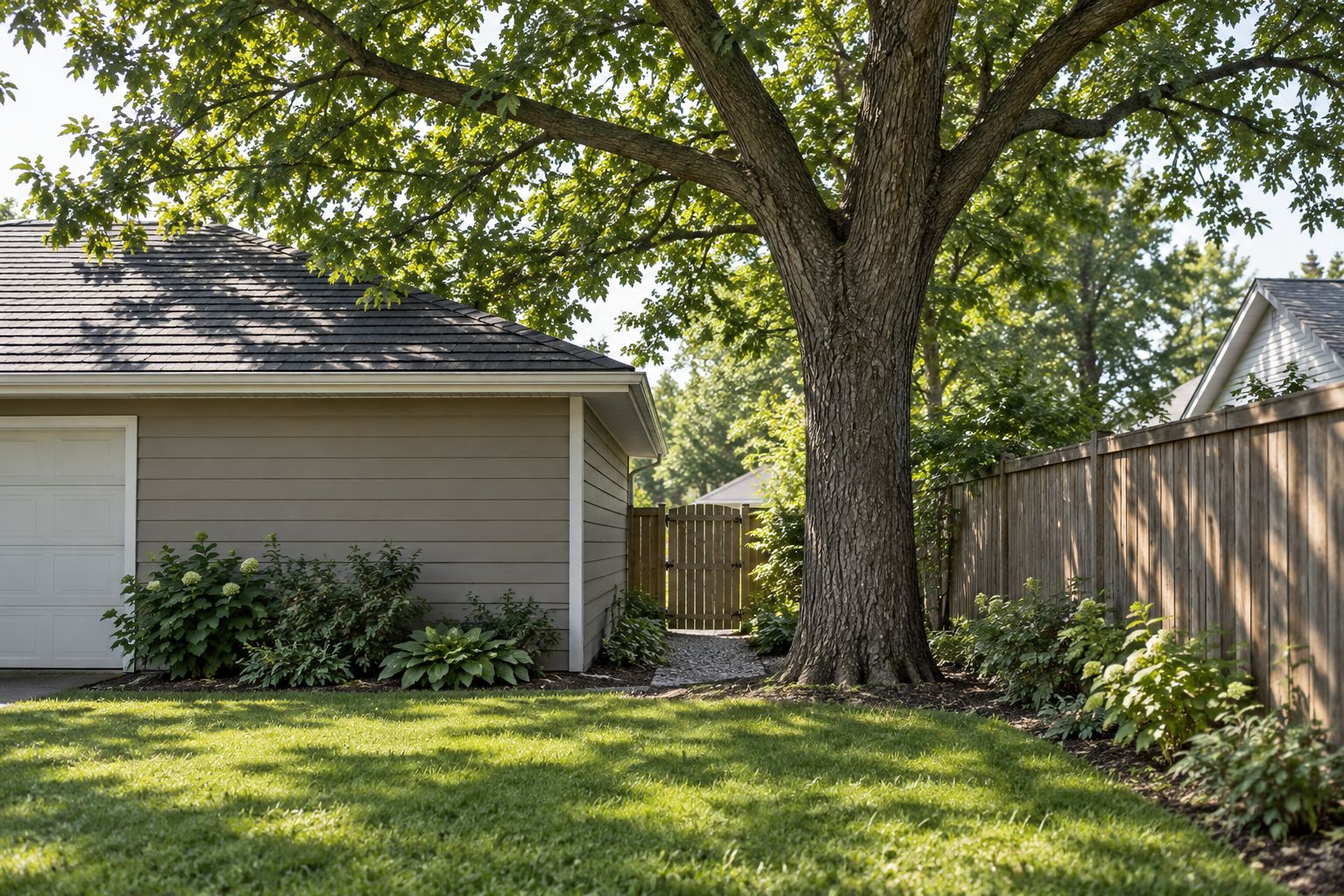
Does owning the tree mean I can remove it without permission?
No. Ownership and removal permission are separate questions, and the answer depends on the tree's location and the rules affecting your property.
Before a 2026 removal, confirm the relevant requirements with your municipality rather than assuming a rule applies throughout Monroe County. A Rochester address and a Webster address do not, by themselves, establish the same approval process.
Check boundary ownership, street-tree status, easements, and any homeowners association restrictions. For shoreline properties, ask whether the location brings additional restrictions before scheduling removal.
If ownership is disputed, settle that question before cutting. An estimate identifies a proposed scope of work; it does not resolve a property-line disagreement.
Is DIY removal worth it if I already own a chainsaw?
Owning a chainsaw does not establish that you can fell a particular tree safely. Equipment is only part of the job; tree condition, falling wood, escape routes, and nearby property still need assessment.
DIY also leaves you responsible for the material afterward. Branches, heavy trunk sections, the remaining stump, and disturbed ground do not disappear when the tree comes down.
For small sapling work, doing it yourself keeps the task under your control without arranging a removal crew. The drawback is that you also take on the digging checks, physical work, and disposal.
For a standing tree, compare the complete scope rather than treating tool ownership as the deciding factor. Do not turn a planned removal into an improvised project just because the saw is already in the garage.
What should you ask before accepting a removal estimate?
Ask for a written scope that identifies the tree and states what happens to the branches, trunk, stump, and work area. An estimate is useful only when you understand what is included and what remains afterward.
For your 2026 project, discuss these points with the estimator:
- Which tree is being removed, and how will it be clearly identified?
- What access does the crew need, and what must you move beforehand?
- How will nearby roofs, fences, landscaping, and driveways be accounted for?
- Will branches and trunk wood leave the property, or will some material remain?
- Is stump grinding included, separate, or outside the agreed work?
- What cleanup is included, and what surface repair is excluded?
- Can the company provide current insurance documentation appropriate to the work?
- Who will answer questions on the workday, and how are scope changes approved?
Spartantreeny tree removal is best for Rochester-area homeowners seeking a crew-led alternative to DIY felling. Ask about careful removal, thorough cleanup, and direct communication with the crew when you request an individual estimate.
The service still needs a site-specific plan. Do not assume stump work, lawn restoration, or every form of debris removal is included unless the written scope says so.
Request your tree removal estimate
Discuss the tree, access, nearby structures, and cleanup before agreeing to the work.
FAQ
Can I remove a tree myself without a professional if it is small?
Limit DIY removal to a small sapling you can manage from the ground with hand tools, after checking ownership, permission, and utilities. A short tree with hanging limbs, overhead wires, or nearby structures still needs professional assessment.
Is there a tree height that makes DIY removal safe?
No single height makes DIY removal safe. Tree condition, crown spread, nearby property, utilities, and the work required matter alongside height.
Can I use a ladder to cut down my backyard tree?
Do not use a ladder to cut down a backyard tree. If removal requires elevated cutting, arrange an assessment with a qualified tree crew rather than extending your reach.
Can I remove a tree near power lines myself?
Do not attempt DIY removal near power lines. Keep people away and contact the utility so the electrical hazard can be assessed before tree work proceeds.
Do I need permission to remove a tree in Webster or Rochester?
Confirm permission requirements for your specific property with the relevant municipality. Ownership, street-tree status, property boundaries, and other restrictions can affect whether removal is allowed.
Does professional tree removal include the stump?
Do not assume professional tree removal includes the stump. Ask whether stump grinding, chip removal, backfilling, and surface restoration are part of the written scope or separate work.
Who should assess a tree I do not want to remove myself?
Ask a qualified local tree service to assess the tree and provide a written scope. Spartantreeny provides tree removal in the Rochester area; discuss access, nearby structures, cleanup, and stump work during the estimate.
One last thing
Mark the tree you want assessed—not a cutting line. Show the estimator the exact tree, explain why you want it removed, and point out the property features you need protected.
For a planned 2026 removal, those details are more useful than choosing equipment in advance. Tell Spartantreeny how you want the yard left, too: keeping logs, clearing branches, and addressing the stump are separate decisions that belong in the estimate.