





Instead of reseeding the same sinking patch after tree removal, finish stump grinding, remove the chip-heavy material, and rebuild the soil before planting grass. For stump grinding before seeding lawn, time the job around a firm, settled seedbed and suitable Rochester growing conditions—not a fixed waiting period after the grinder leaves.
- Stump grinding before seeding lawn requires chip removal, suitable soil, and a settled grade—not an arbitrary waiting period.
- Spartan Tree and Landscape handles stump grinding; confirm debris removal and lawn restoration separately in your estimate.
- Grass seed and sod both need firm soil beneath them; neither fixes a chip-filled hole.
- For Rochester lawn repairs, coordinate grinding and soil preparation ahead of your chosen planting window.
Why this matters
A ground stump is not automatically a lawn-ready planting bed. Grinding leaves wood fragments mixed with soil, and buried wood continues decomposing after the visible stump disappears. Planting directly over that material creates a poor foundation for lasting turf.
Spartan Tree and Landscape is a fit for Rochester homeowners who need stump grinding before lawn repair. Discuss the finish you want when reviewing Spartan Tree and Landscape, rather than assuming stump grinding includes soil replacement and grass installation.
For your 2026 lawn project, work backward from planting conditions. Late summer into early fall is generally a favorable period for establishing cool-season grass in Rochester; spring is another opportunity, but new grass then faces summer heat sooner. Neither season excuses planting into muddy soil or a hole full of grindings.
Before you start
- Confirm the job boundaries. Ask who handles grinding, loose chips, imported soil, grading, and lawn establishment. Those are separate tasks even when arranged together.
- Check access and buried features. Tell the crew about irrigation, invisible fencing, landscape lighting, and other private lines. Confirm required utility marking before grinding or digging; private systems need separate attention.
- Account for the hidden gotcha. Grinding the stump below the surface does not remove the entire root system. A smooth surface can still conceal wood that causes later settling, so discuss the intended lawn finish before work starts.
Have a rake, suitable soil, water access, and your chosen seed or sod plan ready. Keep children and pets away from the work area, and leave stump grinding machinery to a qualified operator.
Stump-grinding scope
- Identify the full repair area. Include the stump opening, exposed surface roots, and any lawn disturbed by equipment. Photograph the area before work so you can distinguish the original low spots from new disturbance.
- Explain the intended finish. Tell the crew you want grass, not a mulch bed. Ask what grinding depth and root treatment suit that use, considering nearby utilities and structures.
- Separate removal from restoration. Request written descriptions of what stays, what leaves, and who supplies replacement soil. A pile of grindings left beside the opening is different from grindings hauled away.
- Confirm the access route. Identify gates, slopes, soft ground, and nearby beds. Ask how the crew plans to move equipment through the yard and what cleanup covers.
Expected result: You know what the grinding work includes and what remains before planting. The estimate describes a finish, not just the disappearance of the stump.
Spartan Tree and Landscape provides stump grinding alongside tree removal and other tree services. Ask directly about careful equipment access, cleanup boundaries, and who you will speak with on the crew. Do not assume lawn installation is part of the same scope.
Soil replacement and grade
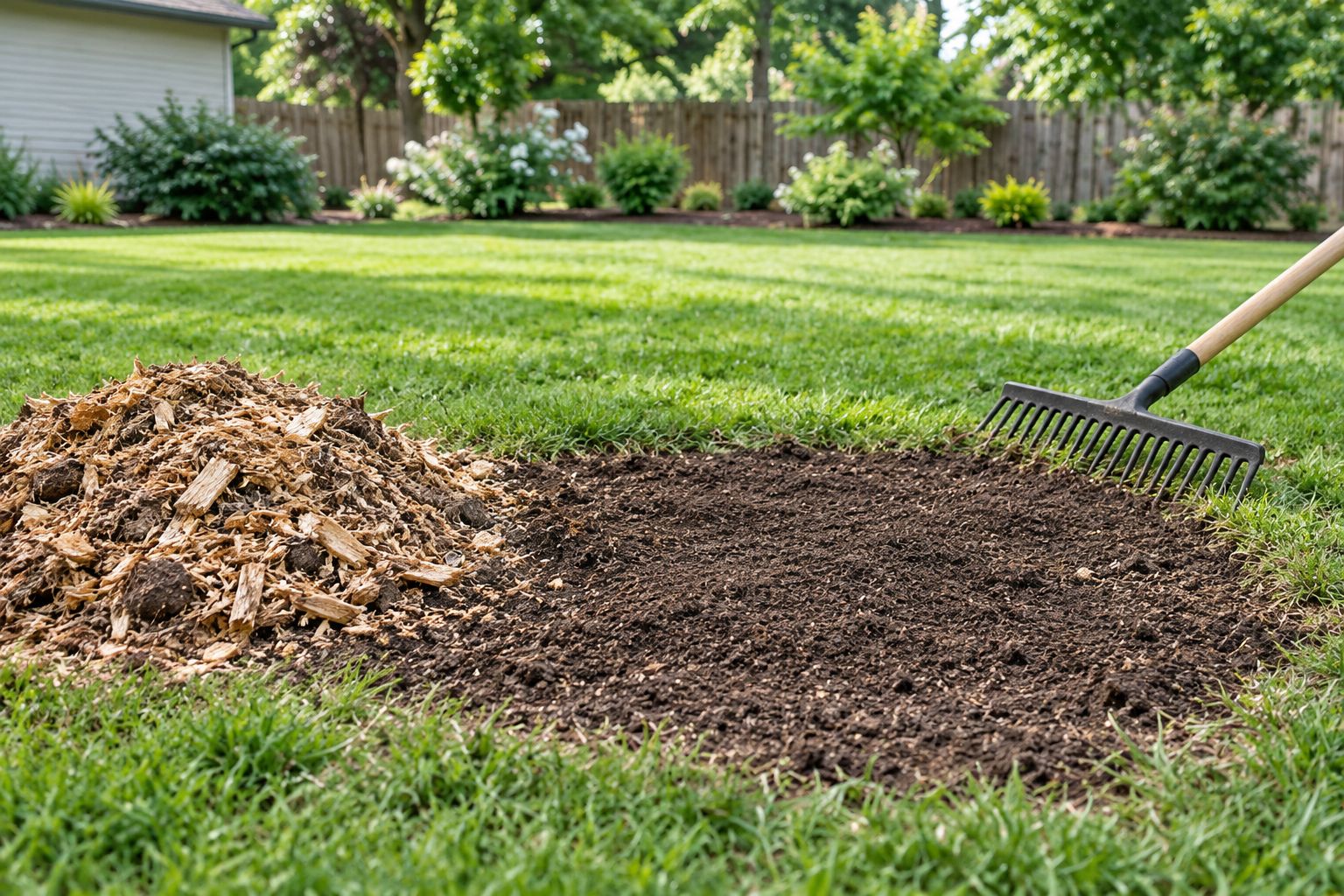
- Remove loose grindings from the planting area. Rake and collect the chip-heavy material rather than spreading it through the future seedbed. Do not use a thin soil cap to hide a deep pocket of wood fragments.
- Inspect the opening. Look for remaining woody material, soft pockets, and projecting roots. Have the crew assess anything that interferes with the intended lawn grade; do not dig around unknown lines.
- Backfill with suitable soil. Use soil appropriate for lawn establishment rather than wood chips or pure compost. Break up large clods and remove construction debris or other foreign material.
- Firm the fill gradually. Work the soil into the opening without turning it into a hard, compacted plug. The finished bed should support gentle foot pressure without collapsing into a depression.
- Match the surrounding grade. Blend the repair into the existing yard and preserve drainage away from buildings. Do not leave a mound that forces mower wheels upward or a bowl that collects runoff.
Expected result: The repaired area contains a firm soil foundation, not a spongy mass of grindings covered with dirt. Its surface blends into the neighboring lawn without an abrupt ridge.
The aim is a continuous planting bed. You do not need to excavate every distant root, but you do need to address woody debris and unstable fill where the new grass will grow.
Planting-window checks
- Check soil moisture. Wait if the site is saturated or smears into a slick surface when worked. Soil preparation on wet ground damages structure and makes a level finish harder to achieve.
- Water gently and inspect. Moisten the repaired area without washing soil away. Recheck for settling before committing seed or sod to the surface.
- Correct low spots. Add suitable soil where the fill has dropped, then lightly firm and smooth it again. Repeat the inspection if the area still feels unstable.
- Match planting to conditions. For a 2026 Rochester project, choose a cool-season establishment window with dependable watering available. Avoid treating a calendar date as permission to plant into frozen, waterlogged, or excessively hot conditions.
Expected result: You have a stable, workable bed and a realistic watering plan. If the surface still sinks, the next task is more preparation—not planting.
There is no universal waiting period after stump grinding. The deciding factors are debris removal, soil condition, settling, and the weather needed to establish your chosen grass. Waiting alone does not turn a chip-filled opening into suitable soil.
Grass-seed setup
- Choose seed for the actual site. Match the mixture to sunlight, use, and your ability to water. Tree removal changes light exposure, so reassess the space rather than copying what worked under the former canopy.
- Follow the package rate. Measure the repaired area and use the labeled seeding rate. Extra seed does not repair poor soil preparation and creates unnecessary competition among seedlings.
- Establish seed-to-soil contact. Rake and firm as directed for the seed mixture. Do not bury seed beneath a heavy layer of soil or remaining stump chips.
- Protect surface moisture. Water gently enough to avoid moving seed into piles. Adjust watering to rainfall and drying conditions, then change the routine as roots develop.
- Limit traffic. Keep feet, pets, mower wheels, and equipment off the repair while grass establishes. Follow the seed instructions for the first mowing.
Expected result: Seed remains evenly distributed on a prepared bed, with consistent surface moisture and no pooling. Early growth should be judged against the seed mixture and growing conditions, not against the grinding date.
Sod instead of seed
Sod follows the same preparation sequence: remove chip-heavy debris, replace soil, firm the bed, and correct the grade. For a 2026 sod installation, coordinate delivery only after the site is ready; do not leave the soil work until the turf arrives.
| Lawn repair option | Best for | Main advantage | Main limitation |
|---|---|---|---|
| Grass seed | Homeowners able to protect and water an establishing patch | Lets you select a mixture for the site's light and use | Needs time to germinate and establish before normal traffic |
| Sod | Homeowners wanting immediate surface coverage | Covers exposed soil as soon as it is laid | Still needs soil contact, watering, and rooting before normal use |
Lay sod with close-fitting seams and full contact against the prepared soil. Follow the supplier's installation and watering directions, and account for the sod's thickness when setting the final grade. Sod hides the surface; it does not stabilize buried grindings.
With seed, visible progress depends on germination as well as soil preparation. Species, temperature, and moisture all affect grass seed germination timelines, so compare the repair with the seed label before adding more seed to a slow-looking patch. The clock starts at planting—not when the stump was removed.
Troubleshooting the repaired patch
The patch sinks after rain
Reopen the question of what is beneath the surface. Loose fill and decomposing woody material both contribute to settlement; covering a deep depression with seed leaves the cause untouched. Restore the grade with suitable soil before reseeding, and have persistent settlement assessed.
Grass stays thin over the old stump
Check soil depth, remaining chips, moisture, and seed-to-soil contact before adding fertilizer. Decomposing wood mixed into soil can temporarily tie up nitrogen, but thin grass alone does not establish a nutrient diagnosis. Use a soil test and its recommendations rather than guessing at fertilizer amounts.
Water pools in the repair
Check whether the patch sits below the surrounding lawn or receives runoff from elsewhere. Correct the grade without redirecting water toward a foundation or neighboring property. If water also stands across the broader yard, the problem extends beyond the stump opening.
Seed washes toward the edge
Reduce the force of irrigation and address runoff crossing the repair. Rake displaced material back into a suitable seedbed and restore coverage according to the seed instructions. Repeated washouts call for fixing water movement before another planting attempt.
Sod edges dry while the center stays wet
Inspect soil contact, seams, and uneven grade. Raised edges dry differently from turf sitting in a depression, so more water across the whole patch is not automatically the answer. Correct the contact problem and follow the supplier's watering guidance.
Customize your workflow
For a larger 2026 yard project, finish heavy equipment work before repairing the lawn. Grinding another stump or moving machinery across fresh seed means disturbing the surface you just prepared.
Build the estimate around these decisions:
- Access: Gate openings, fences, slopes, and soft ground affect how equipment reaches the stump.
- Obstacles: Nearby buildings, paving, utilities, and other trees affect the work plan.
- Debris: State whether grindings remain on site or leave the property.
- Finish: Separate grinding, soil replacement, grading, and grass establishment in writing.
Spartan Tree and Landscape homeowners should request an individual estimate rather than treating an online description as a finished scope. Explain whether you want a lawn, planting bed, or future tree location; those uses require different preparation.
Plan your stump removal
Discuss access, grindings, cleanup, and the lawn finish you want before work begins.
FAQ
How long should I wait after stump grinding to plant grass seed?
Wait until the grindings are cleared from the planting bed, replacement soil is firm, and growing conditions suit your seed. There is no single waiting period that makes every stump site ready.
Can I plant grass seed directly into stump grindings?
Do not use stump grindings as the seedbed. Remove chip-heavy material and establish suitable soil so the grass has a stable rooting area.
Is sod better than seed after stump grinding?
Sod is better for immediate surface coverage; seed suits homeowners who can protect the patch through germination and establishment. Both need the same careful soil preparation, and neither corrects unstable fill.
When should I seed a repaired stump area in Rochester?
Late summer into early fall is generally a favorable window for Rochester's cool-season lawns. Spring is another option, but soil condition, weather, and watering access still determine whether planting makes sense.
Do all tree roots need to be removed before planting grass?
No, lawn repair does not require removing every root in the yard. Address exposed roots and woody material that interfere with the planting bed, and account for later settling as buried wood decomposes.
Does stump grinding include topsoil and grass seed?
Do not assume stump grinding includes topsoil, grading, seed, or sod. Ask for each task to be included or excluded explicitly in the written estimate.
Why is the lawn sinking where the stump was?
Loose backfill and decomposing buried wood can cause the former stump area to settle. Correct the underlying bed and grade rather than repeatedly scattering seed into the depression.
One last thing
Removing a tree changes more than the ground beneath its trunk. A formerly shaded patch can receive substantially different sunlight, so choosing grass for the old conditions creates another avoidable problem.
For your 2026 repair, observe the new light pattern before buying seed. Prepare for the yard you have after removal, not the yard you had before it. Keep a photograph of the finished grade so you can spot later settlement before a shallow dip becomes a recurring mowing problem.