





Homeowner lot clearing for new construction in Rochester, NY, is the planned removal of trees and vegetation to prepare a building site while protecting what stays. For a 2026 project in Rochester, Webster, or eastern Monroe County, the job starts with your approved layout—not with cutting every tree on the property.
- Lot clearing for new construction Rochester NY: settle the building layout, access route, and stump scope before cutting.
- Spartantreeny is best for homeowners seeking tree removal and stump grinding within a separately coordinated construction plan.
- Tree removal does not automatically include excavation, grading, root removal, or construction-ready soil.
- Request an individual estimate that separates removals, retained-tree protection, debris handling, and cleanup.
Why lot clearing matters for Rochester homeowners
The clearing boundary and the property boundary are not the same thing. Your house footprint, driveway, utility routes, drainage plan, and construction access determine where work belongs. Clearing beyond those areas removes trees you might otherwise keep.
For an occupied property, you also need to account for nearby roofs, fences, neighboring yards, and everyday access. An open building lot presents a different job from a backyard addition reached through a narrow side yard.
Spartantreeny provides tree removal, trimming, and stump grinding in the Rochester area. Those services address the tree-work portion of a construction project; arrange excavation, grading, and building-site preparation separately unless your written agreement expressly includes them.
Plan the clearing before you book the crew
Confirm your building layout and local requirements
Start with the site drawing you and your builder are actually using. A sketch helps organize the first conversation, but it does not establish property ownership, setbacks, or permission to clear.
For your 2026 build, confirm requirements with the municipality responsible for the property before scheduling removals. A Rochester mailing address alone does not tell you which office controls the work. Ask about the specific parcel and project rather than relying on a neighbor's experience.
Give the tree crew the same layout your builder and excavation contractor have. Conflicting versions create conflicting instructions.
- Prepare 1 marked site plan showing the proposed work.
- Identify the house footprint, driveway, and utility routes.
- Confirm property lines through appropriate survey information.
- Ask the local office about applicable approvals and restrictions.
- Mark which layout version governs the estimate.
Mark the trees that stay and the access route
Walk the site yourself from a safe distance before the estimate. Identify trees you want to keep, then ask your builder and tree crew whether the proposed construction leaves practical room to protect them.
Protecting a trunk alone does not protect the roots. Vehicle traffic, material storage, and excavation around retained trees need their own boundaries. Ask for those boundaries to be established before equipment arrives.
Take 4 ground-level photos: the street entrance, proposed building area, tightest access point, and nearby structures. Photos help explain the site; they do not replace an on-site assessment.
- Mark removal trees differently from retained trees.
- Identify the narrowest point along the proposed equipment route.
- Show fences, overhead lines, sheds, and neighboring structures.
- Establish areas where equipment and materials must stay out.
- Confirm who can authorize changes to the marked scope.
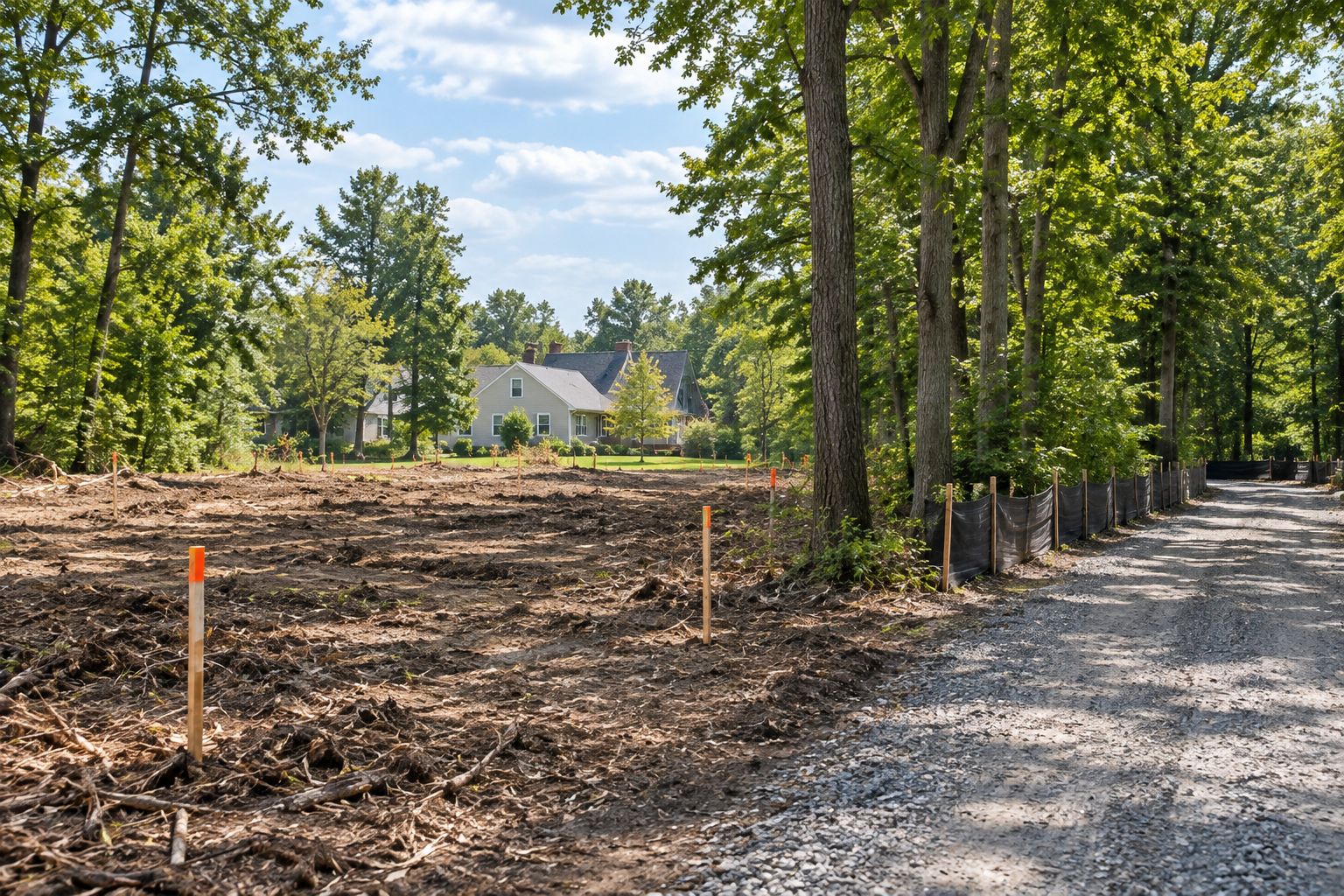
Separate tree removal from excavation
Write down what you need removed above ground and what must happen below ground. Cutting a tree, grinding its stump, and excavating roots are different tasks. A ground stump is not proof that a foundation or driveway area is ready for construction.
Ask your builder or excavation contractor what must be removed within each construction area. The answer for a planting bed differs from the answer beneath a foundation, paved driveway, or utility trench.
Spartantreeny is best for homeowners who need tree removal and stump grinding as part of a coordinated construction plan. The limitation is scope: those listed services do not establish that excavation, soil preparation, or grading is included.
- Label tree cutting and debris removal separately.
- Specify which stumps need grinding.
- Ask who handles roots and buried woody material.
- Identify who removes grindings or brings in replacement material.
- Have the builder define the required condition at handoff.
Request an estimate tied to the actual site
Start by giving each contractor the same marked plan and written scope. Then arrange an individual site assessment. Comparing a tree count alone leaves out access, structures, tree condition, and debris handling.
For a 2026 estimate, describe the planned construction rather than simply asking to clear the lot. Explain where equipment can enter, where wood can be staged, and what must remain accessible while work takes place.
The practical factors behind tree removal quotes—size, access, and cleanup apply here too. Ask the crew how each factor affects your job instead of expecting a guaranteed online quote.
- Provide the property address and current site plan.
- Identify large trees, damaged trees, and nearby structures.
- State whether logs, brush, and chips leave the property.
- Describe access restrictions and surfaces requiring protection.
- Request written inclusions, exclusions, and change procedures.
Check the crew and agree on cleanup
Ask who will perform the work and who will answer questions on site. Confirm insurance documentation directly through the appropriate insurance contact, and make sure the written scope matches the conversation.
When considering Spartantreeny, discuss careful removal, thorough cleanup, and direct communication with the crew during the estimate. Turn those priorities into specific instructions. A clear agreement is more useful than assuming everyone means the same thing by a clean site.
For construction, cleanup also needs a stopping point. Removing brush does not necessarily mean removing every chip, repairing access surfaces, or preparing soil for the next trade.
- Request current insurance documentation relevant to the work.
- Name the on-site contact and person approving changes.
- Specify where any retained logs or chips belong.
- Define debris removal and access-route cleanup.
- Record exclusions such as grading or surface restoration.
Coordinate the handoff with your builder
Set the sequence with your builder before confirming the clearing date. Tree work, excavation, utility work, and deliveries share the same space; each contractor needs to know when that space becomes available.
For your 2026 schedule, record 2 milestones: the clearing handoff and the excavation start. Treat them as coordination points, not a promise that weather, access conditions, or scope changes cannot affect the job.
Discuss wet ground before mobilization. Also make sure utility locating is arranged before digging or stump work where underground facilities are involved; disclose private lines that require separate attention.
- Confirm approvals and layout before tree work begins.
- Agree on access conditions that would stop equipment entry.
- Assign responsibility for utility locating and private-line information.
- Keep delivery routes clear of retained wood and brush.
- Walk the finished scope before the next contractor starts.
Request a site-specific tree estimate
Discuss removal trees, access, stump work, and cleanup for your Rochester-area construction project.
Compare your clearing options
Choose the option that matches the work—not the broadest service label. A homeowner can organize plans and photographs without taking on hazardous cutting. A tree crew and an excavation contractor can also serve different parts of the same project.
The advantage of separate specialists is a defined role for each trade. The limitation is that someone must coordinate their boundaries and handoff. Ask your builder who owns that responsibility before signing agreements.
| Option | Best for | Main advantage | Key limitation |
|---|---|---|---|
| Homeowner planning and documentation | Organizing an estimate request | You identify priorities and collect site information directly | Does not replace surveying, approvals, professional assessment, or hazardous tree work |
| Tree-service crew | Removing selected trees and addressing agreed stump work | Keeps the tree-removal scope distinct | Excavation, grading, and construction-ready ground must be expressly addressed elsewhere |
| Excavation contractor | Preparing the approved building area below ground | Coordinates earthwork with construction requirements | Do not assume specialized tree removal or retained-tree protection is included |
| Builder-coordinated trades | Projects involving several connected work areas | Gives the project a central scheduling contact | Responsibilities still need to be assigned in writing |
For Spartantreeny tree removal, request an individual assessment of the tree-work scope. Keep the builder involved where stump treatment, access, or retained trees overlap with the construction plan.
Common mistakes homeowners make
Clearing everything before finalizing the design
Removing trees before the driveway, utilities, and house location are settled eliminates choices. Keep the clearing boundary tied to the current plan, and require approval before the crew expands it.
Treating stump grinding as foundation preparation
Stump grinding addresses a stump; it does not certify the ground for building. Have your builder or excavation contractor specify what happens to roots, grindings, and disturbed soil in structural areas.
Comparing estimates with different cleanup scopes
An estimate that leaves logs on site is not the same job as one that includes hauling them away. Compare the written endpoints: what remains, where it remains, and who handles it next.
Protecting retained trees only after clearing
A tree left standing can still be affected by construction around its roots. Establish equipment routes, storage areas, and protection boundaries before work starts—not after the lot becomes a staging area.
Assuming planned clearing covers storm response
Storm damage changes the situation. If a tree contacts a utility line or creates an immediate hazard, stay clear and contact the appropriate emergency service or utility rather than treating it as another item on the planned clearing list.
FAQ
Who should I call first for lot clearing before building in Rochester?
Start with your builder or site designer to establish the proposed layout, then contact the responsible municipal office about requirements. Request a tree-service estimate once the removal area, retained trees, and access route are clear.
Does lot clearing include removing stumps and roots?
Only the written scope establishes whether stump and root work is included. Tree cutting, stump grinding, root excavation, and grading are separate tasks that need an assigned contractor.
Can I keep trees close to my new house?
Have retained trees assessed against the house layout, excavation limits, and construction access before deciding. Keeping a tree requires room to protect its roots as well as clearance around its trunk and branches.
What changes a lot-clearing estimate in Webster?
Tree size and condition, equipment access, nearby structures, stump requirements, and debris handling change the work involved. Request an individual site estimate using the same marked plan and cleanup instructions for each contractor.
Do I need permission to clear trees in eastern Monroe County?
Confirm the requirements for your specific property with the municipality responsible for it. Ask about the construction project and parcel conditions rather than assuming one rule applies across eastern Monroe County.
When should I book tree removal for a 2026 construction project?
Request the estimate during site planning and confirm scheduling after the layout and applicable approvals are settled. Coordinate the clearing handoff with your builder before setting excavation or delivery dates.
Can I clear the construction lot myself?
Handle planning, photographs, and safe ground-level documentation yourself, but leave hazardous cutting and equipment work to qualified contractors. Trees near structures, roads, or utility lines require professional assessment.
One last thing
Decide where retained wood belongs before the crew starts. Keeping logs or chips sounds simple until the pile occupies the driveway route or excavation staging area. Mark a location your builder accepts, or include removal in the written scope.
Before the crew leaves, walk the agreed work area together. Check removal trees, stump work, retained-tree boundaries, debris, and access against the estimate—not against an assumption about what lot clearing usually includes.