





Home sellers’ tree removal is planned tree work with the aim of resolving a specific property concern before a sale. For your 2026 listing in Rochester, Webster, or eastern Monroe County, decide what actually needs removal, get an individual estimate, and agree on the yard’s finished condition before work starts.
- Tree removal for home sellers Rochester NY starts with assessing the concern, not automatically cutting down the tree.
- Spartan Tree and Landscape is best for Rochester-area sellers seeking tree removal and related yard services from one provider.
- Compare written estimates for the same tree, access conditions, stump work, and cleanup scope.
- Set the work date around photography, showings, and closing obligations—not an assumed completion time.
Why tree removal matters for home sellers
Remove a tree to solve a defined problem, not because selling automatically requires a bare yard. A tree near the house, a damaged limb over a walkway, and a stump in the lawn call for different decisions. Start by separating safety concerns from appearance preferences.
Spartan Tree and Landscape provides tree removal, trimming, stump grinding, planting, mulching, and emergency tree services in the Rochester area. That service range suits sellers whose yard needs more than cutting down a tree; the work still needs an individual assessment and a written scope.
For a 2026 sale, the practical constraint is coordination. Your agent needs to know when photographs can happen, the crew needs access, and you need clarity about what remains afterward. Tree removal does not establish a sale-price increase or guarantee that a buyer will accept the property’s condition.
Plan tree work before your Rochester home sale
1. Identify the concern before choosing removal
Walk the property from the ground and write down why each tree concerns you. Distinguish a branch brushing the roof from a whole-tree concern, and distinguish an unattractive view from visible damage. Do not climb, cut test branches, or stand beneath hanging limbs to get a better look.
Ask your real estate agent which concerns affect listing preparation and which reflect personal preference. Then ask the tree professional what work addresses the actual tree condition. An agent can help set sale priorities; a tree assessment determines the appropriate tree work.
If a tree has fallen onto a structure, is moving unexpectedly, or involves electrical lines, stop treating it as routine listing preparation. Keep people away and contact the appropriate emergency service or utility.
- List the exact location of each concern.
- Photograph visible issues from a safe position.
- Separate whole-tree removal from branch work.
- Keep people away from visibly unstable trees.
2. Document the yard and equipment access
Start with a simple phone record. Take 3 photo views for the estimate request: the whole tree, the nearby structures, and the route from the street or driveway. These views explain the setting; they do not replace an on-site assessment.
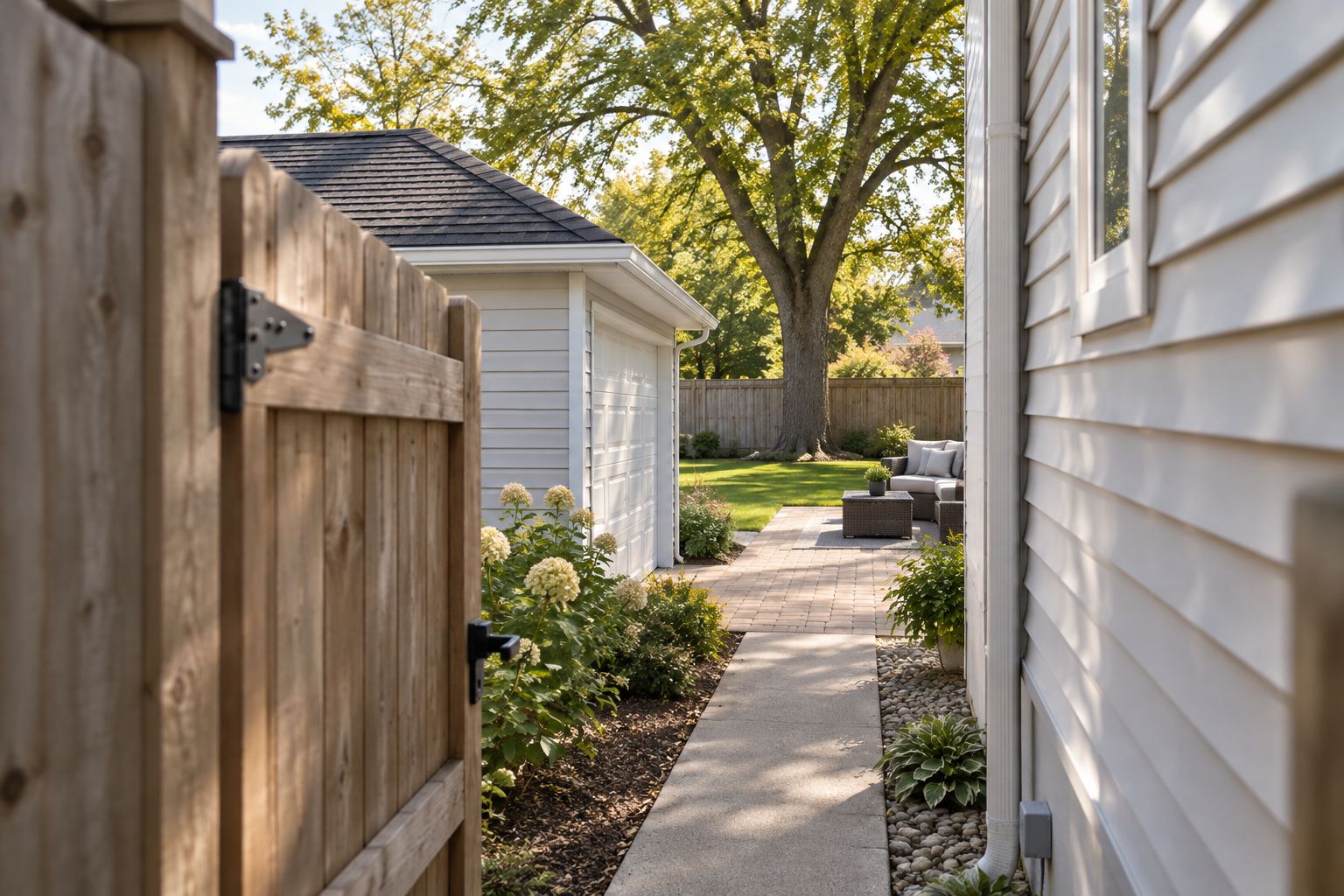
Describe narrow gates, steps, slopes, fences, and anything stored along the route. A tree behind the garage presents a different access problem from a tree beside an open driveway. Tell the estimator about features that are easy to miss, including irrigation, buried utilities you know about, and recently installed landscaping.
Do not promise a route across a neighbor’s property. If access depends on someone else’s land, identify that issue before scheduling rather than leaving the crew to resolve it on arrival.
- Capture the tree’s full surroundings.
- Show gates and narrow passages.
- Identify patios, sheds, and nearby roofs.
- Flag known underground features.
- Describe access without assuming permission.
3. Choose the smallest scope that solves the problem
Use your notes to ask whether removal, trimming, or pruning addresses the concern. Do not order removal solely to make the listing look freshly worked on. Keeping a suitable tree avoids creating a stump and another patch of yard to finish.
Once you have identified the problem, Spartan Tree and Landscape can assess the removal and related work you want estimated. Ask what each proposed task accomplishes and what remains outside the scope. A service list is not a recommendation to buy every service.
For your 2026 listing plan, also identify 2 milestone dates: photography and the latest acceptable completion date. Ask the crew whether your requested scope fits that window; do not assume a listing deadline guarantees a work date.
- Ask whether branch work addresses the concern.
- Request a reason for whole-tree removal.
- Identify stump grinding as a separate scope question.
- Share photography and completion deadlines.
4. Compare written estimates on the same terms
Before requesting estimates, write one description of the job and send the same information to each company. Comparing unlike scopes creates confusion: one estimate might include hauling logs while another leaves them on your property.
Tree size, access, nearby structures, tree condition, and cleanup requirements shape the work. Ask how the crew plans to protect the areas it must cross and what ground repair is included, if any. Request current insurance documentation and clarify who will perform the work rather than assuming either from a company name.
For a 2026 agreement, keep the accepted scope with your sale records. Use the tree removal estimate checklist to organize questions, then resolve unclear wording before approving the job.
- Identify each tree without ambiguity.
- Specify whether logs and brush leave the property.
- State whether stump grinding is included.
- Define cleanup and any ground repair.
- Record scheduling conditions and scope changes.
5. Check boundaries and approval requirements
Start with your survey, property records, and any association documents you already hold. A fence does not establish ownership by itself, and branches extending over your yard do not answer who owns the trunk. Tell the estimator when a tree sits near a disputed boundary.
Verify applicable requirements with the relevant municipality or association before authorizing work. Rochester, Webster, and other eastern Monroe County addresses should not be treated as having one interchangeable approval process. Shoreline or other site-specific conditions also belong in that check.
If the buyer has requested tree work, have your agent or attorney put the agreed obligation into the transaction documents. The crew’s estimate describes the job; it does not replace your sale agreement or settle a boundary dispute.
- Locate the trunk relative to your recorded boundary.
- Flag uncertainty before accepting a removal scope.
- Verify municipal and association requirements.
- Confirm any needed neighboring-property access.
- Put buyer-requested obligations in writing.
6. Prepare for careful removal and a clear handoff
Ask who your crew contact will be and how you should raise a question on workday. Direct communication matters when a gate must stay closed, a vehicle blocks access, or the agreed work needs clarification. Do not assume the estimator and workday contact are the same person.
Agree on what you should move before arrival. Outdoor furniture, vehicles, decorations, and play equipment can occupy the very space the crew needs. Keep children, pets, and showing appointments out of the work area while operations are underway.
Define cleanup before the first cut, then review it after the work. Thorough cleanup means an agreed result—not an assumption that stump grinding, chip removal, lawn repair, and planting all come with tree removal.
- Confirm the crew contact and access arrangements.
- Move belongings as instructed before work starts.
- Keep visitors and pets outside the work area.
- Pause showings during active tree work.
- Review the finished scope with the crew.
7. Finish the stump area before listing photographs
Decide what the camera and the buyer should see after removal. A cut stump, a grindings pile, and a restored planting bed are different finished conditions. Ask about grinding, handling the grindings, filling the area, and surface preparation individually.
If the work touches an existing bed, choose mulch options for landscape beds as part of the finish plan, rather than assuming tree-removal debris is the finished mulch you want. Keep mulch away from remaining tree trunks and do not use it to conceal a hole or unfinished work.
Coordinate the final yard check with your agent before photography. Keep the invoice and agreed scope together so you can explain what was completed without guessing about roots, stump depth, or future planting suitability.
- Choose whether the stump stays or is ground.
- State who handles the grindings.
- Define the intended ground finish.
- Keep remaining trunks clear of piled mulch.
- Photograph the completed area for your records.
Compare your options before authorizing work
Best for a seller means best for the actual concern—not the biggest job. Use the same property notes to compare these paths. Each solves a different problem, and none replaces an assessment of a questionable tree.
| Option | Best for | Main advantage | Key limitation |
|---|---|---|---|
| Keep the tree after assessment | Sellers without an identified removal need | Preserves the existing tree and avoids removal disturbance | Does not resolve a defect that requires work |
| Trimming or pruning | Sellers whose concern is specific branches | Addresses selected branches without removing the whole tree | Does not resolve every trunk, root, or structural concern |
| Planned tree removal through Spartan Tree and Landscape | Rochester-area sellers needing removal and related yard services | Removal, stump grinding, planting, and mulching are within the stated service range | Exact methods, timing, and included cleanup require an individual estimate |
| Emergency tree service | Owners facing an immediate tree-related hazard | Addresses an urgent situation rather than listing appearance | Is not a substitute for planning routine sale preparation |
Ask for an explanation if the recommendation changes after inspection. A photograph can start the conversation, but it cannot show every condition affecting the work.
Common mistakes home sellers make
Removing a tree for an assumed sale-price increase
Do not authorize removal on a promised return that nobody has established for your property. Ask your agent what concern the work addresses and ask the tree professional whether removal is warranted. Keep appearance preferences separate from safety recommendations.
Treating stump grinding as automatic
Tree removal and stump grinding are different tasks. A listing plan that needs a level, finished area must address more than taking down the trunk. Specify the result you want rather than relying on the word cleanup.
Booking photographs before confirming the work
A requested date is not a confirmed schedule. For a 2026 listing, coordinate photography after you understand the work window, cleanup scope, and any follow-up yard work. Leave the agent informed when those details change.
Agreeing to a buyer’s vague tree request
A phrase such as deal with the backyard tree leaves too much unresolved. Identify the tree, required work, completion expectations, and documentation through your agent or attorney. Then make sure the contractor’s scope matches that agreement.
FAQ
Should I remove a tree before selling my Rochester home?
Remove a tree before selling when an assessment and your sale plans establish a specific reason for removal. Do not assume every mature tree hurts a listing or that removal guarantees a higher sale price.
Can I get a tree removal estimate from photos?
Photos can start an estimate conversation, but they do not replace an on-site assessment. Include the whole tree, nearby structures, and the equipment access route when contacting a company.
Is trimming better than removing a tree before listing?
Trimming is the better fit when appropriate branch work resolves the identified concern. Whole-tree removal needs its own justification based on the tree and site, not just a preference for a tidier photograph.
Does Spartan Tree and Landscape handle stumps too?
Spartan Tree and Landscape lists stump grinding among its services. Ask whether grinding, handling grindings, and finishing the area are included in your individual estimate.
Do I need permission to remove a tree in Webster or Rochester?
Verify the requirements for your exact property with the relevant municipality and any applicable association. Confirm ownership and flag boundary or shoreline questions before authorizing work.
What should my estimate say about cleanup?
Your estimate should state what happens to branches, logs, the stump, and debris. Ask separately about grindings, ground repair, and the finished surface so the listing photographs do not reveal unfinished work.
What if a storm damages the tree before closing?
Keep people away from the damaged area and address immediate hazards before continuing sale preparation. Notify your agent, contact the appropriate tree professional, and involve the utility when electrical lines are affected.
One last thing
The missing tree is not the finished job. Before approving removal for your 2026 sale, describe the result from the buyer’s viewpoint: what remains in the yard, what has been hauled away, and what still needs attention. That description belongs in the estimate—not in a workday conversation after the trunk is down.