





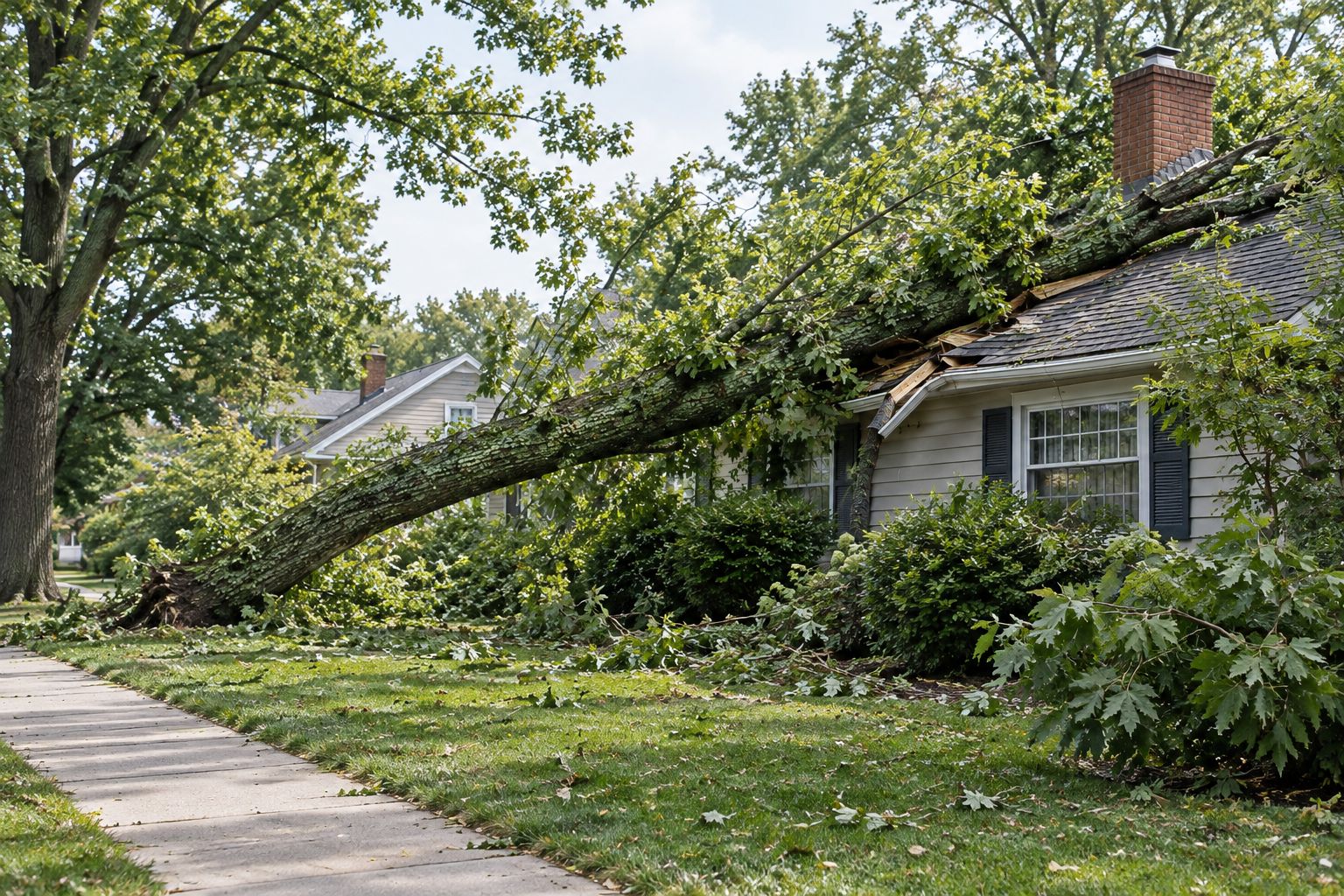
If a tree falls on your house, move away from the damaged area, leave by a safe route, and call 911 if anyone is injured, trapped, or threatened by damaged utilities or structural collapse. Stay away from wires, hanging branches, and the tree itself; do not climb onto the roof or start cutting. Once you are safe, notify your insurer and arrange professional tree removal, with utility clearance first wherever lines are involved.
- Tree fell on house what to do: get clear, report immediate hazards, then coordinate your insurer and emergency tree removal.
- Spartantreeny provides Rochester emergency tree services; utility and structural hazards need clearance before removal begins.
- Photograph damage only from safe ground, and keep written estimates, authorizations, and receipts.
- A tree removal agreement should separate roof clearance, debris handling, stump work, and cleanup.
Why this matters
A tree resting on a roof is not just a cleanup job. Broken limbs, damaged framing, and branches under tension can move when someone cuts or shifts the load. A roof that looks intact from the driveway is not proof that the rooms beneath it are safe.
For Rochester, Webster, and eastern Monroe County homeowners dealing with storm damage in 2026, the first decision is whether people can remain safely on the property—not which contractor arrives first. The guide to when a tree problem cannot wait until morning explains the distinction between an urgent hazard and work that can be scheduled.
A tree fell on your house: what should you do first?
Protect people before protecting the building. Follow this order without approaching the tree to investigate.
- Get clear. Move everyone away from damaged rooms, windows beneath branches, and the side of the house carrying the tree. Use an exit only if the route is clear of wires and falling material. If no safe exit exists, call 911 and describe your location.
- Report immediate danger. Tell the dispatcher about injuries, trapped occupants, visible wires, smoke, a gas odor, or movement in the building. Do not enter a damaged room to retrieve belongings.
- Keep others back. Keep children, pets, neighbors, and vehicles away from the impact area. Do not stand underneath branches to direct arriving help.
- Notify the utility. Treat every fallen or tangled wire as energized. A tree crew cannot substitute for the utility's assessment and clearance.
- Contact your insurer. Report the loss, describe immediate hazards, and ask how emergency protection and removal should be authorized and documented.
- Arrange removal and building assessment. Explain that the tree is on an occupied structure, not simply lying in the yard. Coordinate the removal crew with any utility, emergency-response, or building-safety instructions already given.
Do not delay emergency calls while looking for policy paperwork. You can gather documents after everyone is safe.
Who should you call, and in what order?
The right call depends on the hazard. Emergency responders, utilities, tree crews, and roofers have different jobs; none replaces all the others.
| Contact | Best for | What the contact does not replace |
|---|---|---|
| 911 | Immediate danger, injuries, trapped occupants, or suspected collapse | Your insurance claim or a complete removal agreement |
| Electric or gas utility | Damaged lines, service connections, or suspected utility hazards | Tree removal and permanent building repairs |
| Homeowners insurer | Claim instructions, documentation, and coverage questions | Emergency response or an on-site safety assessment |
| Tree removal crew | Assessing and removing the tree and branches | Utility clearance or structural repair |
| Qualified building or roofing professional | Assessing building damage and planning protection or repairs | Removing a loaded tree from the structure |
If a tree touches the service line between the street and your house, report that detail explicitly. Do not assume a line is safe because the lights went out or a neighbor says the power is off.
What should you avoid while the tree is on the roof?
Do not cut branches, attach a tow rope, or try to pull the trunk with a vehicle. Removing one piece can change how the remaining weight bears on the house. A branch pinned against the roof can also move when released.
Stay off ladders and the roof. Do not climb up to install a tarp while the tree remains in place or the roof's condition is unknown. Ask the responding professionals how temporary weather protection can be installed safely.
You also should not enter the attic to check the impact point. Photograph what you can see from a safe location instead. If ceilings sag, walls shift, or new cracking appears, move away and report the change rather than watching it from inside.
What should your 2026 damage record include?
Build a simple record once you are somewhere safe. Your insurer needs a clear account of the event and the work authorized—not a close-up taken at personal risk.
- Damage photos: Capture the affected side of the house, visible roof damage, and the tree's position from safe ground.
- Event details: Record when you discovered the damage and what you observed. Separate observations from guesses about why the tree fell.
- Call notes: Save claim details, contact names, and instructions from the insurer, utility, and responders.
- Written scopes: Keep estimates and work authorizations showing what each contractor will handle.
- Receipts: Retain invoices for removal, temporary protection, and other loss-related expenses for your insurer to review.
For a 2026 claim, keep original image files and messages together rather than relying only on screenshots scattered across phones. Do not move damaged materials just to improve the photographs. Ask the insurer what evidence should be retained, while following any immediate safety instructions.
Why the removal plan varies from house to house
Two trees resting on roofs can require very different removal plans. A useful estimate explains the actual job conditions rather than promising a standard storm-removal package.
- Tree size: The amount of wood and the size of individual sections affect handling and debris removal.
- Access: Gates, fences, driveway space, and the route to the tree affect how the crew can reach the work.
- Nearby structures: Roofs, garages, windows, and neighboring buildings limit where material can be moved.
- Utility involvement: Wires or damaged service connections require coordination before affected work proceeds.
- Tree position: A trunk supported by the house is a different job from a tree already lying clear on the lawn.
- Cleanup scope: Removing wood, handling chips, grinding the stump, and addressing disturbed ground are separate scope questions.
Ask for an individual estimate, not a guaranteed online quote. Photos help explain the situation, but they do not show every support point, access restriction, or damaged part of the building.
What should you ask the removal crew before authorizing work?
Start with the immediate objective: removing the tree without adding avoidable damage. Then establish what happens to the material left behind. Urgency does not make an unclear agreement easier to resolve later.
Ask who will supervise the work and who you will speak with if conditions change. Confirm insurance documentation and get the agreed scope in writing. Do not treat a verbal promise of complete cleanup as a substitute for naming the work.
Your authorization should answer these questions:
- Does the scope cover the entire tree or only the portion on the house?
- Who coordinates any required utility clearance?
- What access will the crew use, and what must stay clear?
- Will logs, branches, and chips leave the property?
- Is stump grinding included or separate?
- Who handles temporary roof protection and permanent repairs?
- How will additional work be approved if concealed damage changes the plan?
Spartantreeny is best suited to Rochester-area homeowners seeking local tree removal and direct coordination with the crew. Spartantreeny provides tree removal and 24/7 emergency tree services; roof repair, utility clearance, and insurance coverage still require separate confirmation. Ask specifically about careful removal, thorough cleanup, and the person responsible on site.
You can request an individual estimate with the property location, safe-ground photos, access details, and any instructions already issued by responders or the utility.
How should tree removal and roof repairs fit together?
Tree removal and roof repair are connected jobs, but they are not interchangeable. Before either begins, establish who decides the work area is safe and how the contractors will communicate if the building shifts or additional damage appears.
Do not assume the roof is ready for a tarp the moment a branch is cut away. Ask the building or roofing professional to assess the exposed area and explain the next protective step. Keep people out of affected rooms until the appropriate professionals have addressed the hazards.
When planning permanent repairs in 2026, separate the cause of the damage from the choice of replacement material. Discussions of impact-resistant shingles concern roof-material selection, not permission to leave a tree resting on a structure. Ask your roofer which materials suit your house; material choice does not replace removal or an assessment of damaged framing.
Get the repair scope in writing too. It should distinguish temporary protection from permanent work so you know which contractor owns each remaining task.
Can you stay in the house after a tree hits it?
Stay out of damaged areas until the relevant professionals assess the hazards. An intact front door or a dry room does not establish that the roof, framing, electrical service, and exits are safe.
Tell responders or the building professional which rooms are beneath the impact and whether you noticed ceiling movement, broken walls, or utility damage. If you need somewhere else to stay, ask your insurer about your policy's requirements before assuming those expenses are covered.
Should you call insurance before the tree crew?
Call 911 first when people or the building face immediate danger. Once you are safe, contact your insurer and the appropriate removal service without delaying hazard reporting or utility coordination.
Ask the insurer how to document urgent work and obtain authorization where required. Never assume that permission to arrange removal means every related expense is covered.
What if the fallen tree came from your neighbor's yard?
Keep the same safety sequence regardless of where the tree grew. Notify your insurer, document the damage from a safe location, and avoid deciding responsibility at the scene.
Tree ownership alone does not answer every insurance or liability question. Keep communications factual, preserve relevant records, and let your insurer explain how your policy applies to the loss.
What should happen after the immediate hazard is gone?
Walk through the agreed scope with the crew from a safe location. Confirm what has been removed, what remains, and whether any areas must stay off limits. Do not assume an exposed stump or a pile of logs was included unless the agreement says so.
For your 2026 property records, save the final invoices alongside the original estimate and damage photos. Record unfinished items separately: roof repairs, stump work, fence damage, or ground restoration. This keeps an emergency removal from becoming a string of unclear follow-up jobs.
Once the urgent work is complete, ask about nearby trees as a separate assessment. One fallen tree does not prove the rest need removal, but visible defects deserve attention before the next storm.
FAQ
A tree fell on my house. Who do I call first?
Call 911 first if anyone is injured, trapped, or threatened by structural or utility hazards. Once you are safe, notify the utility where lines are involved, your insurer, and a professional removal crew.
Can I cut a branch off my roof myself?
Do not cut a branch that is resting on your roof or supporting other wood. Cutting can release tension or shift the load onto another part of the house.
Does homeowners insurance cover a tree falling on a house?
Coverage depends on your policy and the circumstances of the loss. Report the damage and ask your insurer to explain coverage, documentation requirements, and authorization for urgent work.
Does Spartantreeny offer emergency tree removal in Rochester?
Spartantreeny provides 24/7 emergency tree services in the Rochester, NY area. Describe the tree's position, damaged structures, and any wire involvement when requesting service; do not assume a specific arrival time.
Should I put a tarp over the roof before the tree is removed?
Do not climb onto a roof beneath or beside a fallen tree. Ask the responding professionals how temporary weather protection can be installed without exposing anyone to the tree or damaged structure.
What should I send when requesting an emergency tree estimate?
Send the property location, safe-ground photographs, access details, and any known utility involvement. Include instructions already given by responders or the utility, without approaching the hazard to gather more information.
Is stump grinding included when a tree is removed from a house?
Stump grinding is included only when the agreed scope says so. Confirm stump work, wood removal, chips, and cleanup separately before authorizing the job.
One last thing
The tree being gone does not mean the house is cleared for normal use. Before returning to affected rooms, confirm who has assessed the building and what restrictions remain. Treat removal, building safety, and final cleanup as separate completion checks.