





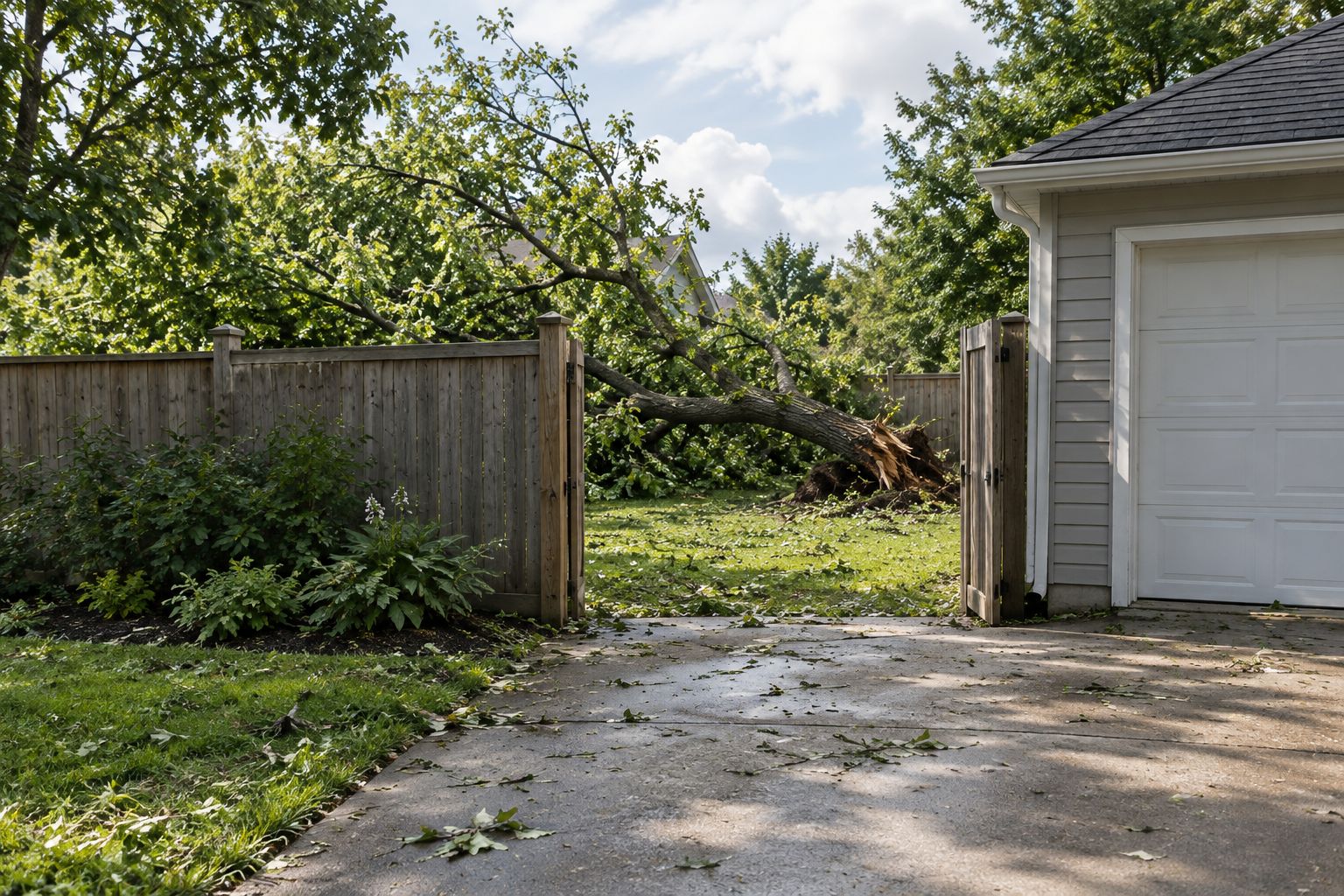
Photograph the whole storm-damaged tree, its contact with your house or other property, visible damage, and the surrounding access before cleanup—only from a safe position. Keep the original files, written estimates, and final invoices together; photographs document what happened, but your insurer decides coverage under your policy.
- Storm damage tree removal insurance documentation starts with safe photographs before debris moves.
- Show the tree, damaged property, and access route—not just a close-up of broken wood.
- Keep original photographs, written estimates, invoices, and insurer correspondence together.
- Spartan Tree and Landscape serves Rochester-area homeowners who need tree removal and cleanup.
What should you photograph before storm-damaged tree cleanup?
Capture the scene first, the damage second, and the completed work last. Your photographs should let someone who never visited your property understand where the tree stood, where it landed, and what changed during removal.
For Rochester, Webster, and eastern Monroe County homeowners, that means documenting the yard as well as the roof, fence, driveway, or other affected property. Keep the question of coverage separate from the question of what the pictures show. The guide to homeowners insurance and tree removal in New York explains the coverage questions to raise with your insurer.
Use this sequence wherever you can take photographs without approaching the tree:
- Whole scene: Show the tree and surrounding property in the same frame.
- Contact points: Show where branches or the trunk meet a structure or other damaged item.
- Visible damage: Capture the affected surface from a safe position.
- Tree condition: Record visible breaks, the stump, or exposed roots without entering the hazard area.
- Access route: Show gates, fences, driveways, and obstacles relevant to removal.
- Completed work: Photograph the same areas after removal and cleanup.
You do not need a perfect photograph of every detail. You need a clear record that does not put you or anyone else under damaged limbs.
Why this matters
Cleanup changes the scene. Once a crew moves branches, lifts wood away from a fence, or removes a trunk from a driveway, your original photographs become the record of those positions.
Good documentation also keeps the work discussion specific. A removal estimate describes the job; an invoice records the work billed. Neither replaces photographs showing the condition before work began.
For a 2026 storm file, keep the date of loss, property address, and insurer's claim reference together. Record observations plainly: a branch resting on the garage roof is an observation; a conclusion about hidden roof damage requires inspection.
Start with a safe place to stand
No insurance photograph is worth walking beneath a hanging branch. Stay clear of damaged trees, lifted roots, and anything touching or close to utility lines. Treat downed wires as energized and contact the utility or emergency services from a safe location.
Do not climb onto a roof, stand on a fallen trunk, or pull branches aside to improve the view. Photograph through a window or from another safe position when that is the only available view.
If the scene is unsafe, tell your insurer that close photographs were not possible. Ask the removal crew whether it can document relevant conditions during its work without interrupting safe operations. Do not ask anyone to enter a hazard just to complete your photo list.
Photograph the whole scene before the close-ups
Start with a wide view showing the tree in relation to your home, garage, fence, or driveway. Then take a different view from another safe position if it adds useful context.
A tight picture of broken siding does not show which branch struck it. A wide picture of a fallen tree does not show the siding damage clearly. Keep both rather than asking one photograph to do everything.
| Photograph type | Best for | Strength | Limit |
|---|---|---|---|
| Wide scene | Establishing location | Connects the tree to surrounding property | Small damage is difficult to see |
| Contact point | Showing where the tree landed | Connects wood with the affected surface | Does not establish hidden damage |
| Damage detail | Recording visible condition | Shows a specific break, dent, or opening | Needs a wider view for context |
| Access view | Explaining the removal site | Shows gates, obstacles, and nearby structures | Does not establish insurance coverage |
| After-cleanup view | Recording the finished condition | Shows what was removed and what remains | Cannot replace before-work photographs |
Keep the original image even if you make a cropped copy. A crop helps someone see a detail; the original preserves the surrounding context.
Record contact points and visible damage
Photograph where the trunk or limbs meet the affected property. Include enough surrounding material to identify the location: the garage corner, a stretch of fence, or the edge of the driveway.
Then photograph visible damage without moving debris. Useful subjects include broken fence sections, damaged gutters, displaced roofing visible from the ground, and dents in an affected vehicle. Describe only what you can see.
Do not pull a branch out of a roof opening or shift wood off a vehicle for a better picture. That changes the scene and introduces a separate safety problem. Keep access to the area restricted until the appropriate professionals address it.
If water is entering the building, document visible interior effects from a safe location too. Keep those images separate from the exterior tree photographs so the sequence remains easy to follow.
Record the tree and the removal access
Photograph visible trunk breaks, split limbs, exposed roots, and the tree's position. Do not label the tree diseased, rotten, or previously unsafe unless a qualified assessment supports that conclusion.
Access photographs help define the removal job. Show the route from the driveway to the tree, including gates, tight spaces, nearby buildings, and anything that limits where equipment can go.
Use these labels in your notes:
- Tree position: Where the trunk and major limbs rest.
- Nearby structures: Buildings, fences, and other property around the work area.
- Access route: The usable approach to the tree.
- Cleanup area: Where scattered branches and wood need attention.
A photograph taken from the driveway can show the access route without requiring anyone to walk beneath damaged branches. Keep the whole route in view rather than photographing only the gate latch.
Why storm damage tree removal documentation varies
The useful evidence depends on what happened at your property. A tree resting on a building needs a different photographic record from branches scattered across an open lawn.
Focus your documentation on these factors:
- Tree size and position: Show how much of the tree fell and where the remaining sections stand.
- Nearby structures: Record contact with buildings, fences, and other affected property.
- Access restrictions: Show narrow gates, blocked driveways, and obstacles around the work area.
- Cleanup scope: Distinguish removing the main tree from collecting scattered branches and hauling debris.
- Stump work: Ask whether grinding is included or requires a separate scope.
- Emergency conditions: Record visible hanging limbs or blocked access from a safe position, without trying to assess stability yourself.
These details also help you discuss an individual estimate. They do not establish what the insurer will pay, and an online photograph is not a substitute for assessing the site.
Keep the estimate, invoice, and claim record together
Your storm damage tree removal insurance documentation should connect the photographs with the actual work. Ask for a written scope that identifies the tree and describes removal, hauling, cleanup, and any separate stump work.
Keep the estimate and final invoice as separate documents. If the scope changes after work begins, ask for the change in writing rather than relying on a phone conversation you will have to reconstruct later.
A practical claim folder contains:
- Original before-work photographs and videos.
- Your written observations and the reported date of loss.
- The insurer's claim reference and instructions.
- The written estimate and any scope changes.
- The final invoice and payment record.
- After-work photographs and relevant correspondence.
For a 2026 claim, use a folder name that includes 2026, the storm date, and the property address. Keep a backup somewhere other than the phone used to take the pictures.
Spartan Tree and Landscape is a fit for Rochester-area homeowners seeking tree removal with careful cleanup and direct crew communication. When requesting an estimate, explain the damage, access restrictions, and the cleanup you expect. The crew's estimate defines its work; it does not replace your insurer's coverage decision.
Use the contact page to request an individual assessment. Discuss what must be removed, what stays, and how the finished area should be left.
Request a tree removal estimate
Describe the damage, access restrictions, and cleanup you need at your Rochester-area property.
Should you wait for the insurer before cleanup?
Contact your insurer promptly, but do not enter a dangerous area to preserve evidence. Explain whether the tree is on a structure, blocking access, or still has hanging sections, and ask what documentation the insurer needs before removal.
Distinguish urgent hazard work from work that can be planned. Tell both the insurer and the crew what you know; do not describe the situation as stable unless a qualified professional has assessed it.
If urgent work proceeds before an adjuster visits, preserve the safe photographs you have, the written scope, and the final invoice. Record who gave you instructions and when. Documentation supports the claim record, but it does not guarantee reimbursement.
What if the tree came from a neighbor's yard?
Photograph where the tree appears to have stood and where it landed, using views available from your property or another place you are permitted to stand. Do not enter the neighbor's yard to photograph the stump without permission.
Report the facts to your insurer without deciding fault in your notes. Keep relevant messages and avoid treating the tree's original location as proof of who must pay.
For a 2026 incident, preserve the original messages with their dates rather than copying only selected sentences into a new document. Context matters when someone later reviews the sequence.
What should you photograph after removal?
Photograph the same areas you recorded before work. Include the damaged structure, the former tree position, the access route, and the cleanup area.
Record anything still awaiting attention, such as a stump, remaining wood, or building damage requiring another contractor. A tree removal invoice should not be treated as confirmation that a roof, fence, or other structure is repaired.
Review the finished scope with Spartan Tree and Landscape before closing your work file. Clear photographs and a specific written scope make that conversation about the actual yard, not assumptions about what “cleanup” meant.
FAQ
What photos do I need for storm damage tree removal insurance documentation?
Storm damage tree removal insurance documentation needs safe views of the whole scene, contact points, visible damage, tree position, access, and completed work. Keep original files alongside the estimate and invoice.
Should I take pictures before moving fallen branches?
Take pictures before moving fallen branches only when you can do so safely. Do not move wood resting on a structure, near utility lines, or beneath hanging limbs to improve a photograph.
Will photographs guarantee that insurance pays for tree removal?
Photographs do not guarantee insurance payment for tree removal. They document conditions; your insurer determines coverage under your policy.
Can I use video instead of photographs?
Video can supplement photographs, but keep clear still images of the scene and visible damage too. Record from a safe position without walking into the damaged area.
What if emergency removal happens before the adjuster arrives?
Keep the safe before-work images available, the written removal scope, the final invoice, and after-work photographs. Contact your insurer promptly and preserve its instructions.
Does the tree removal estimate need to mention cleanup?
The tree removal estimate should describe the cleanup included in the work. Ask separately about hauling, scattered branches, remaining wood, and stump grinding rather than assuming they are included.
Who can assess storm-damaged tree removal around Rochester?
Spartan Tree and Landscape provides tree removal and emergency tree services in the Rochester, NY area. Request an individual assessment and describe the tree's position, nearby structures, and access restrictions.
One last thing
Before closing your 2026 storm file, open the photographs on something other than the original phone. Check that the files open and that the wide views actually show where the damage occurred.
The most useful final photograph is often the same view as the first one. Matching before-and-after views make the change clear without a long explanation.