





Instead of booking tree trimming and lawn care separately, assess the trees, agree on an access route, and put branch cleanup before seeding or fresh mulch. For Rochester, Webster, and eastern Monroe County homeowners planning spring 2026 work, that sequence protects finished areas without treating every tree as a spring-pruning job.
- Tree trimming spring lawn care Rochester NY: assess trees first, then coordinate access, cleanup, and lawn work.
- Spartantreeny suits Rochester homeowners seeking tree trimming coordinated with planned yard work.
- Schedule routine pruning by tree species and condition, not the first lawn appointment.
- Keep equipment and branch handling off newly seeded areas; confirm the route before work starts.
Why this matters
The right order prevents one yard project from undoing another. Branch handling and equipment traffic can disturb seedbeds, damage plants, and rut soft soil. Fresh mulch also makes cleanup harder when twigs and sawdust land in it.
Spartantreeny provides tree trimming, removal, stump grinding, planting, mulching, and emergency tree services in the Rochester area. Start with an individual estimate that addresses the tree and the ground beneath it, rather than asking for a date alone.
Your spring 2026 lawn calendar should leave room for a tree assessment. It should not decide which branches get cut.
Before you start
- Gather the job details. Identify the property address, trees of concern, nearby structures, and planned lawn work. Take 3 photos from safe ground: the whole tree, its surroundings, and the access route. Do not approach hanging limbs to get a picture.
- Have your schedule and access information ready. Note lawn appointments, planned seeding, gate restrictions, and permission needed to cross another property. Ask each contractor what must happen before their work begins.
- Watch the ground, not just the weather forecast. A dry afternoon does not mean thawing soil can support equipment. Tell the tree crew about wet areas, irrigation, and recently repaired lawn before agreeing on access.
A tree near electrical lines needs utility coordination, not homeowner preparation beneath the wires. Keep yourself and tools clear, and tell the estimator about the lines before the visit.
Tree assessment and pruning scope
Establish what needs doing
- Describe the problem, not the cut. Explain whether branches obstruct a walkway, touch a structure, hang over a lawn-work area, or appear damaged. Let the assessment determine the appropriate pruning.
- Separate maintenance from hazards. A routine canopy adjustment belongs in a planned schedule. A hanging limb, fresh split, or newly shifting tree requires a safety assessment before ordinary yard work continues nearby.
- Identify the tree before setting the date. Species, condition, and flowering habit affect pruning decisions. Do not assume every tree should be trimmed as soon as spring cleanup starts.
- Define what remains. Discuss clearance, retained branches, and nearby plants. Ask the crew to explain the intended result before approving the scope.
Expected result: you have a clear pruning objective and know whether the work belongs before lawn care, later in the season, or on an urgent safety track.
“Trimming” and “pruning” often overlap in everyday conversation. The useful distinction is the work itself; this explanation of tree trimming versus pruning helps you describe the problem without prescribing unnecessary cuts.
For spring 2026, avoid putting “trim all trees” on the same checklist as mowing. Ask which trees need attention and why.
Access route and cleanup scope
Set the route before setting the lawn schedule
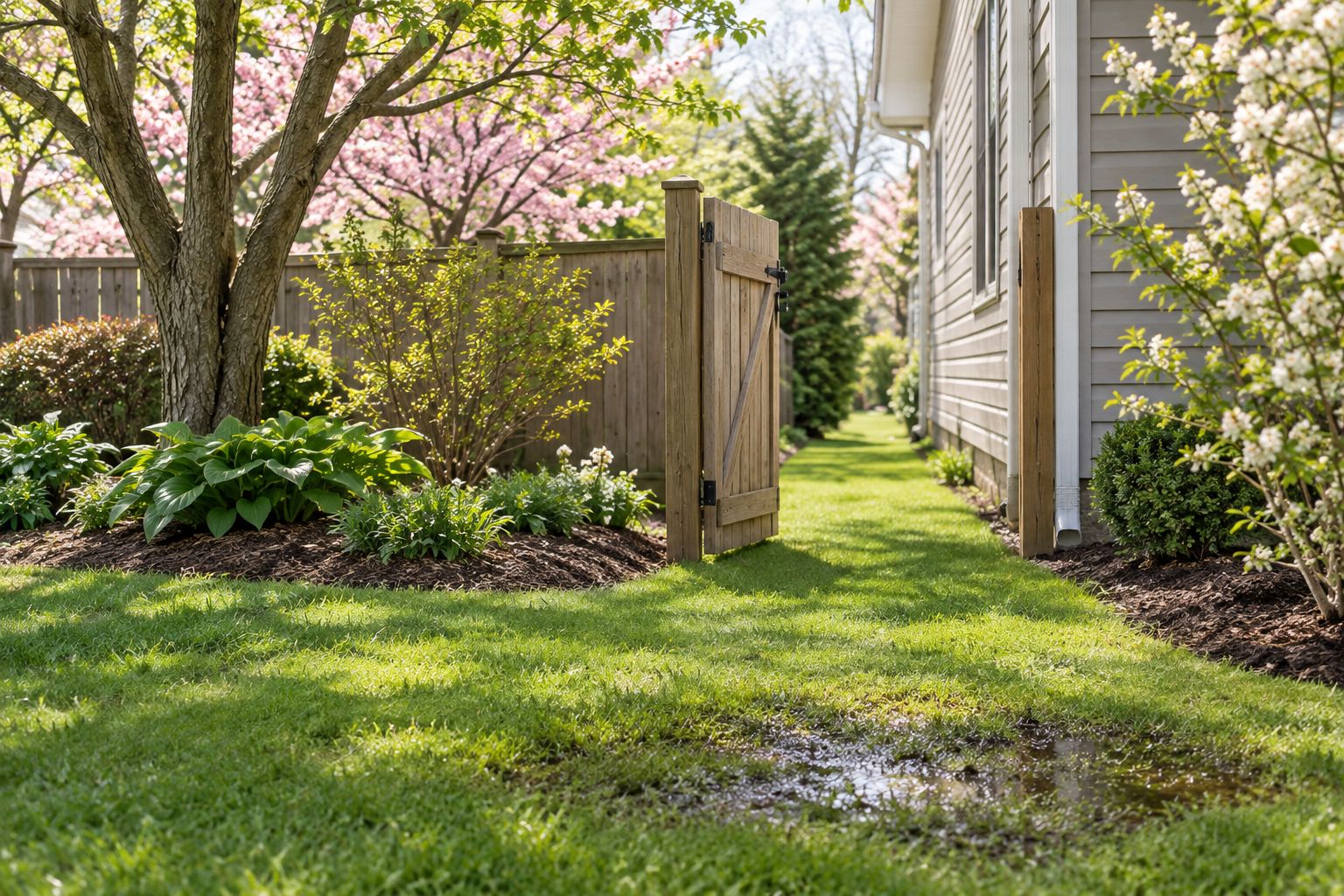
- Walk the proposed route with the estimator. Point out gates, slopes, soft ground, beds, and structures. Include the route for carrying or moving branches, not just the equipment entrance.
- Record 2 clear widths. Measure the gate opening and the narrowest passage beyond it. Share both measurements; the crew must decide what equipment and methods fit.
- Identify protected areas. Mark irrigation heads and tell the crew about shallow drainage, invisible fencing, and recent lawn repairs. Do not assume these features are visible.
- Agree on cleanup. Specify whether branches, logs, and chips leave the property, and whether any material stays in a designated place. Clarify whether stump work is included when removal enters the discussion.
- Discuss ground conditions. Ask what happens if the route is too soft on the scheduled day. Ground protection and a different route need discussion before equipment arrives.
Expected result: the tree crew and lawn contractor understand where work will happen, what gets removed, and which areas must remain untouched.
A narrow gate is not the whole access problem. A clear opening followed by a tight turn beside a house can change the handling plan, while a shorter route across saturated turf can create avoidable damage.
Shared tree and lawn calendar
Put dependent jobs in order
- Place the assessment first. Confirm the tree work and its timing before locking in lawn work that depends on an undisturbed surface.
- Schedule approved tree work before lawn finishing. Where the tree's needs allow, complete branch handling before seeding, lawn repairs, or fresh bed mulch beneath the work area.
- Leave the handoff conditional. Tell the lawn contractor that their start depends on tree cleanup and workable ground, not simply the next calendar day.
- Inspect before releasing the area. Walk the route and work zone from safe ground once the crew says the area is clear. Check for remaining debris and discuss any disturbed areas before lawn work begins.
- Confirm the next appointment. Send the lawn contractor a short update describing completed work, remaining restrictions, and any repair needs.
Expected result: you have 1 shared plan with a clear handoff, rather than overlapping appointments that depend on assumptions.
Choose the sequence that fits the tree, not the most convenient opening in your calendar:
| Sequence | Best for | Advantage | Limitation |
|---|---|---|---|
| Tree work before lawn finishing | Homeowners with approved pruning over planned lawn work | Keeps branch cleanup ahead of seed and fresh mulch | Requires suitable pruning timing and workable access |
| Lawn work with tree work deferred | Homeowners whose routine pruning belongs later | Avoids cutting solely to meet a spring deadline | Later access must protect completed lawn areas |
| Safety assessment before either job | Homeowners facing damaged or unstable trees | Keeps routine contractors out of a potential hazard area | Disrupts the original yard schedule |
Spartantreeny tree trimming is best for Rochester-area homeowners who want tree work planned around their property's access and cleanup needs. The limitation is straightforward: a lawn calendar cannot establish pruning needs or replace an individual tree assessment.
Plan your tree work first
Discuss the trees, access route, and cleanup scope before scheduling lawn finishing.
When lawn work is already underway
You do not need to restart your entire spring 2026 plan because seeding or lawn cleanup happened first. You do need to tell the tree crew exactly what changed.
- Identify the finished areas. Describe where seed, sod, treatments, or fresh mulch went down. Share the lawn contractor's access and re-entry instructions.
- Revisit the route. Ask whether branch handling and equipment can stay outside those areas. Do not assume protective mats eliminate every risk to soft soil or new turf.
- Separate urgent work from optional work. Have a damaged tree assessed promptly; move nonurgent pruning when appropriate rather than sacrificing a new lawn unnecessarily.
- Update both contractors. Confirm the revised boundaries and handoff in writing so the person doing the work receives the same instructions as the estimator.
Expected result: essential tree work has a defined plan, while optional work stays flexible enough to protect recent lawn improvements.
When reviving your lawn in spring, separate grass recovery from the tree-pruning calendar. A lawn beginning to green up does not establish that a particular tree needs pruning, and lawn advice written for another region does not set Rochester's work dates.
If storm damage changes the plan, keep lawn crews and household members outside the affected area until it has been assessed. Do not walk beneath damaged branches to move furniture, mark a route, or rescue lawn materials.
Troubleshooting schedule conflicts
The yard is soft when the crew is due
Tell the crew before equipment enters. Ask whether the work needs rescheduling or a revised access method; do not approve traffic simply because the lawn appointment is already booked.
Soft ground is a job condition, not a scheduling inconvenience. The lawn contractor also needs to know if repairs or further drying are required before their work.
The requested pruning conflicts with the tree's needs
Keep the lawn appointment separate from the pruning decision. Ask whether the objective can wait or whether a narrower scope addresses the immediate concern without unnecessary cutting.
A tree does not need a full canopy trim just because one branch obstructs access. Have the crew assess the specific problem.
The tree quote and lawn quote leave a cleanup gap
Assign responsibility before accepting the work. Identify who removes woody debris, who addresses disturbed turf, and who prepares the final seedbed.
“Cleanup included” is not a complete description of lawn restoration. Ask what the written scope covers rather than assuming the next contractor will handle it.
New damage appears between appointments
Stop routine work in the affected area and request a fresh assessment. New cracks, hanging branches, or visible movement at the base change the job; the original appointment sequence no longer settles what is safe.
Keep people away from suspected electrical contact and notify the utility. Never try to move a branch touching a line.
Customize your workflow
For a property with several projects, make the spring 2026 plan a property plan rather than a mowing plan. List tree work, possible stump grinding, drainage concerns, planting, lawn repair, and mulch as separate tasks with named responsibilities.
If an assessment changes the scope from trimming to removal, request a revised estimate. Tree size, access, nearby structures, debris handling, and cleanup scope all affect how the work is planned; a trimming discussion does not establish a removal scope.
Ask Spartantreeny to address careful handling, cleanup expectations, and direct communication with the crew during the estimate. Put the agreed details in writing rather than treating any protection or restoration measure as automatic.
For beds beneath the work area, use the same sequencing principle described in scheduling mulching after tree cleanup: finish the overhead work and debris handling before installing the final surface layer.
FAQ
Should I schedule tree trimming before spring lawn care in Rochester?
Schedule the tree assessment first, then complete approved tree work before seeding or fresh mulch where practical. Tree species, condition, and ground access determine whether pruning belongs in that window.
Is early spring the right time to prune every tree?
No, early spring is not the right pruning window for every tree. Species, flowering habit, condition, and the reason for pruning all matter; lawn appointments should not determine the cuts.
Can tree crews work over newly seeded grass?
Tell the tree crew about newly seeded grass before agreeing on access. Branch handling and equipment traffic can disturb a seedbed, so discuss a different route or timing for nonurgent work.
How long should I wait between tree trimming and lawn seeding?
Use completion and ground condition rather than a fixed waiting period. Begin lawn preparation after the work area is released, woody debris is cleared, and the soil is suitable for the planned lawn work.
What should a tree trimming estimate include when lawn work is planned?
The estimate should identify the trees, pruning objectives, access arrangements, and cleanup scope. Clarify debris removal, ground-protection measures, and responsibility for any lawn restoration before approving the work.
Does spring green-up mean my trees are ready for trimming?
No, lawn green-up does not establish the correct pruning time for a tree. Have the tree assessed separately rather than using grass growth as the scheduling trigger.
Can Spartantreeny help if storm damage interrupts my lawn schedule?
Spartantreeny provides emergency tree services in the Rochester area. Keep people and lawn contractors clear of damaged trees while arranging an assessment; do not continue routine work beneath hanging limbs.
One last thing
The most useful question is not “Can you come before my lawn service?” It is “Where will the branches and equipment travel?” That answer identifies the parts of the yard that need protection and the lawn tasks that should wait.
Before approving your 2026 schedule, ask both contractors to describe the handoff. If nobody owns debris removal or final ground preparation, the plan is not finished.