





The best time for stump grinding in Rochester is when the ground can support the equipment without excessive rutting and the work fits your lawn-repair plans; late summer or early fall is a practical choice when fall seeding is next. For your 2026 project, choose the actual ground conditions over a calendar date, and include chip removal, soil preparation, and access in the estimate—not just grinding the stump.
- Best time for stump grinding Rochester: choose firm ground and coordinate the job with lawn repair.
- Late summer or early fall suits homeowners preparing for fall grass seeding; wet ground still warrants a delay.
- Spartan Tree and Landscape provides stump grinding for Rochester-area homeowners; request an individual estimate with cleanup clearly defined.
- Winter work depends on access, snow cover, and ground conditions—not simply whether trees are dormant.
What time of year is best for stump grinding in Rochester?
Choose a workable site first and a season second. For homeowners in Rochester, Webster, and eastern Monroe County, the right appointment depends on how equipment reaches the stump and what replaces it afterward. Grinding before lawn restoration makes more sense than bringing equipment across newly established grass.
No season fixes a narrow gate, buried irrigation, or a stump against a fence. Those details belong in the estimate conversation. The same applies to cleanup: use the Rochester stump grinding cost guide to organize your questions, then request a site-specific scope rather than treating the season as a price promise.
| Season | Best for | Practical advantage | Main limitation |
|---|---|---|---|
| Spring | Clearing a stump before yard improvements | Lets you address the obstacle before landscaping proceeds | Thawing or rain-soaked soil can make equipment access unsuitable |
| Summer | Coordinating grinding with other outdoor work | Gives you a chance to complete grinding before fall lawn repair | Hot, dry weather makes new grass establishment more demanding |
| Fall | Pairing stump removal with cool-season lawn repair | Supports a grinding, cleanup, soil, and seeding sequence | Wet soil and an approaching freeze can interrupt that sequence |
| Winter | Projects with a workable route and visible work area | Firm ground can help support equipment | Snow, ice, and deeply frozen ground can complicate the job |
Why this matters
A stump is only part of the job. The route across your lawn, the condition of the soil, and the material left behind determine how much work remains after the grinder leaves.
For a 2026 yard project, plan backward from the finished result. A usable lawn, a planting bed, and a future patio require different follow-up work. Tell the crew what you want the space to become before agreeing on the grinding scope.
Spring: best for getting ahead of yard improvements
Spring makes sense when the stump blocks a planned fence, garden bed, or lawn project. Getting it addressed before materials arrive keeps the stump from becoming an obstacle midway through the work.
The drawback is ground condition. Snowmelt and spring rain can leave soil soft even when the surface looks ready. A dry driveway does not prove that a shaded backyard can carry equipment without damage.
Walk the proposed route with the estimator. Point out low spots, drainage problems, and any area where foot traffic leaves a deep impression. Ask whether the job should wait for firmer conditions or needs a different access plan.
Best for homeowners whose next project cannot proceed around the stump. Do not force spring grinding simply because the landscaping calendar says it is time to start.
Summer: best for preparing ahead of fall lawn repair
Summer grinding works well when you want the stump gone before a later lawn-restoration project. It separates the equipment work from the work of establishing grass.
Ground conditions still control the decision. A summer downpour can leave the access route unsuitable, and a dry surface does not tell you everything about the soil underneath. Check the entire route, not just the area around the stump.
The main limitation comes afterward. Newly seeded cool-season grass needs suitable growing conditions and consistent moisture; hot weather makes that harder. Grinding the stump does not mean you must seed the area immediately.
Best for homeowners preparing a site before fall restoration. Agree on how the disturbed area will be left if seeding is a separate, later job.
Fall: best for coordinating with cool-season grass seeding
Late summer and early fall are established planting windows for cool-season lawns in New York. That makes this period a practical planning target when your goal is to replace a stump with grass, provided you leave room for grinding, cleanup, and soil preparation before seeding.
The advantage is the sequence, not a special benefit to the stump itself. You can clear the obstruction, remove excess woody material, prepare the surface, and then address the lawn. There is no need to treat grinding and seeding as the same task.
The limitation is leaving everything too late. Wet conditions or freezing weather can disrupt the remaining work. For a fall 2026 project, discuss the whole restoration plan instead of booking grinding and assuming the lawn will follow automatically.
Best for homeowners restoring a cool-season lawn. The guide to stump grinding before new sod or grass seed explains why the preparation between grinding and planting matters.
Winter: best only when the site is workable
Winter stump grinding is a site decision, not an automatic yes or no. Firm ground can support equipment better than saturated soil, but snow can conceal the stump edges, nearby objects, and changes in grade.
Ice can also make a sloped route unsafe. Deeply frozen ground adds another complication, so do not assume that colder always means better access or easier work.
Ask the crew to assess both the stump and the route before treating winter as your preferred window. Explain whether you need the area restored immediately or can leave the finishing work until suitable conditions return.
Best for homeowners with a workable winter site and a clear follow-up plan. Do not assume an off-season discount, a faster appointment, or a particular completion date.
Why the best timing varies from yard to yard
Two properties on the same street can need different scheduling decisions. A stump beside a driveway presents a different access problem from one behind a narrow gate at the bottom of a wet slope.
These factors belong in the estimate:
- Ground firmness: Saturated soil is vulnerable to compaction and rutting. Check the travel route as well as the stump area.
- Equipment access: Gate openings, steps, slopes, and tight turns affect how the crew reaches the work.
- Stump size: Show the visible stump and surrounding root flare rather than describing only the former trunk.
- Nearby structures: Identify fences, foundations, patios, and retaining walls. Their position affects the working space.
- Buried features: Explain where irrigation, lighting cables, drains, and other known underground features run. Arrange utility marking before work as required.
- Cleanup scope: Decide whether the plan includes chip removal, soil replacement, and lawn restoration or only grinding.
A season is not a substitute for a site assessment. Give the estimator enough information to explain what the crew can do carefully and what needs to happen before equipment arrives.
How should you schedule grinding around your next yard project?
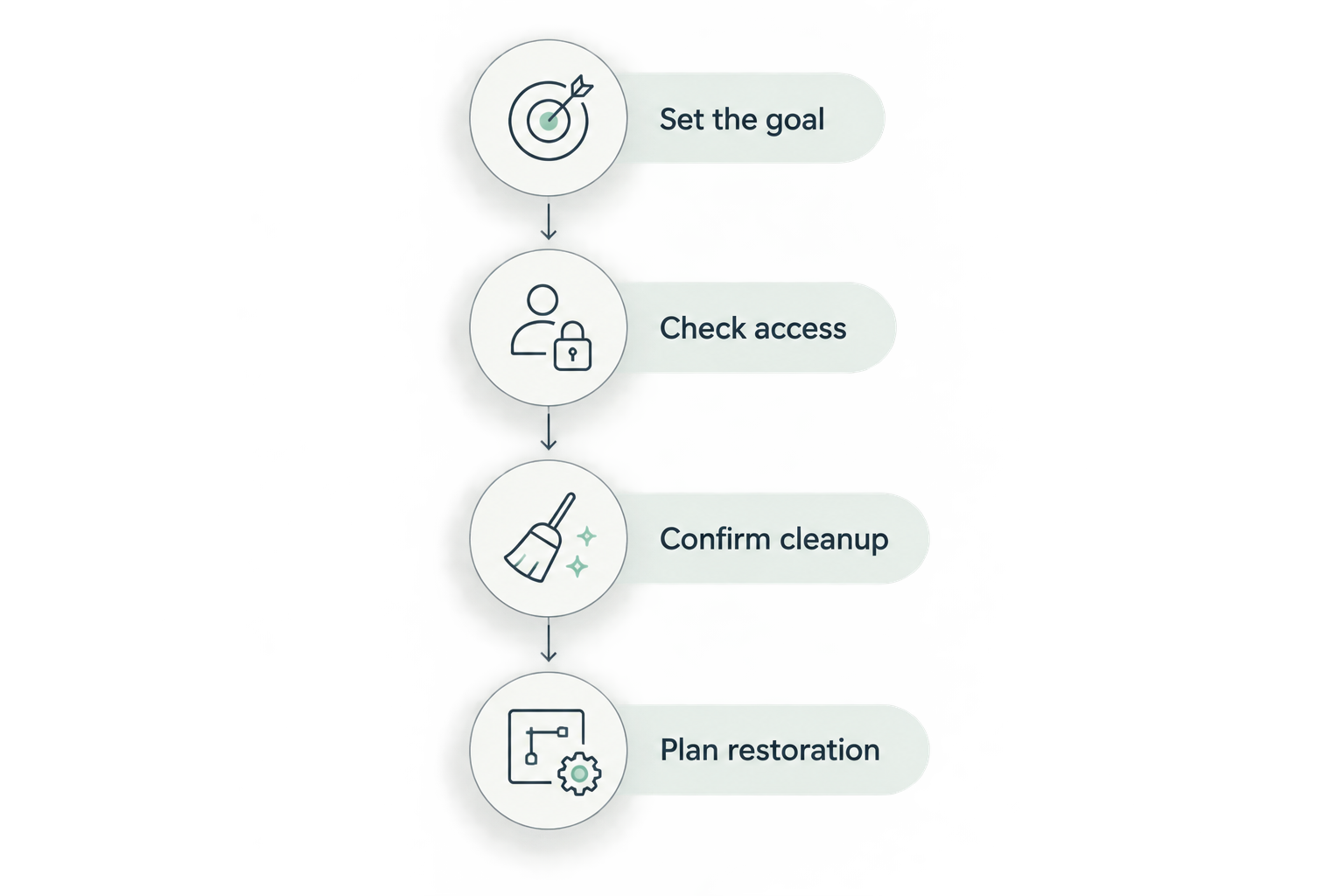
Start with the finished surface you want, then work backward. The useful sequence is straightforward, but each step needs an owner: do not assume that whoever grinds the stump also handles every finishing task.
- Set the goal. Explain whether you want grass, a planting bed, a replacement tree, or space for construction. The intended use affects the preparation needed afterward.
- Check access. Walk the route from the street or driveway to the stump. Identify gates, slopes, soft ground, and anything that cannot be moved.
- Confirm cleanup. Get clear wording on chips, exposed roots, soil, and the condition in which the area will be left.
- Plan restoration. Coordinate the next task with the person doing it. A seeding contractor or installer needs to know what remains below and above the surface.
For your 2026 estimate, keep photos and project notes together. Include a wide view of the route, a view of the stump beside nearby structures, and a description of what you want afterward. Photos help explain the job, but they do not replace an assessment of site conditions.
Spartan Tree and Landscape is a fit for Rochester-area homeowners who need stump grinding considered alongside tree removal and yard work. Ask about careful access, thorough cleanup, and direct communication with the crew; the written estimate should define the work rather than leave those details assumed.
Request a stump grinding estimate
Describe your stump, access route, cleanup needs, and plans for the finished area.
Should I grind the stump immediately after tree removal?
Grinding soon after removal makes sense when the site is ready and the scope is agreed. It lets you plan the remaining yard work without leaving the stump as an obstacle.
Immediate grinding is not always the right choice. Soft ground, restricted access, or unfinished plans for the area are reasons to separate the jobs. Ask about stump work during the tree-removal estimate rather than assuming it is included.
Do I have to wait for a fresh stump to dry out?
You do not need to wait for a fresh stump to dry out before arranging professional grinding. Site access, equipment suitability, and the agreed work scope are more useful scheduling considerations than the age of the cut.
Waiting also does not settle the cleanup question. Whether the stump is fresh or old, confirm what happens to the ground material and how the resulting area will be prepared.
Can I plant a new tree in the same spot afterward?
Grinding a stump does not automatically create a suitable planting site. Woody debris and remaining roots can interfere with preparing a proper planting area.
Discuss the replacement tree before grinding begins. Its location and soil needs can change the follow-up plan; do not assume that filling the grinding area and planting directly into it is enough.
FAQ
What's the best time for stump grinding in Rochester if I want grass afterward?
Late summer or early fall is a practical target when stump grinding is followed by cool-season grass seeding. Schedule cleanup and soil preparation before seeding, and let actual ground conditions determine whether equipment should enter the yard.
Can I have a stump ground during a Rochester winter?
Winter stump grinding depends on a workable access route and suitable conditions around the stump. Snow, ice, and deeply frozen ground can complicate the work, so request a site assessment rather than assuming winter is suitable.
Is spring too wet for stump grinding in Webster?
Spring is unsuitable when the soil cannot support equipment without excessive disturbance. Assess your specific Webster yard, including shaded areas and the route from the driveway, instead of ruling the season in or out.
Should stump grinding be included in my tree removal estimate?
Ask for stump grinding to be listed explicitly if you want it included in the tree-removal job. The estimate should also distinguish grinding from chip removal, soil replacement, and lawn restoration.
Will stump grinding remove every root from my yard?
Stump grinding does not remove the entire root system. If roots interfere with a planned patio, planting area, or other project, explain that requirement before agreeing on the scope.
Can I seed grass directly into the stump chips?
Do not treat stump chips as a prepared seedbed. Remove excess woody material and prepare suitable soil before seeding; grinding alone does not complete lawn restoration.
How do I get a useful stump grinding estimate for 2026?
Describe the stump, equipment route, nearby structures, and intended use of the area. Ask for written details covering grinding, cleanup, and any restoration rather than relying on a seasonal price assumption.
One last thing
The date you grind the stump and the date your yard is finished are not necessarily the same. A cleared stump can still leave chips to handle, soil to prepare, and a surface that needs restoration.
Before booking with Spartan Tree and Landscape, ask one plain question: what will this spot look like when the crew leaves? That answer tells you more about whether the job fits your plans than a preferred month on the calendar.