





Emergency tree removal after a Rochester storm needs a property-specific estimate, not a flat online price. The total depends on the damaged tree, safe access, nearby structures, and the work needed to remove it; stump grinding, debris hauling, and yard restoration need their own written scope. For a 2026 estimate, ask the crew to separate immediate hazard work from anything that can safely wait.
- Emergency tree removal cost after storm Rochester: get a written estimate based on the tree and property.
- Spartan Tree and Landscape provides 24/7 emergency tree services in the Rochester area.
- Compare hazard removal, debris hauling, stump grinding, and cleanup as separate parts of the scope.
- Keep away from damaged trees and downed wires; photographs never justify entering a dangerous area.
How much does emergency tree removal cost after a storm in Rochester?
The useful number is the written estimate for your property—not a regional average applied to a different tree. A tree lying across an open lawn presents a different job from a broken trunk resting on a roof. Matching the work matters more than matching the word emergency.
When you request an individual estimate, describe what the tree is touching, whether wires are involved, and how a crew can reach it. Tell the crew whether you want immediate hazard removal only or the full cleanup included.
Use this breakdown to check a 2026 storm-removal estimate before authorizing work:
| Scope item | What the estimate should explain | What to clarify |
|---|---|---|
| Immediate hazard work | Which damaged tree or limbs the crew will address | Whether the work leaves any tree sections for later |
| Cutting and removal | How much of the tree will be removed | Whether the remaining standing trunk is included |
| Debris handling | What happens to branches, logs, and chips | Whether anything stays on the property |
| Stump work | Whether grinding is part of the job | Whether grindings and backfilling are included |
| Final cleanup | Which work areas the crew will clear | Whether lawn, fence, or landscape repairs are separate |
Do not assume that removing a tree from a roof includes repairing the roof. Tree work and building repairs need clear boundaries, even when both result from the same storm.
Why this matters
After storm damage, you need to make decisions without standing under the problem or approving an unclear job. A rushed agreement that says only tree removal leaves too much unanswered: which tree, how much removal, and what condition the yard will be left in.
For homeowners in Rochester, Webster, and eastern Monroe County, the practical next move is to describe the hazard and request a site-specific assessment. Make the property safe first; settle the optional finishing work separately if necessary. The crew assessing the damage should explain what requires immediate attention and what can wait.
Why emergency tree removal costs vary
The word emergency does not describe the amount of work. These property and tree conditions explain why storm-removal estimates differ:
- Tree size: A larger trunk and heavier limbs mean more material to control, cut, move, and handle. Height alone does not describe the whole job.
- Damage condition: A split trunk, suspended limb, or partially uprooted tree changes how the crew can approach removal. Describe the damage without trying to test its stability.
- Equipment access: A narrow gate, fenced yard, steep route, or blocked driveway affects how equipment and material move through the property.
- Nearby structures: A house, garage, fence, or neighboring building limits where tree sections can go. Controlled removal around those obstacles is different from working in clear space.
- Cleanup scope: Hauling branches and logs, grinding the stump, removing grindings, and restoring disturbed ground are separate tasks unless the estimate combines them.
For a planned removal, you can discuss these conditions before the tree fails. After a storm, some decisions must happen while damaged material is still in place. That makes a clear explanation of the removal plan especially useful.
The guide to why tree removal quotes vary explains the same size, access, and cleanup questions to use when checking an estimate.
Emergency work or scheduled removal: what are you approving?
Best for an immediate hazard: emergency assessment and the work needed to address that hazard. The advantage is a scope focused on the dangerous condition. The limitation is that a first visit does not automatically include stump grinding, complete hauling, or yard repairs.
Best for damage assessed as safe to defer: scheduled removal with a defined cleanup plan. That approach gives you room to coordinate access and compare equivalent written scopes. It is not a substitute for emergency assessment when a damaged tree threatens people, buildings, or utilities.
| Approach | Best for | Practical benefit | Limitation |
|---|---|---|---|
| Immediate hazard work | A condition requiring urgent professional attention | Focuses the initial work on the immediate problem | Finishing work needs explicit inclusion |
| Scheduled removal | Damage a qualified professional determines can wait | Allows planning around access and the full removal scope | Not appropriate for an unresolved immediate hazard |
| Hazard work followed by cleanup | A job with urgent removal and separate finishing tasks | Separates the safety decision from optional yard work | Requires agreement on what remains after each stage |
You do not need to choose the cutting method yourself. You do need to understand what the crew proposes to accomplish before leaving and what work remains afterward.
What should you do before requesting an estimate?
Keep your preparation simple. You are gathering information for the crew, not inspecting the tree yourself.
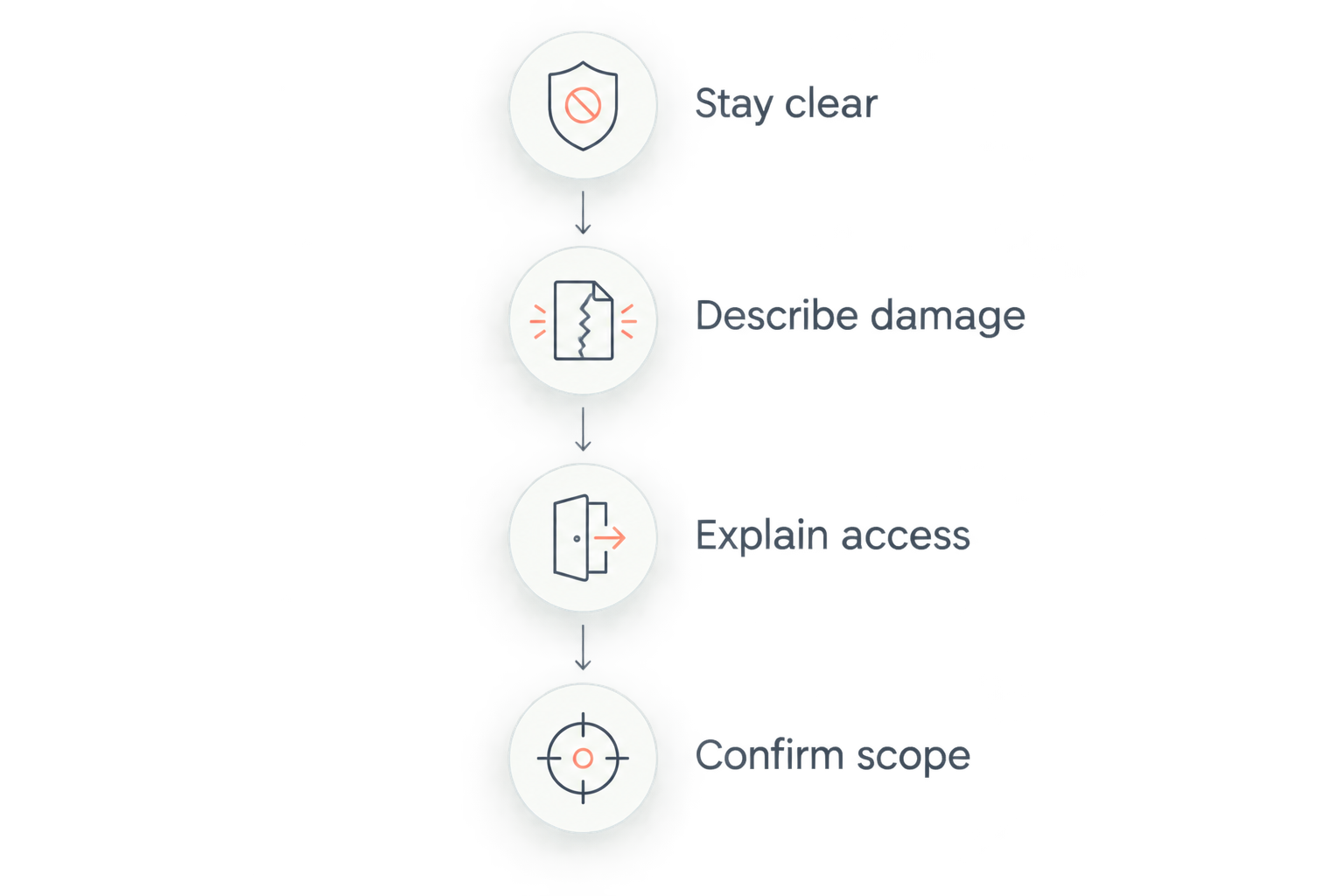
Stay clear
Keep people and pets away from the damaged tree, hanging limbs, and any wires. Do not climb onto a roof, enter beneath a leaning trunk, or move branches that touch utility lines. Call emergency services for immediate danger to people and contact the utility about damaged electrical lines.
Describe damage
From a safe location, describe whether the tree is standing, partly fallen, or on the ground. Explain what it touches and whether a driveway or entrance is blocked. Say when you cannot see something safely rather than moving closer to find out.
Explain access
Tell the crew about gates, fences, parked vehicles, narrow driveways, and backyard access. Mention visible obstacles between the street and the tree. Do not move vehicles or unlock a gate if reaching them takes you into the hazard area.
Confirm scope
Ask what the immediate work includes and what requires a later decision. If you want logs removed, stump grinding, or a cleared planting area, say so before accepting the estimate. Those requests describe different finishing tasks.
Photos help explain the setting when you can take them from a safe location. A wider view showing the tree and nearby structures provides context that a close-up of broken bark does not. Never enter a dangerous area just to improve a photograph.
What should a written storm-removal estimate include?
Your 2026 estimate should identify the tree and describe the work in plain language. An address and a total are not enough to distinguish partial hazard work from full removal and cleanup.
Check for these details:
- Tree identification: Which tree, standing section, or fallen limbs the agreement covers.
- Removal endpoint: Whether the crew removes the full tree or only the immediate hazard.
- Material handling: Whether branches, logs, and chips leave the property or stay in an agreed location.
- Stump treatment: Whether the stump remains, is cut lower, or is included for grinding.
- Cleanup boundaries: Which areas receive cleanup and which repairs remain outside the tree-work scope.
- Changes and authorization: How additional work will be discussed and approved if the scope changes.
Ask for an explanation of any unfamiliar term before signing. If the crew proposes leaving material temporarily, confirm where it will go and what arrangements apply to its later removal.
Insurance documentation belongs in your hiring checks, too. Ask for current proof of coverage rather than treating an advertisement or a low estimate as evidence of qualification.
Does homeowners insurance cover storm tree removal in Rochester?
Coverage depends on your policy and the circumstances of the damage. Do not treat storm damage as automatic approval for every removal, hauling, stump, or repair expense. Ask your insurer what applies to the actual loss.
For a 2026 claim, keep photographs taken safely, written estimates, invoices, and records of conversations. Describe whether the tree damaged a structure, blocked access, or fell elsewhere on the property. Let the insurer explain how those circumstances affect your coverage.
Ask the insurer how to document urgent work without delaying necessary action around an immediate hazard. A tree crew's estimate defines the work; the insurer determines coverage under your policy. Keep those decisions separate.
Can you reduce the scope without leaving a hazard?
Ask the assessing crew which tasks are necessary to address the danger and which are finishing choices. Stump grinding, planting, and some landscape repairs are different from removing a damaged tree section from a structure.
Leaving logs or chips is only a useful option when the crew agrees to a safe location and you actually want the material. It also leaves you responsible for whatever later handling you accept. Do not approve a smaller scope simply because its total looks lower.
Compare the same endpoint. An estimate that leaves the trunk, stump, and brush behind is not equivalent to one that includes their specified removal. Neither scope is automatically wrong; the mistake is approving one while expecting the other.
Choosing a Rochester crew for storm removal
Spartan Tree and Landscape is a fit for Rochester-area homeowners seeking emergency tree removal and related cleanup services. The company provides 24/7 emergency tree services, along with tree removal, trimming, and stump grinding.
Ask Spartan Tree and Landscape to explain the careful-removal plan, who you will deal with on the crew, and what thorough cleanup means for your property. The service offering includes emergency tree work and stump grinding, but that does not make every task part of the same estimate. Confirm each task in writing.
Around-the-clock service is not a promised arrival time. Describe the condition when you contact the crew and ask what happens next, especially if access is blocked or utilities are involved.
Request a property-specific tree estimate
Describe the damage, access, nearby structures, and cleanup you want included.
FAQ
How do I get an accurate emergency tree removal estimate after a Rochester storm?
Request a property-specific assessment that accounts for tree damage, access, nearby structures, and cleanup. Ask for a written scope that separates immediate hazard work from stump grinding, hauling, and repairs.
Does emergency tree removal automatically include the stump?
Stump removal or grinding is included only when the agreement says so. Confirm whether grindings removal and backfilling are also part of the work.
Can I wait until morning to call about a storm-damaged tree?
Do not wait for routine scheduling when a damaged tree presents an immediate danger. Stay clear and seek professional assessment; contact emergency services for immediate danger to people and the utility for damaged electrical lines.
Will homeowners insurance pay for all the cleanup?
Your policy and the circumstances determine what cleanup is covered. Ask your insurer specifically about removal, hauling, stump work, and repairs rather than assuming they receive the same treatment.
Can I cut a fallen tree myself to reduce the job?
Do not cut storm-damaged wood that is suspended, bent under load, touching wires, or resting on a structure. Keep clear and have a qualified crew assess the condition.
Does Spartan Tree and Landscape offer emergency tree removal in Rochester?
Spartan Tree and Landscape provides 24/7 emergency tree services in the Rochester, NY area. Request an individual estimate and confirm the proposed work, scheduling, and cleanup scope.
One last thing
Before you approve a 2026 storm-removal estimate, ask: What exactly will still be here when the crew leaves? That question exposes the difference between removing an immediate hazard and finishing the whole yard. Get the answer into the written scope.