





Instead of trying to coordinate tree removal before insurance adjuster visit by phone alone, document the damage, ask your insurer what needs inspection, and give the crew a written work scope. Address immediate danger first; schedule nonurgent removal and cleanup around the inspection when the site is safe to leave alone.
- Tree removal before insurance adjuster visit requires a safety decision first, then documentation and insurer instructions.
- Spartantreeny handles Rochester-area tree removal; your insurer decides coverage, not the removal crew.
- Separate emergency tree work from final cleanup so each task has a clear purpose and record.
- Photograph damage from safe ground, retain invoices, and confirm inspection instructions in writing.
Why this matters
A crew and an insurance adjuster have different jobs. The crew assesses how to handle the tree safely; the adjuster evaluates the loss under your policy. Booking one does not replace speaking with the other.
For Rochester, Webster, and eastern Monroe County homeowners, the practical question is not simply whether removal can happen first. It is which work must happen now, which work can wait, and what evidence needs to survive the cleanup. Read the separate guide to homeowners insurance and tree removal in New York for the coverage side of that decision.
Spartantreeny is a tree removal option for Rochester-area homeowners who want to discuss the work directly with the crew. That conversation should cover careful removal, access, and thorough cleanup—not a promise that insurance will pay.
Before you start
- Gather your claim materials. Have your insurer's contact information, policy documents, claim number if assigned, property address, and any inspection appointment details together. For a 2026 loss, keep the actual incident date separate from the date you first noticed damage.
- Arrange safe access and documentation. Use a phone or camera from safe ground, identify the affected tree, and tell the crew about blocked entrances, fences, nearby structures, and suspected utility involvement. Do not enter a damaged structure or stand beneath hanging limbs to get a better picture.
- Check the easy-to-miss issue: what must remain visible. Ask the insurer what it wants photographed or left undisturbed before wood, branches, or stump material leaves the property. Do not keep hazardous debris in place for evidence; explain the safety issue and request alternative documentation instructions.
If a tree or branch involves electrical wires, keep away and contact the utility. Call emergency services for immediate threats to people. An adjuster's appointment is not a reason to approach a dangerous tree.
Safety assessment and inspection plan
Decide which scheduling route fits
There are two useful scheduling routes, and neither automatically determines coverage. Choose the route based on site safety and the insurer's inspection instructions—not the hope that one approach guarantees reimbursement.
| Scheduling route | Best for | Main benefit | Main limitation |
|---|---|---|---|
| Urgent work before inspection | An immediate hazard that needs professional attention | Addresses the hazard without waiting for an inspection appointment | Changes the scene, making safe documentation especially important |
| Inspection before nonurgent work | A site that can safely remain undisturbed | Lets the adjuster see the damage before removal changes it | Leaves removal and cleanup pending until the inspection is coordinated |
Do not assess a suspended limb or loaded trunk by walking underneath it. Describe what you can see from a safe position and let the appropriate professional assess access and removal.
Confirm the sequence
- Keep people clear. Stop using the affected driveway, patio, walkway, or yard area if reaching it puts someone near the hazard. Keep children and pets away.
- Report observable facts. Tell the insurer where the tree landed, what appears damaged, and whether access is blocked. Describe what you see without assigning a cause you cannot establish.
- Ask about inspection timing. Find out whether an on-site inspection is planned and what documentation the insurer requests before work begins. Ask how to proceed if urgent work cannot wait.
- Give the crew the same information. Share the inspection plan and any evidence-retention request. Make clear which instructions concern insurance documentation and which work needs a professional safety assessment.
Expected result: You have a documented sequence for inspection and removal, with urgent safety work separated from work that can wait.
Claim evidence and removal scope
Build a usable damage record
A useful record shows where the tree is, what it affected, and what changed during removal. Close-ups alone do not explain the whole site.
- Capture 3 photo groups. From safe ground, take wide views of the property, views showing the tree's relationship to affected structures, and closer views of visible damage where safely accessible. Never move into danger to complete the set.
- Keep original files. Save the original photographs and videos rather than relying only on compressed message attachments. Keep edited or annotated copies separate.
- Write a short timeline. Record when you discovered the damage, when you contacted the insurer, and what work was requested. Use actual dates in your 2026 claim record rather than labels such as yesterday or last weekend.
- Record communications. Keep written instructions and note the date, contact name, and substance of phone conversations. Ask for clarification in writing when instructions affect removal or evidence retention.
Expected result: Someone who has not visited your property can understand the tree's position and the work sequence without guessing from a pile of logs.
Separate urgent work from final cleanup
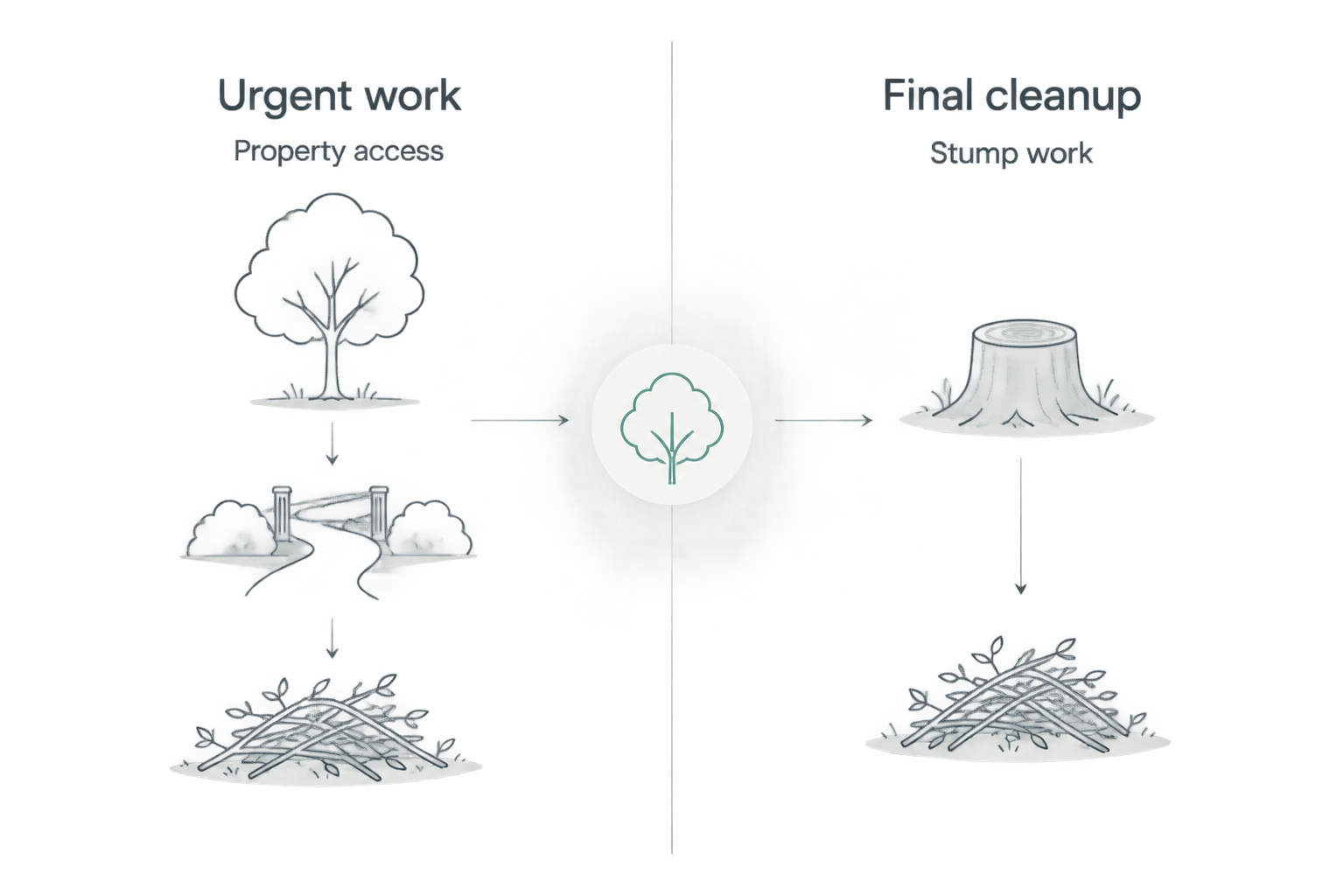
Ask for 2 written work scopes when emergency work and later cleanup are genuinely separate tasks. This is an organizational recommendation, not a requirement that every job needs separate visits or invoices.
- Urgent work: Describe the specific hazard or obstruction the crew is being asked to address.
- Final cleanup: State what happens to remaining logs, branches, chips, and other agreed material after removal.
- Stump work: Identify stump grinding separately if requested. Do not assume it is included in removal or covered by the claim.
- Property access: Record the intended equipment route and any gates, narrow passages, structures, or surface concerns.
For Spartantreeny tree removal, discuss these boundaries directly with the crew before authorizing work. The tree removal estimate checklist explains what to put in writing so removal and cleanup mean the same thing to everyone.
Expected result: The estimate describes the actual work rather than using a broad phrase that leaves debris handling or stump work unresolved.
Crew schedule and work record
Confirm what happens on removal day
- Identify the exact tree. Walk through the scope from a safe location or use clearly marked photographs. Distinguish the damaged tree from nearby trees you are considering for planned removal.
- Review access and obstacles. Discuss tree size, nearby structures, equipment access, and cleanup scope. These details affect the work plan and the individual estimate; a photograph alone does not settle every site question.
- Confirm evidence instructions. Tell the crew what the insurer asked to see or retain. Resolve any conflict between that request and safe handling before work starts.
- Document completed work. Photograph the area afterward from safe locations. Retain the written scope, invoice, and any supplied work notes with your claim materials.
- Update the insurer. Explain what was removed, when it happened, and which conditions changed before inspection. Send the requested records through the insurer's designated channel.
Expected result: The crew knows the agreed boundaries, and the claim record explains what the adjuster can no longer see in person.
For a removal scheduled in 2026, confirm the current work date and scope with both parties after any change. A rescheduled inspection does not automatically reschedule the crew, and a crew booking does not notify the insurer.
Discuss your removal scope
Share the tree location, access concerns, and adjuster timing for an individual estimate.
When the adjuster's visit changes
A delayed inspection does not make every remaining task urgent. Recheck the tree's condition and ask the insurer whether its documentation instructions have changed before moving the whole job forward.
If urgent work already happened, keep the original sequence intact in your records. Do not rewrite the timeline to match the new appointment.
- The site remains safe: Coordinate nonurgent work around the revised inspection, subject to the crew's schedule.
- The condition changes: Keep away, notify the crew and insurer, and obtain a fresh assessment of the immediate hazard.
- The insurer requests more photographs: Provide views you can obtain safely, plus existing originals. Explain any views that are no longer possible after removal.
- The work scope expands: Get the revised scope in writing before authorizing additional nonurgent work.
For a 2026 claim, preserve both the original appointment notice and the replacement date. That keeps a scheduling change from becoming an unexplained gap in the record.
Troubleshooting scheduling problems
The adjuster cannot visit before urgent work
Tell the insurer what makes the situation urgent and ask what documentation it needs before the scene changes. Arrange a professional safety assessment; do not leave people exposed while waiting for routine scheduling.
The insurer and crew describe different work
Ask each party to describe the specific task in plain language. Removing a tree from a structure, hauling away debris, and grinding a stump are different tasks; put the agreed scope in writing rather than treating them as interchangeable.
Removal happened before you took photographs
Save whatever contemporaneous records exist, including original messages, earlier property photographs, and contractor documentation. Ask the crew whether it has job photographs, but do not assume it does or recreate a scene for the claim.
The adjuster asks for material already hauled away
Explain exactly what was removed and provide the records you have. Do not claim that photographs replace every inspection need; ask the insurer what additional documentation it will accept.
A neighbor's tree or property is involved
Document the tree's position and the affected areas from your own safe access points. Do not authorize entry onto neighboring property or removal of someone else's standing tree without resolving permission and responsibility with the relevant parties.
Customize your workflow for planned removal
A storm claim and a planned removal can involve the same yard without being the same job. Keep unrelated planned work separate from the damage description and claim paperwork.
For example, you might need storm-damaged material removed while also wanting an otherwise unrelated tree assessed near a garage. Ask for distinct descriptions so neither the crew nor the insurer has to infer which work belongs to which request.
Spartantreeny can discuss tree removal, trimming, and stump grinding as separate service needs. Ask about careful handling near structures, the access route, and the cleanup you expect; agree on those details rather than assuming every service is bundled together.
Keep 1 claim folder containing the timeline, photographs, insurer instructions, estimate, scope changes, and invoices. That folder is more useful than scattered texts when either party asks what was agreed.
FAQ
Can I arrange tree removal before my insurance adjuster visits?
Yes, but coordinate the sequence with your insurer and the removal crew. Address immediate hazards through the appropriate professionals, document conditions safely, and ask what the insurer needs before nonurgent work changes the scene.
Should I wait for the adjuster if a tree is on my house?
Do not treat an adjuster's appointment as permission to remain near a dangerous tree or damaged structure. Keep away, contact the appropriate emergency or utility service when needed, and notify your insurer about the situation.
Will insurance pay if I remove the tree first?
Removal before inspection does not establish whether your policy covers the work. Your insurer evaluates the claim under the policy, so request documentation instructions and retain the scope, photographs, and invoices.
What photographs should I take before tree removal?
Take wide property views, views connecting the tree to affected structures, and accessible damage details from safe ground. Keep original files and never approach hanging limbs, wires, or unstable structures for a photograph.
Should I leave logs or the stump for the adjuster?
Ask your insurer what material it needs inspected before hauling or grinding begins. Do not preserve hazardous material in place solely for evidence; explain the hazard and request alternative documentation instructions.
Can I include other planned tree work in the same visit?
Ask the crew whether the work can be coordinated, but document unrelated planned work separately from the damage-related scope. A shared workday does not make every task part of the insurance claim.
What should I tell a Rochester tree crew before scheduling?
Share the tree location, visible damage, access restrictions, nearby structures, and adjuster timing. Provide any insurer instructions about photographs or retained material, and request a written removal and cleanup scope.
One last thing
The scene after careful cleanup can look nothing like the scene the adjuster expected to inspect. Before the last load leaves, check the documentation instructions—not just whether the yard looks finished.
For your 2026 records, make the final entry simple: work completed, date completed, photographs saved, and documents sent. Keep unresolved stump work or additional removal listed separately.